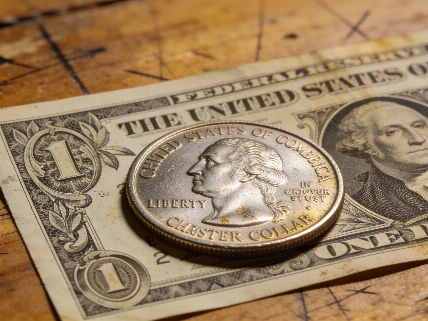
The upcoming Semiquincentennial dollar coin, featuring a living president, has sparked strong reactions among collectors, raising questions about tradition, precedent, and the future of U.S. commemorative coinage
The United States Mint's announcement of a new Semiquincentennial dollar coin, set for release in 2026, has ignited a heated debate among coin collectors and currency enthusiasts. The coin, intended to mark the 250th anniversary of American independence, is notable for featuring the image of a sitting president-an unprecedented move in modern U.S. coinage. This decision has prompted a wave of responses, ranging from outright rejection to cautious acceptance, reflecting deep divisions over the role of living figures on national currency.
Traditionally, U.S. coins and banknotes have depicted only historical figures, with a longstanding rule against featuring living persons. The new coin's design, which includes the current president's likeness, has been criticized by some as a break from established norms. Several collectors have voiced concerns that the move is politically motivated, with some stating they will not add the coin to their collections and have even severed ties with the U.S. Mint. Others argue that the coin's design fails to capture the historical significance of the 1776 milestone, suggesting that figures such as George Washington would have been more appropriate choices for the anniversary.
Tradition Versus Change in U.S. Coin Design
For many collectors, the inclusion of a living president on a legal-tender coin is more than a design choice-it represents a fundamental shift in the principles guiding U.S. currency. Critics point to the risk of politicizing commemorative issues and undermining the perceived neutrality of national symbols. Some have gone so far as to close their Mint accounts or block official communications in protest, citing a loss of trust in the institution's stewardship of American numismatic heritage.
However, not all responses have been negative. A segment of collectors views the coin as a historical artifact, regardless of personal opinions about the featured individual. For these collectors, the coin's uniqueness-being the first to depict a living president-adds to its appeal as a record of a controversial moment in U.S. monetary history. Others express interest in acquiring the coin as part of a complete Semiquincentennial set, treating it as an essential piece of the broader commemorative program.
Market Impact and Historical Context
The introduction of the Semiquincentennial dollar comes at a time when commemorative coin programs are under increased scrutiny for their design choices and market relevance. According to U.S. Mint data, commemorative coin sales have fluctuated in recent years, with collector demand often tied to the perceived historical or artistic value of each issue. The decision to feature a living president may influence both short-term sales and the long-term collectibility of the coin, as buyers weigh tradition against novelty.
In the context of American numismatic history, the move echoes earlier debates over the depiction of contemporary figures on currency. While living individuals have occasionally appeared on medals and tokens, official U.S. coins have consistently avoided this practice since the 19th century. The new coin's release thus marks a significant departure from precedent, raising questions about the future direction of U.S. commemorative coinage. For comparison, other high-profile coin events, such as the gathering of all 1933 Double Eagles at a major exhibition, have highlighted the enduring fascination with rare and historically significant issues-see the coverage of this event at a recent $100 million coin showcase.
Understanding the Precedent and Its Implications
The U.S. Mint's decision to break with the tradition of featuring only deceased individuals on coins is not without precedent globally, but it remains rare in the American context. The rationale for the original rule was to avoid the appearance of political favoritism and to ensure that currency served as a unifying national symbol rather than a tool for personal recognition. The current debate over the Semiquincentennial dollar highlights the tension between commemorating contemporary events and preserving the integrity of established numismatic standards.
As the coin's release approaches, collectors and the broader public will continue to debate its place in U.S. monetary history. The outcome may influence future commemorative programs and the criteria used to select figures for national currency, with potential implications for both the market and the cultural meaning of American money.
Commemorative coins are a distinct category within U.S. currency, typically issued to mark significant anniversaries, events, or individuals. Unlike circulating coins, commemorative issues are often produced in limited quantities and sold at a premium to collectors. Their legal-tender status does not guarantee widespread acceptance in everyday transactions, and their value can fluctuate based on collector demand, historical context, and design choices. The debate over the Semiquincentennial dollar underscores the complex interplay between tradition, innovation, and the evolving role of currency as both a medium of exchange and a vehicle for national memory.