
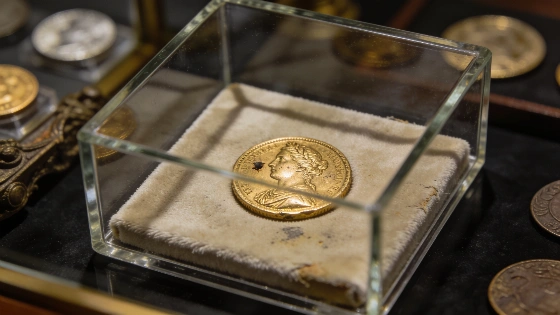
A coin's value is not just about how few exist or its condition. The most coveted coins are those with dramatic histories, famous owners, or links to pivotal events, turning ordinary metal into icons that command record-breaking prices
When a single 1933 Saint-Gaudens Double Eagle appeared on Pawn Stars and its owner turned down a $25 million offer, the message was unmistakable: in the world of rare coins, the story behind the metal can eclipse even the rarest mintage. This coin, once seized by the Secret Service and at the center of international intrigue, has become a global icon not because it is the rarest, but because its journey reads like a thriller.
Collectors and investors often obsess over population reports and grades, but the market's true heavyweights are coins with stories that leap off the auction block. The 1933 Double Eagle's path-from the Philadelphia Mint to King Farouk's collection, through legal battles and undercover stings, to a Sotheby's sale at $18.87 million-demonstrates how narrative can transform a coin into a legend. Even when thousands of examples survive, as with the 1907 High Relief Double Eagle, a coin's artistic ambition and presidential backing can keep demand intense for generations.
Beyond Numbers and Grades
Numismatics is awash with coins that are technically rarer than the Double Eagle, yet they languish in obscurity. What sets the icons apart is their connection to history, art, and sometimes scandal. The 1792 Half Disme, for example, is not just an early American coin-it is directly tied to Thomas Jefferson, who personally delivered silver for its production and spent the coins on his journey home. This tangible link to the founding era gives the Half Disme a presence that no population report can replicate.
Pedigree also matters. Coins once owned by legendary collectors-names like Eliasberg, Ford, or Bass-carry a premium that goes beyond condition. The Redfield Hoard, discovered in a Reno basement in 1974, flooded the market with hundreds of thousands of silver dollars. Yet, a Morgan or Peace Dollar in a Redfield holder still commands attention because of its documented origin. The same logic drives demand for coins from shipwrecks like the SS Central America, where provenance and survival against the odds add layers of meaning and value.
When History Surfaces
Some coins become famous not for their rarity, but for the drama of their rediscovery. The SS Central America's gold coins, lost in an 1857 hurricane and recovered more than a century later, are now prized for their dual connection to the California Gold Rush and a maritime disaster that helped trigger a financial panic. The Atocha treasure, found after 16 years of searching by Mel Fisher, transformed ordinary Spanish colonial coins into artifacts of adventure and perseverance.
Even modern coins can acquire legendary status through unusual events. Philadelphia's 2026 Liberty Dime, for instance, has drawn attention for its rare die breaks and minting flaws, offering collectors a glimpse into the unpredictable world of coin production, as reported earlier.
Facts and Figures
The 1933 Double Eagle set the world auction record for a coin at $18,872,250 in June 2021. The Philadelphia Mint originally struck 445,500 pieces, but nearly all were melted, with only a handful escaping destruction. The 1907 High Relief Double Eagle, with a mintage of over 12,000, remains widely available, yet top examples routinely fetch six-figure sums due to their artistic pedigree. The Redfield Hoard, discovered in 1974, contained approximately 400,000 silver dollars, purchased for $7.3 million in 1976. Coins from the SS Central America and Atocha shipwrecks continue to command premiums far above comparable non-shipwreck examples, driven by their documented histories.
Why Stories Endure
Collectors describe coins as "history in your hands" for good reason. Ancient and modern coins alike survive as physical witnesses to the rise and fall of empires, economic upheavals, and personal ambition. American coinage reflects the nation's expansion, from the Pine Tree Shilling of colonial Massachusetts to the gold rush denominations of the nineteenth century. The United States Mint's commemorative issues for the 250th anniversary in 2026 continue this tradition, embedding current events into circulating money.
Yet, not every coin with a story becomes a legend. The difference lies in the depth of the narrative and its resonance with collectors. A coin linked to a president, a shipwreck, or a courtroom battle offers more than metal-it offers a direct connection to the drama of history. As markets shift and price guides are rewritten, coins with the richest stories consistently attract the strongest demand. Rarity and grade may set the stage, but it is the story that keeps collectors coming back.
Understanding the role of narrative in numismatics reveals why some coins become icons while others remain footnotes. The interplay between rarity, condition, and story is not unique to coins, but in this market, the stakes are visible in every auction result and every collector's pursuit. The lesson is clear: in the world of coins, the best stories are the most enduring currency.
While rarity and grade are measurable, the concept of pedigree in coin collecting is more nuanced. Pedigree refers to the documented ownership history of a coin, often tracing its passage through notable collections or famous hands. This record can add significant value, especially when linked to collectors who shaped the field or to events that changed the course of monetary history. Pedigree is not always visible on the coin itself, but it is meticulously tracked in auction catalogs and specialist references, making it a key factor for advanced collectors seeking more than just a piece of metal.