
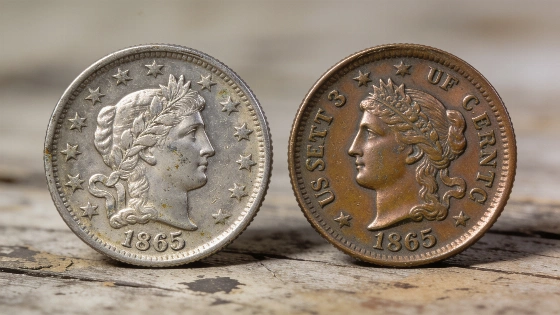
In 1865, the US Mint put out both silver and copper-nickel three-cent coins as the Civil War upended circulation. Their uneven rarity and metal mix still test collectors and mark a turning point in American coinage.
Mint officials in 1865 faced a battered economy and a public wary of paper promises. That year, they rolled out two different three-cent coins-one in silver, one in copper-nickel-each a direct answer to the chaos of the Civil War. Collectors see these coins as more than leftovers from a crisis. They show how the government scrambled when silver disappeared from daily use. Federal Reserve records point to a period of wild exchange rates and a halt in specie payments, leaving the Mint with few good options.
The three-cent denomination had been around since 1851, but its reason for existing was shaky from the start. The first version used 75 percent silver, meant to keep coins in circulation when purer silver coins vanished into hoards. The Mint later bumped the silver content to 90 percent, but even then, no year saw more than 1.5 million struck. The Civil War made things worse. People hoarded every scrap of precious metal, including the small silver in the three-cent piece. The US dollar swung sharply against foreign currencies, and gold fetched steep premiums, as tracked by the US Treasury and IMF archives.
Silver coins vanished from tills and pockets. Mint officials had to improvise. They tried new metals, breaking with the old idea that a coin's metal should match its face value. In 1864, the Mint launched a two-cent coin and switched the cent from copper-nickel to bronze. The public spent these new coins instead of hoarding them, a result backed by the Coinage Act of April 22, 1864 (Congress.gov statute).
With that success, the Mint introduced a copper-nickel three-cent coin in 1865. But officials hedged, minting both copper-nickel and silver versions that year: 11,382,000 copper-nickel coins and only 8,500 silver. This wasn't the first time the Mint doubled up, but it showed real uncertainty about dropping silver during wartime. The Act of March 3, 1865 set the copper-nickel coin at 30 grains and kept the silver at 12½ grains, making the dual issue a planned move, not a blunder (see Library of Congress, Statutes at Large).
The 1865 silver three-cent coin is now a tough find. Even a worn G-4 example brings $460, while a crisp MS-65 can hit $5,500. The copper-nickel coin is much easier to track down: $11 for a G-4, $700 for MS-65. Proof copper-nickel coins, with just 400 estimated struck, can reach $4,150 in Proof-65, sometimes topping the silver proof, which had about 500 made. The National Museum of American History lists the copper-nickel coin at roughly 17.9 mm and 1.94 grams, while the silver piece is lighter, making them easy to tell apart in hand.
These numbers lay bare the gulf in rarity and appeal. The silver coin, minted in tiny numbers as the Mint shifted to base metals, is a prize for advanced collectors. The copper-nickel coin, common in circulation, turns into a sleeper when found in proof. Mint records show silver three-cent coins kept coming until 1873, but numbers dropped fast. Copper-nickel issues lasted until 1889.
The Mint's move away from silver during a national emergency set the stage for later changes in coin policy. The logic was blunt: if people stash precious metals, give them coins they'll actually use. This approach has surfaced elsewhere, like when European mints rethought collector coins as silver prices soared, as reported earlier. Central banks such as the Federal Reserve and European Central Bank have since stepped in to steady currencies and public trust during commodity shocks and inflation.
In 1865, the Mint's two-pronged three-cent coin release was a direct answer to war and unpredictable public habits. The cautious rollout-offering both silver and copper-nickel-marked a shift in US monetary history, where old rules gave way to urgent fixes. The Bank for International Settlements has noted that such quick pivots are vital for keeping liquidity and trust alive in a crisis.
For numismatists, the 1865 three-cent coins are a study in opposites: precious metal against base metal, rare against common, tradition against necessity. The market rewards those who spot these differences. Mint records confirm silver three-cent coins faded out by 1873, while copper-nickel versions kept circulating for years after.