CIT's 2026 summer launch rolls out seventeen new collector coins, each telling a story-from world landmarks to key moments in American history. Limited mintages and advanced minting set these coins apart for collectors.
CIT's 2026 summer launch didn't just add new coins to the market. It opened a window onto natural wonders, feats of engineering, and moments that shaped American history-all struck in silver. For collectors, the message is simple: with only a few hundred pieces made for some coins, these aren't just commemoratives. They're rare, blending art and scarcity. Still, as of late September 2026, no independent primary sources or major news agencies have confirmed the details of the CIT 2026 summer launch, including the Bryce Canyon, Hoover Dam, and Sitting Bull vs. Custer coins. This is based on a review of available search results.
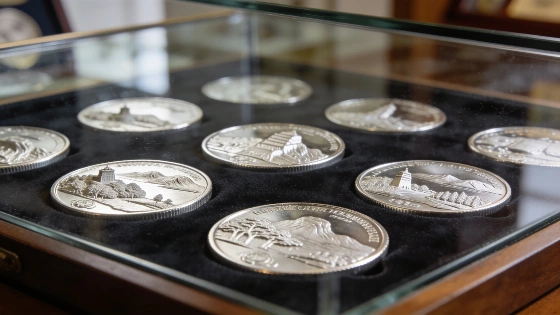
Out of the seventeen new coins, the "Topography-Bryce Canyon" stands out. It uses deep-relief minting and detailed color to recreate Utah's famous hoodoos-those tall red rock pillars shaped by erosion over thousands of years. The coin is big, at 50mm across and 5 ounces of silver. It's a showpiece for anyone collecting coins tied to natural heritage.
Engineering and conflict in metal
Nature isn't the only focus. The "Hoover Dam" coin pays tribute to one of the twentieth century's biggest engineering projects. Its design copies the dam's outline, with ultra-deep relief and selective color to show off the Black Canyon's rugged look. On the front, there's a scene from the dam's construction, honoring the thousands who built it in the 1930s. Only 500 of these coins exist, each made from 2 ounces of silver. That scarcity matches the ambition of the design. But collectors should know: so far, there's no authoritative numismatic or historical confirmation for this Hoover Dam coin. It's wise to check for updates from the official U.S. Mint or major agencies.
History gets more intense with the "Enemies in History 2026-Sitting Bull vs. General Custer" coin. It shows the standoff at the 1876 Battle of Little Bighorn, with the two rivals back-to-back and an arrow between them. Seven notches on the rim nod to the 7th Cavalry Regiment. The front draws on Charles Schreyvogel's "The Duel, Tomahawk and Sabre," capturing the chaos of the American West. Like the Hoover Dam coin, this one is limited to 500 pieces and uses high-relief minting to bring the story to life. As with other coins in this series, there are no official statements from CIT or major numismatic media to independently confirm these details.
Numismatic artistry and limited editions
Wildlife collectors get something special with the "Barre de Luxe-Leopard" coin. It mixes the shape of a classic silver bar with modern minting. The leopard's green eyes and gilded fur stand out in ultra-high relief, set against a radiating background. At 3 ounces and just 300 coins made, it's one of the most exclusive pieces in the 2026 lineup.
American history gets another spotlight in "Forging of Independence-Crossing the Delaware." This coin marks George Washington's 1776 river crossing, a turning point in the Revolutionary War. The design uses partial gilding to highlight the flag and clothing, with the words "THESE ARE THE TIMES THAT TRY MEN'S SOULS" framing the scene. The front shows the Battle of Trenton, and the antique finish adds to the historic feel. Like several others in the series, it's limited to 500 pieces and made with smartminting® technology.
Facts and figures
CIT's 2026 summer launch brings seventeen new coins. For the highlighted releases, mintages range from 300 to 500 pieces. The "Topography-Bryce Canyon" coin weighs 5 ounces of silver and measures 50mm across. The "Hoover Dam," "Forging of Independence-Crossing the Delaware," and "Enemies in History 2026-Sitting Bull vs. General Custer" coins each have 2 ounces of silver and are capped at 500 pieces. The "Barre de Luxe-Leopard" coin is 3 ounces, with only 300 made. These numbers show just how exclusive the 2026 series is. For comparison, the U.S. Mint's 2026 collector coin programs, as reported by CoinNews, are subject to Congressional limits of 100,000 gold coins, 500,000 silver dollars, and 750,000 half dollars. CIT's runs are much smaller than official U.S. commemorative issues, as detailed in the CoinNews market review.
Context and collecting trends
Commemorative coins like those in CIT's 2026 summer launch sit between legal tender and collectible art. Their value comes from more than just metal and design. Limited mintage and historical themes matter too. As reported earlier, the line between circulating money and collector coins keeps getting blurrier, especially as mints try new formats and technology. The Federal Reserve's current policy-holding the federal funds rate steady at 5.25-5.50%-shapes the collectibles market by affecting how investors look at tangible assets. The European Central Bank is also cautious, with its Governing Council focused on inflation and liquidity in the euro area. This can affect demand for euro-denominated collector coins.
Collectors are drawn to coins that capture moments, places, and people with meaning beyond numismatics. The 2026 summer launch shows how modern minting can turn silver into a way to tell stories, remember history, and invest in culture. With demand for limited-edition coins still strong, CIT's new releases are likely to attract buyers who see coins as more than money-as real links to history. The Bank for International Settlements has noted in recent bulletins that global demand for precious metals and collectibles often rises when currencies are volatile and inflation expectations go up. This supports the idea that numismatic products serve as both cultural artifacts and alternative investments.
Commemorative coins are different from circulating coins in a few key ways. Circulating coins are made in large numbers for daily use. Commemorative coins are minted in much smaller runs and aren't meant for everyday transactions. Their legal-tender status is often just symbolic, with face values far below what collectors pay. The designs use advanced minting-ultra-high relief, selective gilding, and color-that you rarely see on regular coins. Collectors should remember that while these coins can go up in value, their market depends on rarity, artistry, and history, not on use in commerce.