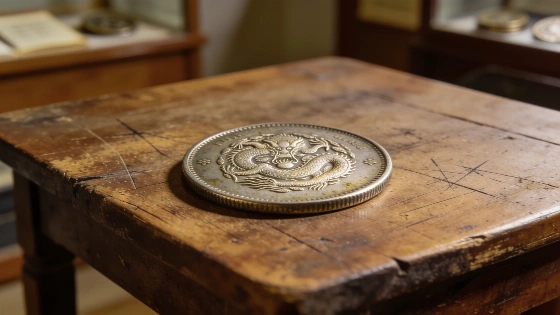
A 1911 Reversed Dragon Dollar Pattern from the Qing Dynasty, graded MS-66, is expected to fetch up to $600,000 at auction. This rare coin captures the final days of imperial China's monetary ambitions and the abrupt end of an era.
One silver coin. An auction estimate between $400,000 and $600,000. The 1911 Reversed Dragon Dollar Pattern is about to hit the block at Stack's Bowers Galleries' Hong Kong Rarities Night in October 2026. This isn't just about silver or a high grade. The coin is a piece of a world that almost was-China's last imperial currency experiment, cut short by revolution. The "瑰宝之夜" (Rarities Night) session is set for October 19, 2026, during a week packed with numismatic events in Hong Kong. Demand for Chinese rarities keeps rising. Hong Kong remains the center for big-money currency auctions, as shown in recent auction previews.
This coin sits alone at the top of the NGC census for its type, graded MS-66. It's not just a collector's prize. It's a record of the Qing Dynasty's last push to unify and modernize China's money. The dragon on this pattern coils the opposite way from the design that finally made it into circulation. That makes it a true outlier-a "what if" frozen in silver. The coin's return to the spotlight comes as interest in old monetary reforms grows. Central banks like the People's Bank of China keep talking about currency stability and modernization. The echoes of early 20th-century reformers are still there.
The final experiment of imperial coinage
The Reversed Dragon Dollar was struck in the third year of the Xuantong era, under the child emperor Puyi. The Qing government was in crisis. By early 1912, the dynasty would fall. The Central Mint in Tientsin made this coin as part of a last-ditch effort to bring order to China's chaotic money system. For years, provincial mints and foreign silver dollars mixed with local coins. The Qing wanted to change that. They weren't alone. Around the world, monetary authorities were trying to unify and control national currencies. The Federal Reserve, for example, was set up in 1913 to do just that.
China's push for uniform coins started earlier. In 1905, U.S. diplomats translated regulations that called for standard weights, fineness, and designs. The Tientsin Mint became the lab for these changes. It produced a series of dragon dollar patterns now prized by collectors. The Reversed Dragon, listed as L&M-31 and marked by raised veins in the outer leaves, stands out for its design and timing. It arrived just as the dynasty was about to collapse. These reforms were part of a bigger late Qing plan to bring China's currency in line with global standards. That plan would later shape the modern renminbi and its management by the People's Bank of China, as detailed on the PBoC official site.
Design details and auction history
The coin shows the classic late Qing dragon dollar look: a twisting dragon, a flaming pearl, and bilingual denomination marks. But here, the dragon's body forms a C-shape, tail to the right. That's the opposite of the design that went into circulation. The reversed dragon and the raised leaf veins let experts pin down the exact variety.
Condition matters. This MS-66 coin is exceptional. NGC has certified only ten of this variety. None are higher. The surfaces are bright, with just a hint of golden toning at the edges. Details are sharp. For a coin struck in one of China's wildest years, it's survived almost untouched. Official auction catalogs haven't published the estimate for this coin, but Chinese auction previews confirm the sale's format and dates. The anticipation is real.
The market history is clear. In April 2023, Stack's Bowers sold a PCGS SP-65 Reversed Dragon Dollar for $1,380,000. That set a record for the type. Other examples-PCGS SP-62 and SP-63-have also come up for sale, each drawing fierce bidding. The pattern's rarity is proven. As reported earlier, collectors keep pushing rare coins with real history into the million-dollar range. This matches what's happening worldwide. Rare coins are now seen as alternative stores of value, especially as bond yields swing and central bank policies shift. The Bank for International Settlements and the International Monetary Fund track these trends closely.
Historical weight and collector appeal
The Reversed Dragon Dollar is more than a curiosity. It's a snapshot of a government trying to modernize, but running out of time. Patterns like this show the choices mint officials faced-designs tested, tweaked, and then dropped as events overtook them. The reversed dragon isn't just a design twist. It marks a road not taken as China moved from empire to republic.
Collectors want both the story and the rarity. Only a few of these coins exist. Even fewer are this well preserved. The MS-66 coin gives a nearly perfect look at the last days of Qing money policy, when everything was at stake. The story still matters. Debates about currency reform and modernization continue. Central banks like the European Central Bank and the Federal Reserve still weigh tradition against change in their policies.
Specifications and measurable details
The 1911 Reversed Dragon Dollar Pattern was struck at the Central Mint in Tientsin. It weighs 26.90 grams and measures 39 mm across. The coin is silver, marked as 1 Yuan (壹圓), with medal alignment. The Type II variety has raised veins in the outer leaves. Catalog numbers include L&M-31, Kann-225, KM-Pn308, WS-0042A, and Wenchao-115. NGC graded this coin MS-66. Only ten of this variety have been certified, none higher. The auction estimate is $400,000 to $600,000. Past sales show it could go higher if collectors compete. The auction is part of a string of numismatic events in Hong Kong in autumn 2026. Hong Kong keeps its place as a global center for rare coin trading and foreign exchange.
Patterns are different from regular coins. Circulating coins show the final decision. Patterns show the experiments and changes along the way. The 1911 Reversed Dragon Dollar is proof that money systems are shaped by both policy and the chaos of politics and revolution. Its survival in this state says a lot. Ambitions can end fast.
Few coins capture a lost chance like the Reversed Dragon Dollar. Its story pushes collectors and historians to think about how close China came to a different money system-and how quickly those chances can disappear. From test piece to auction star, this coin shows how fragile reform can be. Physical money still marks the turning points of history.
Pattern coins are prototypes. Mints make them to test new designs, denominations, or technical features before mass production. They aren't meant for circulation. Most never leave official hands. In late imperial China, patterns like the Reversed Dragon Dollar were part of a bigger push to modernize and standardize the country's money. Regional differences and foreign coins had long caused problems. Studying and collecting patterns gives a window into how national coinage decisions were made. It shows both the technical hurdles and the political risks of changing a country's money.