The Canadian dollar slipped against the US dollar as investors watched last-minute negotiations to avert new US tariffs on Canadian imports, raising uncertainty for businesses and currency markets ahead of a key deadline
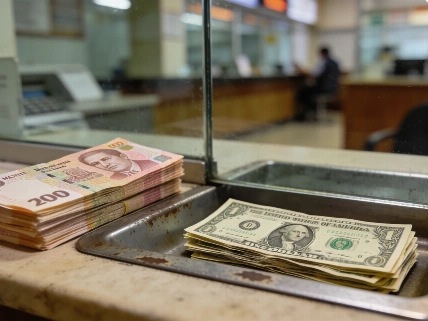
The Canadian dollar lost ground against the US dollar on Tuesday, as market participants focused on high-stakes negotiations between Ottawa and Washington aimed at preventing a new round of tariffs. The loonie traded 0.2% lower at 1.39 per US dollar, equivalent to 71.94 US cents, after briefly touching its strongest level in over two months at 1.3842 during Monday's session. The currency's movement reflects growing uncertainty as the deadline for potential US tariffs on Canadian goods approaches.
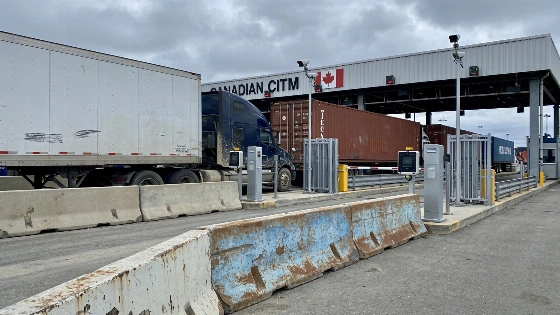
According to the office of Prime Minister Mark Carney, discussions with US President Donald Trump took place on Monday in an effort to secure a last-minute deal. Without an agreement, the United States is set to impose tariffs of up to 50% on approximately $20 billion worth of Canadian imports starting at midnight on Wednesday. The prospect of such steep tariffs has heightened volatility in the USD-CAD exchange rate, with strategists at Monex Europe suggesting that a successful deal could see the pair move toward 1.37, while a breakdown in talks might push it above 1.40 in the coming days.
Tariff Uncertainty Drives Currency Volatility
The looming tariff deadline has injected fresh volatility into the Canadian dollar, which had recently benefited from improved sentiment and rising commodity prices. West Texas Intermediate oil futures, a key benchmark for Canadian energy exports, rose 0.6% to $85.03 per barrel as hopes for a Middle East peace agreement faded, raising concerns about ongoing supply disruptions. Oil remains a major driver of Canada's export revenues and, by extension, its currency's external value.
Canadian bond yields, which had climbed to multi-year highs in recent weeks, retreated slightly as investors weighed the potential economic impact of new trade barriers. Meanwhile, housing market data showed Canadian home sales rising for a fourth consecutive month in July, up 0.5% from June, with prices also edging higher. These domestic indicators, however, have been overshadowed by the immediate risk of tariffs and their potential to disrupt cross-border trade flows.
Market Reactions and Broader Currency Context
Currency strategists remain divided on the likely outcome of the negotiations. While some expect a last-minute compromise, others warn that escalating trade tensions could trigger renewed weakness in the Canadian dollar. The situation echoes recent episodes in other major currency pairs, such as the British pound's reaction to shifting expectations for European Central Bank policy, as discussed in this analysis of sterling's response to eurozone data.
For Canadian businesses and consumers, the stakes are immediate. New tariffs would raise costs for importers and exporters, potentially feeding through to consumer prices and weighing on economic growth. The Bank of Canada has not signaled any imminent policy response, but further currency weakness could complicate its inflation management if import prices rise sharply.
Understanding Tariffs and Currency Movements
Tariffs are taxes imposed on imported goods, often used as a tool in trade negotiations or to protect domestic industries. When tariffs are introduced or threatened, they can disrupt established trade patterns, increase costs for businesses, and create uncertainty in currency markets. For countries like Canada, which rely heavily on cross-border trade with the United States, the risk of new tariffs can have an outsized impact on the national currency. Exchange rates often react quickly to such developments, reflecting both immediate market sentiment and longer-term expectations for trade, growth, and monetary policy. In this context, the USD-CAD exchange rate serves as a barometer for investor confidence in the stability of North American trade relations.