
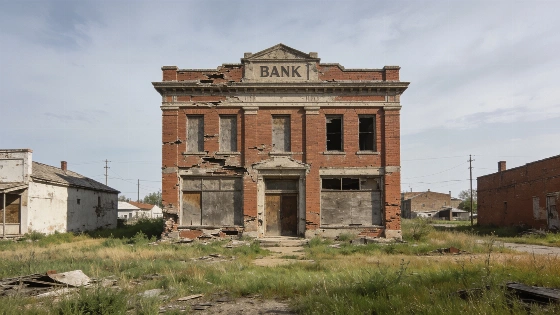
A journey through Littleton and Moundsville, West Virginia, reveals how the rise and fall of local industries shaped the fate of historic banks and rare national banknotes, leaving behind architectural relics and numismatic stories
In the hills of northern West Virginia, the remnants of once-thriving towns tell a story of economic booms, rapid decline, and the enduring legacy of their currencies. Littleton and Moundsville, two communities shaped by the arrival of the railroad and the discovery of oil, offer a window into how local fortunes and banknote histories are intertwined.
Littleton: Oil Boom and Bank Ruins
Littleton, located in Wetzel County near the Pennsylvania border, emerged in the late nineteenth century as the Baltimore & Ohio Railroad extended its reach. The town's fortunes soared during the West Virginia oil boom from 1896 to 1906, transforming a rural settlement into a bustling hub with around 1,000 residents at its peak. Businesses flourished, including several banks, hotels, and factories, all serving the surrounding oil and gas fields.
The prosperity was short-lived. In February 1906, a fire devastated much of Littleton's business district. Although many structures were rebuilt in brick, the decline of the oil industry soon followed. As production waned, businesses shuttered, banks closed, and the population dwindled. The end of passenger rail service in 1950, followed by the loss of freight service a decade later, severed the town's vital transportation link. By 2004, Littleton had dissolved its municipal government, and today fewer than 70 people remain.
One of the last standing monuments to Littleton's past is the Exchange Bank of Littleton, built in 1906 after the fire. The imposing brick structure, now in a state of advanced decay, is the only significant building left from the town's commercial heyday. Its collapsed roof and hazardous interior serve as a stark reminder of how quickly economic tides can turn, leaving behind only architectural shells and fading memories.
Moundsville: From Ancient Mounds to Banknote Rarities
Traveling north along U.S. Route 250, the landscape shifts to Moundsville, the seat of Marshall County. Situated on the Ohio River, Moundsville is named for the prehistoric Native American burial mounds that once dotted the area, most notably the Grave Creek Mound. Built by the Adena culture between 250 and 150 B.C., this 70-foot conical mound remains one of North America's largest and is now preserved as an archaeological complex and museum.
Moundsville's modern development began in the early nineteenth century, with the merging of Elizabethtown and Mound City after the Civil War. The arrival of the Baltimore & Ohio Railroad in 1852 and the city's river location spurred growth in commerce, manufacturing, and glassmaking, with the Fostoria Glass Company gaining national recognition. Another landmark, the West Virginia State Penitentiary, operated from 1866 to 1995 and now draws visitors as a historic site.
The city's banking history is closely tied to its economic rise. The First National Bank of Moundsville opened in February 1901 under charter #5717, serving as a financial anchor during the city's commercial expansion. The bank issued a range of national banknotes, including Series of 1882 and 1902 large-size notes and Series of 1929 small-size notes. In total, $954,000 in notes were issued before the bank liquidated in 1934, a common fate during the Great Depression. Its successor, the First National Bank at Moundsville (charter #14142), continued operations and issued approximately 1,260 Type 2 small-size notes, of which only six are known to survive today.
Banknotes and Historical Data
Surviving banknotes from these institutions are now rare collector's items. For the First National Bank of Moundsville, only 16 large-size notes are reported-split evenly between Series of 1882 and 1902-alongside 25 small-size notes. The successor bank's Type 2 notes are even scarcer, with just six examples documented. These figures highlight the limited survival of local currency from a period marked by economic upheaval and institutional change.
While Littleton never had a national bank, its Exchange Bank stands as a physical testament to the era when local banks played a central role in community life. The fate of these banks and their notes mirrors broader trends in U.S. monetary history, where industrial shifts, transportation changes, and financial crises left lasting marks on both architecture and currency.
Preserving Currency Heritage
Today, visitors to Moundsville can explore the Grave Creek Mound Archaeological Complex, the historic downtown, and the Marshall County Courthouse, which dominates the old city center. The former First National Bank building on 7th Street now houses offices, while the Fostoria Glass Museum preserves another facet of the city's industrial past. These sites, together with the surviving banknotes, offer tangible links to the region's economic and monetary history.
The story of Littleton and Moundsville is not unique in American currency history. Many towns experienced similar cycles of boom and decline, with their local banks issuing notes that are now prized by collectors. For those interested in how the end of an era can be traced through surviving currency, the history of the 1904 Morgan Dollar provides another example of how economic shifts and policy changes are reflected in the coins and notes left behind.
Understanding the legacy of these banknotes requires attention to both their physical survival and the broader economic forces that shaped their issuance and withdrawal. As the last walls of the Exchange Bank of Littleton crumble, and as Moundsville's rare notes circulate among collectors, the region's monetary past remains visible-if only to those who know where to look.
National banknotes in the United States were issued by thousands of local banks under federal charters from 1863 to 1935. Each bank's notes carried its name, charter number, and signatures of local officers, making them both legal tender and historical documents. The survival of these notes depends on factors such as the size of the original issue, the bank's longevity, and the economic disruptions that led to liquidation or reorganization. Collectors value them not only for rarity but also for the stories they tell about local economies, national policy, and the changing face of American money.