
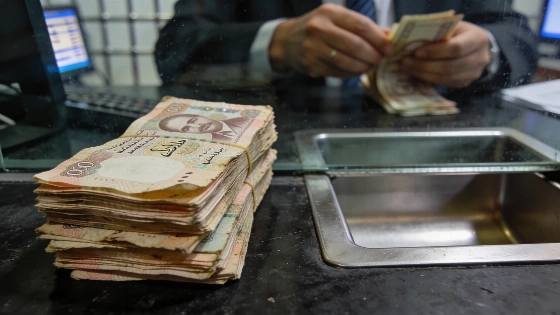
A sweeping Egyptian bank fraud case with 34 defendants and three banks is on hold until November. The court is giving time for possible settlements in a scheme involving forged documents and over EGP 1.8 million in fraudulent loans.
On 28 September 2026, the Cairo Criminal Court hit pause on a major fraud case. The trial involves a former Commercial International Bank (CIB) employee and 33 others. The next hearing is now set for 26 November. The court wants to give both sides a chance to settle. This case has put a spotlight on gaps in Egypt's banking security. Local press reports say the scheme used fake documents to get credit from three banks. The story has drawn attention because bank staff were involved and the fraud ran deep. Al-Masry Al-Youm covered the details.
Prosecutors say the group used forged job records and fake company paperwork to get loans and credit cards from CIB, Mashreq Bank, and United Bank. The paperwork claimed jobs at companies like Green Island, Al-Hamad, and Badr for General Contracting. This let them tap into credit they should not have had. The case is in the first instance court. Proceedings continued through late September 2026, according to Al-Masry Al-Youm.
How the scheme worked
The investigation found the operation was organized. The first defendant, A.M., once worked as a customer relations officer in Mashreq Bank's payroll department and as a sales employee at CIB. He is accused of helping clients get EGP 1,007,100 from Mashreq Bank using fake documents that said they worked for Green Island.
Investigators say A.M. also arranged credit for Green Island employees at CIB. Seven people, including the third defendant M.M., got unauthorized credit this way. A.M. is also accused of working with the late M.A., a former National Organization for Social Insurance employee, and others to forge social insurance certificates and HR letters for Green Island. These documents fooled the banks.
M.H., another key player and a CIB sales employee, is accused of helping defendants 20 to 32 get EGP 827,800 by pretending to work at Al-Hamad. M.H. also allegedly helped others get more money from CIB. The sums ranged from EGP 8,000 to EGP 133,100. The investigation says M.H. and others forged social insurance certificates and HR letters for Al-Hamad to back up their loan requests.
Money trail and breakdown
The prosecution laid out the numbers. Defendants linked to Green Island are accused of taking EGP 1,007,100 from Mashreq Bank. Individual amounts ranged from EGP 56,500 to EGP 194,000. Those claiming to work for Al-Hamad reportedly got EGP 827,800 from CIB, with payouts per person from EGP 8,000 to EGP 133,100. There were also cases where forged documents unlocked credit from United Bank and CIB. One defendant allegedly used a fake HR letter from Mecca Company to get EGP 18,000 from United Bank.
H.K. is accused of getting EGP 13,860 from CIB by pretending to work at Badr for General Contracting. He had already received a loan and credit card from Mashreq Bank under the Green Island ruse. Another defendant allegedly got EGP 16,000 from United Bank using fake Al-Hamad paperwork. Prosecutors say K.S. took EGP 163,800 from CIB with false Al-Hamad job records.
Legal process and what's next
One defendant, M.A., is out of the case after dying. The other 33 face charges of fraud, forgery, and taking money illegally. The court's delay until 26 November is meant to give time for settlements between banks and the accused. That could change the outcome and any payback deals. So far, CIB, Mashreq Bank, United Bank, and the Egyptian Public Prosecution have not made official statements about this case. Most details come from local Arabic-language press.
Egyptian law sometimes lets criminal cases pause or end with a settlement in financial crimes, especially if the money is paid back. But this case is big. It covers several banks, fake official documents, and a web of accused people. That makes it hard for Egypt's banks to spot and stop complex fraud. The Central Bank of Egypt (CBE) has stepped up its checks on banks and fraud controls in recent years. It follows global rules from the Bank for International Settlements (BIS) and advice from the International Monetary Fund (IMF).
Prosecutors say the total fraud tops EGP 1.8 million. The biggest chunk came from the Green Island group's dealings with Mashreq Bank. The breakdown shows the accused worked in a systematic way. They took advantage of weak bank checks and fake paperwork. This is happening while Egypt's banks face more scrutiny. The CBE is watching credit risk and foreign exchange exposure closely. The Egyptian pound (EGP) has been volatile, and inflation is still high. The CBE's overnight deposit rate is now 19.25%. That's after several rate hikes to fight inflation, which has stayed above 30% year-on-year in recent quarters. The CBE policy committee tracks these changes.
How bank fraud and forgery work
Bank fraud with fake documents usually means making up job records, salary slips, or social insurance papers. The goal is to trick banks into thinking someone is a good credit risk. In Egypt, banks ask for proof of work and income before giving loans or credit cards. If these papers are fake, banks might give money to people who can't or won't pay it back. That leads to losses and more checks on bank systems. Using fake stamps or seals, as in this case, makes it even harder to spot the fraud. Bank staff can struggle to tell real from fake without strong checks. The Central Bank of Egypt, working with the IMF and BIS, keeps pushing for better anti-fraud steps and global banking standards. The aim is to protect the financial system.