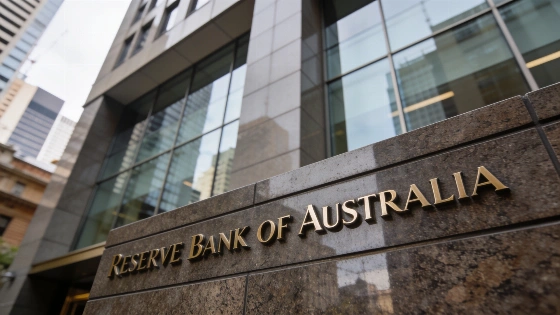
Goldman Sachs expects the Reserve Bank of Australia to keep its policy rate unchanged through 2026, reinforcing the Australian Dollar's appeal as inflation and economic data remain closely watched by markets
The Reserve Bank of Australia (RBA) is expected to maintain its policy rate at 4.35% through the end of 2026, according to analysts at Goldman Sachs. This stance positions Australia among the G10 economies with the most restrictive monetary settings, supporting the Australian Dollar's relative strength even as inflation and growth risks persist.
Following the RBA's August decision to leave rates unchanged, the central bank signaled a preference for patience rather than a definitive end to tightening. While the current rate is considered restrictive, the RBA has not ruled out further increases if inflation deviates from its projected path. Governor Michele Bullock emphasized that the board remains open to additional hikes should price pressures re-emerge, but for now, the focus is on monitoring incoming data.
Inflation, Data, and Policy Risks
Goldman Sachs believes the 4.35% cash rate is already sufficiently tight to bring inflation closer to target, provided the economy evolves as forecast. The RBA projects annualized trimmed-mean inflation at 3.4% for the third quarter and 3.2% for the fourth quarter of 2026-figures that are about 0.3 percentage points higher than Goldman's own estimates. This difference underpins the case for an extended period of steady rates, as softer inflation, labor market, and housing data could allow the RBA to wait before making any further moves.
Despite the hold, the risks remain tilted toward another rate increase rather than an early cut. The impact of the last three rate hikes is still filtering through the economy, affecting both households and businesses. Governor Bullock noted that the board needs more evidence before considering any change, highlighting that the balance of risks is "skewed to the upside on inflation."
Exchange Rate Performance and Market Consensus
In 2026, the Australian Dollar (AUD) has appreciated 6.08% against the United States Dollar (USD), and 8.72% over the past year. As of the latest available rates, AUD/USD stands at 0.707916, up 0.21% on the day. The Pound Sterling to Australian Dollar (GBP/AUD) is at 1.912011, while GBP/USD is at 1.353544. These figures reflect the AUD's resilience amid global monetary tightening and shifting inflation expectations.
Market consensus, as reflected in the Exchange Rates UK Research Currency Forecast Consensus Survey, anticipates a gradual but constructive outlook for the AUD. Median projections for AUD/USD are 0.70 for the third quarter, 0.71 for the fourth quarter, and 0.73 by the second quarter of 2027. With the current rate already above the near-term median, the RBA's steady policy supports the currency's carry appeal, though it does not guarantee a continued rally.
Comparing Global Currency Drivers
The Australian Dollar's outlook is shaped not only by domestic policy but also by global factors, including the direction of the US Dollar and broader market sentiment. For context, a recent analysis of the US Dollar's prospects highlights how earnings, bond yields, and commodity prices can send mixed signals for currency markets. Readers interested in how these global drivers interact can find further discussion in this detailed look at six key market signals for the US Dollar in 2026.
For the Australian Dollar, the combination of a relatively high policy rate, cautious central bank guidance, and ongoing data dependence means that both upside and downside risks remain. An unexpected inflation surge could quickly revive expectations of further tightening, while weaker economic data might eventually open the door to rate cuts. For now, the RBA's extended hold preserves the AUD's yield advantage without committing to a particular future path.
Central banks use policy rates as their main tool to influence inflation and economic activity. A higher policy rate typically makes borrowing more expensive, which can slow spending and help bring down inflation. However, the effects of rate changes are not immediate; it can take months for households and businesses to feel the full impact. This lag is why central banks, including the RBA, often emphasize patience and data dependence when setting policy. The balance between controlling inflation and supporting growth is delicate, and even small changes in inflation or employment data can shift the outlook for interest rates and currency values.