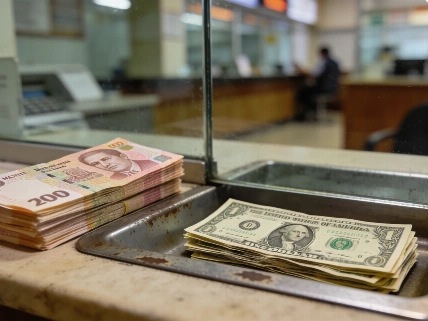

The Australian dollar is set for its longest weekly winning streak since 2021, as persistent inflation and expectations of further Reserve Bank of Australia rate hikes drive the currency higher against its global peers
The Australian dollar (AUD) advanced to its highest level in three months on Friday, positioning itself for a ninth consecutive weekly gain against the United States dollar (USD)-a run not seen since early 2021. This sustained appreciation has been driven by unexpectedly strong domestic inflation data, which has reinforced market expectations that the Reserve Bank of Australia (RBA) may need to tighten monetary policy further in the coming months.
At the end of the week, the AUD traded close to 0.7185 USD, outperforming most major currencies. The move followed the release of July consumer price figures that exceeded forecasts, prompting investors to reassess the likelihood of additional RBA rate increases. The persistence of inflation in Australia has made the currency more attractive to investors seeking higher yields, especially as other central banks signal caution or pause their own tightening cycles.
Global Currency Markets Hold Steady
While the Australian dollar led gains, the broader currency market remained subdued. The U.S. dollar index, which tracks the greenback against six major currencies, hovered near a one-week high at 99.16, supported by steady core inflation and elevated U.S. Treasury yields. Investors largely refrained from making significant moves ahead of Federal Reserve Chair Kevin Warsh's first keynote address at the Jackson Hole symposium, a closely watched event for signals on future U.S. monetary policy.
According to CME FedWatch data, financial markets are currently pricing in a roughly 35% chance of a 25-basis-point rate hike by the Federal Reserve in September, with the probability rising to nearly 75% for a move by December. The resilience of long-term U.S. Treasury yields has helped underpin the dollar, limiting gains for many emerging market currencies and keeping major currency pairs within recent trading ranges.
Regional Moves: South Korean Won and Japanese Yen
Policy divergence among Asian central banks produced notable moves in regional currencies. The South Korean won (KRW) emerged as the strongest performer of the day, with the USD/KRW pair falling 0.7% to 1,371.60 won-its firmest level since July 2025. The won's rally accelerated after the Bank of Korea raised its benchmark interest rate by 25 basis points to 3% on Thursday, marking a second consecutive increase and pushing borrowing costs to an 18-month high. Bank of Korea Governor Shin Hyun-song indicated that while further tightening remains possible to contain inflation, future adjustments are likely to be gradual as the central bank assesses the cumulative impact of recent hikes.
Elsewhere, the Japanese yen (JPY) traded little changed at 159.40 per dollar, maintaining a modest 0.3% weekly gain and staying below the key 160 threshold. Market participants continue to watch for signs that the Bank of Japan could raise rates as soon as September. The Indian rupee (INR) also remained stable, with traders awaiting further guidance from the U.S. central bank before taking new positions.
Inflation and Policy Expectations Drive Currency Moves
Persistent inflation remains a central theme shaping currency markets in 2026. In Australia, the latest consumer price data has prompted a reassessment of the RBA's policy path, with investors now expecting the central bank to consider further rate hikes to anchor inflation expectations. This stands in contrast to some other advanced economies, where central banks have signaled a pause or slowdown in tightening as inflation shows signs of easing.
Recent trends in emerging market currencies have also reflected shifting policy expectations and global risk sentiment. As highlighted in a recent analysis of emerging market currency performance, the interplay between U.S. dollar strength, local inflation, and central bank actions continues to drive volatility and opportunity across global currency markets.
Key Data and Market Context
For the week ending Friday, the Australian dollar was on track for its ninth straight weekly gain against the U.S. dollar, a streak last matched in January 2021. The AUD/USD pair reached 0.7185, while the U.S. dollar index remained nearly flat at 99.16, up about 0.4% for the week. The South Korean won strengthened to 1,371.60 per U.S. dollar, its best level in over a year, following the Bank of Korea's rate hike to 3%. Meanwhile, the Japanese yen held at 159.40 per dollar, and the Indian rupee traded within recent ranges.
Looking ahead, currency markets remain sensitive to upcoming central bank communications, particularly from the Federal Reserve and the Reserve Bank of Australia. The balance between inflation risks and policy responses will likely continue to shape exchange rates and capital flows in the months ahead.
Central banks play a pivotal role in shaping currency values through their policy decisions, especially in periods of persistent inflation. When inflation remains above target, central banks may raise policy rates to cool demand and anchor expectations, which can make a currency more attractive to international investors. However, higher rates can also slow economic growth and increase borrowing costs domestically. The timing and magnitude of policy moves are often influenced by a combination of domestic data, global financial conditions, and the actions of other major central banks. As a result, currency markets frequently react not only to actual decisions but also to changes in expectations and forward guidance from monetary authorities.
- Weekly Currency Recaps
- Central Banks
- Policy Decisions
- Inflation and Currency Effects
- Australia
- India
- Japan
- South Korea
- United States
- Australian dollar (AUD)
- Indian rupee (INR)
- Japanese yen (JPY)
- South Korean won (KRW)
- United States dollar (USD)
- Federal Reserve
- Bank of Japan
- Reserve Bank of Australia
- Bank of Korea