Arada has brought Australian construction firm Roberts into the UAE market, aiming to leverage its experience to boost efficiency and reduce costs across large-scale development projects in Sharjah and Dubai
Roberts, a major Australian contractor, now has boots on the ground in the United Arab Emirates. Arada made the call. The Sharjah-based developer is not just hiring outside help. It is putting Roberts at the heart of its project pipeline. The goal is clear: tighter cost control and better build quality, starting from the design table. The UAE dirham (AED) stays pegged to the US dollar. That peg holds steady. The Central Bank of the UAE keeps backing this policy. Currency risk? Not here.
This is more than importing know-how. Arada wants to shake up how big projects get built in the UAE. Efficiency and cost discipline are now front and center. Roberts has set up a full UAE headquarters. The company is not just passing through. It is taking on a central role in Arada's growing list of projects-residential towers, infrastructure, and social spaces. The timing matters. The Federal Reserve's interest rate moves keep shifting global funding costs. That hits project finance in dollar-linked economies like the UAE.
Strategic integration for construction efficiency
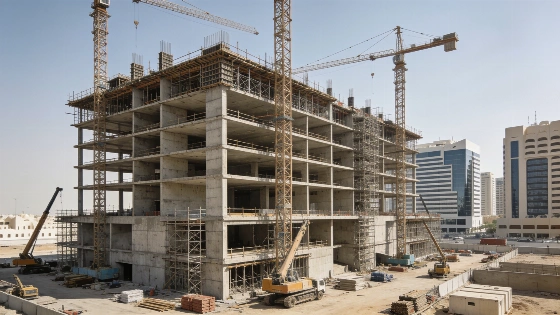
Roberts' first job in the UAE is the second phase of Arada Central Business District. This is a big commercial hub inside the AED 35 billion Aljada project in Sharjah. Roberts is also working on pre-construction planning for several Arada projects in Dubai and Sharjah. This is not a short-term play. Arada is in for the long haul. The company's push into Abu Dhabi stands out. On 30 September 2026, Arada and Aldar announced a partnership worth about AED 15 billion (USD 4.08 billion). That's a huge capital commitment for the sector, as reported by Zawya.
Arada bought Roberts in 2025. That came after Arada's own move into Australia. Roberts brings a long record. The company has delivered complex projects in healthcare, education, commerce, housing, hospitality, industry, life sciences, and defense. Now, Arada wants that experience inside its own operations. The aim is to cut out duplication, speed up delivery, and keep a tight grip on budgets and timelines. The Aldar partnership also covers a mixed-use community in Seih Sdeirah. The site could reach 1.5 million square meters. Plans call for villas, townhouses, shops, and recreation, according to Arabian Business.
Competitive edge through global expertise
Arada's leaders say Roberts is here to add to-not replace-local contractor ties. The plan is to bring in new methods and fresh thinking. The UAE construction sector needs it. Margins are tight. Developers want better standards and lower costs. The Bank for International Settlements (BIS) points out that cross-border integration like this can help manage currency risk and make operations more resilient in emerging markets.
Roberts' CEO says the company was built on finding better ways to build. The UAE is a big stage for that idea. The core team is in place. The first project is underway. Roberts now has a shot to prove itself on some of the region's biggest jobs. There's more. Arada has picked up three residential land plots on Yas Island from Aldar. The total area is over 27,500 square meters. The potential gross floor area is close to 130,000 square meters. The price is still under wraps, as noted by EnterpriseAM.
Facts and figures
Arada is working on projects worth AED 171 billion across the UAE, UK, and Australia. The group has already delivered more than 17,500 homes. Aljada alone is valued at AED 35 billion. That's a massive investment. It demands strict project management. Roberts' integration is expected to boost efficiency, cut costs, and give Arada a stronger edge in the market. The dirham's stability, thanks to the UAE's currency board, keeps investors confident and helps with long-term planning. The IMF country reports back this up.
Industry context and operational impact
Developers across the industry are pulling more construction work in-house. They want to control the value chain and rely less on outside contractors. This helps cut risks-delays, cost overruns, and uneven quality are common headaches in big builds. Other sectors have done the same. Banks like Emirates NBD Egypt have woven services into daily life to build loyalty and resilience, as reported earlier. Arada's move signals a shift to more direct control and integration.
Roberts' arrival through Arada's industrial arm is not just another market entry. It is a test. Can global expertise, built into the core of project development, really deliver better efficiency, cost control, and quality? If it works, other regional developers may rethink how they handle project delivery and supply chains.
When a developer controls design, engineering, and execution from the start, project outcomes can change. There is less risk of miscommunication, duplication, or late changes that drive up costs and cause delays. This model is tough to manage. It takes strong coordination. But it can bring more transparency, accountability, and better alignment of goals across the whole project. The UAE's real estate and infrastructure sectors are still growing fast. Industry players and investors will be watching to see if this integrated approach pays off. The stakes are high.