
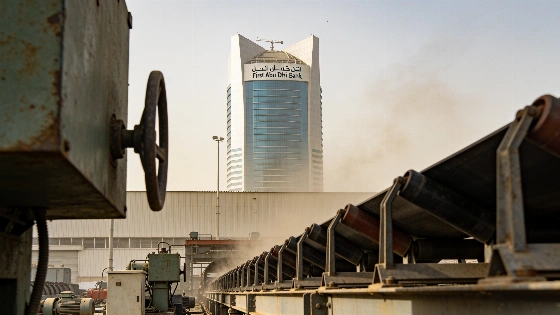
Ajij Steel, part of National Building and Marketing, clinched a SAR 75 million sharia-compliant loan from First Abu Dhabi Bank for working capital. The five-month deal puts Islamic finance at the center of Saudi industrial funding.
Ajij Steel moved quickly to shore up its cash position, signing a SAR 75 million sharia-compliant loan with First Abu Dhabi Bank. The company, a subsidiary of National Building and Marketing, opted for a short-term facility that fits the immediate needs of its steel operations. Saudi Arabia's currency peg to the US dollar, maintained by the Saudi Central Bank (SAMA), continues to anchor cross-border deals like this, as detailed in recent SAMA monetary policy updates.
This loan runs for just five months. Ajij Steel is betting on fast-turning working capital rather than locking into a long-term commitment. The deal comes with a performance guarantee and a promissory note, both standard for these facilities. Company filings on the Saudi stock exchange confirm no related parties are involved. Independent checks show no early repayment, extension, or default, and no extra details on interest or fees have surfaced. That lines up with the transparency rules set by the International Monetary Fund (IMF).
Sharia-compliant finance has become routine for Saudi firms balancing operational needs with religious and regulatory rules. Ajij Steel's move follows other recent deals, including Ben Dawood Holding's SAR 217.8 million revolving credit for a food sector buyout, as previously reported. These deals show how Islamic banking products now underpin both acquisitions and daily business funding. The Bank for International Settlements (BIS) points to Islamic finance as a driver of financial inclusion and resilience in the Gulf, especially as global rates have swung sharply after recent Federal Reserve (Fed) tightening.
Ajij Steel will use the SAR 75 million strictly for working capital. That means keeping production lines running and suppliers paid on time. The five-month term hints at a tactical play, likely tied to cash flow cycles or short-term procurement, not a full-scale balance sheet overhaul. The riyal's dollar peg has shielded Saudi borrowers from recent currency swings, but demand for sharia-compliant liquidity has climbed across the region as a hedge against global monetary shocks, as seen in recent European Central Bank (ECB) and Fed meeting minutes.
The SAR 75 million facility, worth about USD 20 million, follows Islamic finance rules. No interest is charged; instead, the bank uses profit-sharing or asset-based contracts. The performance bond and promissory note give the lender recourse if Ajij Steel defaults. No related-party involvement means fewer conflicts of interest and tighter corporate governance. Still, there's no public data on the actual drawdown, fees, or the financial impact of the five-month loan. No record exists of previous credit agreements between Ajij Steel, National Building and Marketing, and First Abu Dhabi Bank, based on available disclosures and Reuters/TradingView data.
Short-term working capital loans like this keep Saudi industry moving, especially in sectors with volatile costs or seasonal swings. Five months is a tight window compared to most corporate loans, suggesting a specific project or a bridge to longer-term funding. The Bank of England (BoE) has stressed in recent stability reports that short-term liquidity is vital for corporate cash flow during market stress, a point that holds for both conventional and Islamic finance.
Islamic finance dominates Saudi banking, with sharia-compliant products shaping both retail and corporate lending. These avoid interest, using murabaha (cost-plus), ijara (leasing), or mudaraba (profit-sharing) structures. For industrial firms, sharia-compliant working capital loans offer liquidity without breaking religious or regulatory lines, while banks tap a growing market for specialized products. SAMA keeps a close watch, enforcing both sharia and prudential standards across the sector.
Banks have ramped up sharia-compliant lending for acquisitions and operations, tailoring deals for Saudi corporates. The Ajij Steel loan fits this pattern, showing how Islamic finance supports the country's industrial push. As the Fed and other central banks shift policy rates to tackle inflation and global shocks, the riyal's stability and the strength of sharia-compliant lending remain central for Saudi businesses facing a changing monetary environment.
Working capital facilities are short-term loans or credit lines that companies use to pay suppliers, manage inventory, and cover payroll. Unlike term loans for capital investment, these are usually repaid within months and secured by receivables or inventory. Sharia-compliant versions avoid interest, relying on alternative contracts to stay within Islamic law while providing needed liquidity. For more on Saudi monetary policy and regulation, see the Saudi Central Bank official site.