Jefferies expects Abu Dhabi First Bank to post double digit annual credit growth through 2026, fueled by government lending and non interest income. The bank is now Jefferies' top UAE stock pick with a 24.5 dirham target.
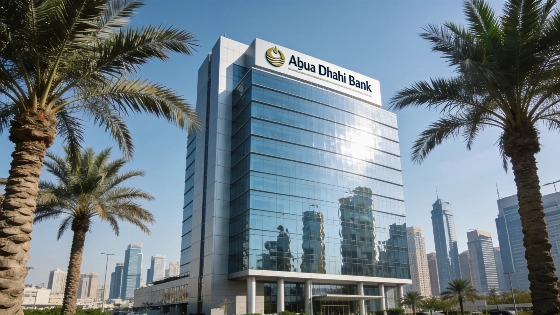
Jefferies has put Abu Dhabi First Bank (FAB) in the spotlight. The bank could see double digit credit growth each year through 2026. Jefferies says new lending could top $100 billion. This comes after a North American investor roadshow. FAB's management told investors they expect strong demand for loans and more non interest income.
The numbers back up that optimism. By the end of 2025, FAB's assets are set to reach 1,403,864 million AED, or about 1.4 trillion AED. Net profit stands at 21,110 million AED. Total debt is 164,454 million AED. These figures make FAB the biggest bank in the UAE by assets, according to Reuters financials. That's a huge lead.
Jefferies' latest research points to FAB's deep ties in Abu Dhabi. The bank now controls more than 30 percent of government and government related lending in the country. This part of the market is growing fast. Lending in this segment is up 13 percent since January and 25 percent year on year as of July 2026. FAB's grip on this market comes from its close links to the public sector and state-backed groups. The UAE's monetary policy, with the dirham pegged to the US dollar and oversight from the Central Bank of the UAE, has kept the system stable. That stability has helped credit grow across the region.
Government lending drives the surge
Most of the expected credit boom comes from a wave of capital spending across the UAE. Government and quasi government borrowers are leading the charge. Jefferies says this trend picked up after recent geopolitical tensions, especially after the Iran-United States conflict. The focus has shifted to infrastructure and strategic projects. Government related entities are now the main force behind the lending surge. That cements FAB's top spot in the market.
The latest Al Etihad review shows UAE banks' total loans rose 4.2% quarter on quarter. Deposits went up 2.3%. FAB's assets are now estimated at about 1.409 trillion AED. The bank's cost-to-income ratio is close to 21%. That shows strong efficiency and resilience, well above what regulators require.
FAB's strengths go beyond regular loans. The bank is active in hedging, structuring, asset management, debt capital markets, and transaction banking. These areas are set to bring in non interest income above what analysts expect. Jefferies highlights FAB's goal to hit a tangible return on equity above 16 percent. This measure leaves out intangible assets and gives a clearer view of shareholder returns. FAB is also busy with big international deals. The recent $5 billion Nigeria swap syndication, reported by Bloomberg, shows the bank's growing reach in cross-border markets. FAB is handling foreign exchange and credit risk in a tough global climate.
Analyst view and market position
Jefferies has kept its "buy" rating on FAB shares. The target price is 24.5 dirhams. FAB is now Jefferies' top UAE equity pick. The bank's size, government links, and ability to capture growth in the most active lending segment set it apart. This fits with what's happening across the region. Leading banks are using capital and government ties to pull ahead, as seen with Emirates NBD Egypt's rise in Africa's banking ranks.
FAB's long-term issuer rating is AA- with a Stable Outlook, reaffirmed by Fitch. The bank's capital and liquidity stay above regulatory minimums, according to the Gulf Capital Market Association and the Central Bank of the UAE. That's a strong foundation.
Jefferies notes that FAB's lending to government and related entities has jumped. The sector's year on year growth hit 25 percent by July 2026. Non interest income, helped by capital markets and asset management, is set to beat analyst forecasts. The bank aims for a tangible return on equity above 16 percent in the medium term. That shows a focus on steady profits. UAE monetary authorities, along with global central banks like the Federal Reserve and the Bank for International Settlements, keep a close eye on liquidity and credit growth. Their goal is to keep the financial system stable as global rates rise and currency markets shift.
What is tangible return on equity?
Tangible return on equity (ROTE) is a key measure for banks. It's calculated by dividing net income by tangible equity, which leaves out intangible assets like goodwill. This gives investors a clearer sense of how well a bank uses its core capital. FAB's target of a ROTE above 16 percent signals a push for strong, steady returns to shareholders. The bank is expanding lending to government and related sectors. In the UAE's changing financial scene, a high ROTE points to solid operations and careful risk management. This is especially true when growth is tied to government-backed sectors. For more on monetary policy and regulations, see the BIS statistics portal.