
While commemorative coins are a familiar part of US currency, the country has never released a limited-edition commemorative banknote. Other nations have embraced this practice-so what holds the US back from joining them
Commemorative coins have long been a fixture in the United States, marking anniversaries, historical figures, and national milestones. Yet, despite a global trend toward issuing commemorative banknotes, the US has never produced a true commemorative note-one designed for a specific event and issued for a limited time. This stands in contrast to countries such as China, Sweden, and Scotland, which have all played significant roles in the evolution of commemorative paper money.
The first known use of paper money dates back to China's Song Dynasty in the 10th and 11th centuries. Europe followed centuries later, with Sweden introducing banknotes in 1661. Scotland is credited with the first commemorative banknotes, issued by the private Leith Bank in 1822 to honor King George IV's visit to Edinburgh. These notes, produced in denominations like £1, guinea, and £5, were explicitly tied to a single event-a defining feature of commemorative currency.
Commemorative Notes: Global Practice, US Exception
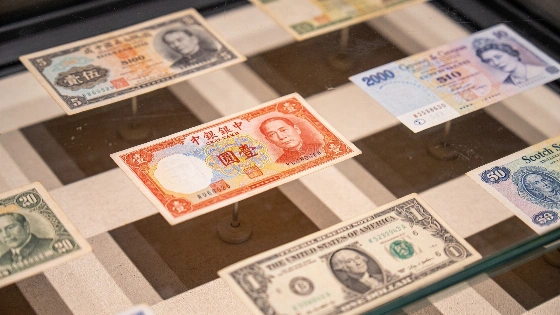
Globally, commemorative banknotes have become a way for central banks to celebrate national achievements, anniversaries, or cultural milestones. These notes are often produced in unusual denominations or with distinctive designs, and are typically available for a limited period. For example, China has issued several commemorative notes in recent decades, including a 100-yuan note for the 2008 Beijing Olympics and a 50-yuan note for the 70th anniversary of the renminbi.
In the United States, however, the closest equivalent is the Series 1976 $2 Federal Reserve Note, which was released to coincide with the US Bicentennial. Despite its timing, the $2 note was not officially designated as commemorative and remains in circulation today. Its status is similar to the Washington quarter, which was initially intended as a commemorative coin in 1932 but became a permanent part of the coinage system. True commemorative notes, by contrast, are defined by their limited issuance and explicit connection to a specific event.
Profit, Policy, and Practicality
Commemorative banknotes can be highly profitable for issuing authorities, especially when sold at a premium to collectors. Unlike coins, which require expensive metal and minting processes, banknotes are relatively inexpensive to produce. Many countries have capitalized on this by issuing non-circulating legal tender notes-notes that are technically valid for payment but are not intended for everyday use. These often feature unique designs and are sold directly to collectors, generating revenue for the treasury.
Despite the potential financial benefits, the US Treasury and Federal Reserve have so far focused their commemorative efforts on coins. The reasons are partly institutional and partly cultural. The US has a long tradition of stable, standardized currency, and changes to banknote design or issuance typically require legislative approval. There is also a perception that commemorative notes could confuse the public or complicate cash handling, especially if issued in unfamiliar denominations.
Facts and Figures: Commemorative Currency in Context
According to the International Bank Note Society, more than 60 countries have issued commemorative banknotes since the 1980s. China alone has released over a dozen commemorative notes since 1999, with print runs ranging from several million to over 100 million notes. In contrast, the US has issued hundreds of commemorative coins but no officially designated commemorative banknotes. The Series 1976 $2 note, while sometimes viewed as commemorative, remains a standard circulating denomination and is still produced in limited quantities each year.
The US Mint's approach to commemorative currency is illustrated by its recent decision to issue a President Donald J. Trump $1 coin for the nation's 250th anniversary, available in rolls and bags but not for general circulation. This strategy, described in detail in a recent report on the 2026 Trump $1 coin, highlights the preference for coins over notes when marking national milestones.
What Makes a Banknote Commemorative?
For a banknote to be considered truly commemorative, it must be issued for a specific event, produced in limited quantities, and often withdrawn from circulation after a set period. Many countries issue such notes in denominations not used for everyday transactions, further distinguishing them from standard currency. In the US, the absence of commemorative notes reflects both regulatory caution and a conservative approach to currency design. While collectors and some policymakers have periodically called for commemorative banknotes, no formal proposal has advanced to the point of production.
As the US continues to mark major anniversaries and historical events, the question remains whether it will eventually join the ranks of countries issuing commemorative banknotes-or whether coins will remain the preferred medium for national celebration.
The distinction between circulating and non-circulating legal tender is central to understanding commemorative currency. Circulating notes are intended for everyday transactions and must be accepted for payment, while non-circulating legal tender is valid in theory but not distributed through banks or ATMs. These notes are typically sold to collectors and may carry a face value, but their market price is often higher due to limited supply and unique designs. The US has used this model extensively for coins, but has yet to apply it to paper money. The decision to issue commemorative banknotes would require balancing public understanding, collector demand, and the operational needs of the currency system.