
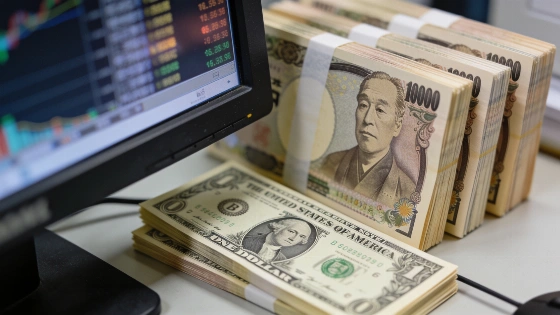
The US dollar climbed to a one-week high, supported by safe haven demand and higher Treasury yields, while the Japanese yen slipped past 158 per dollar despite recent coordinated intervention efforts
The US dollar strengthened against major currencies on Thursday, reaching its highest level in a week as investors sought safety ahead of key US labor market data. The move came as US Treasury yields rose, reflecting market uncertainty about the direction of monetary policy and the global economic outlook. Meanwhile, the Japanese yen weakened sharply, crossing the 158 mark against the dollar for the first time since a recent high-profile intervention by Japanese and US authorities.
At 14:33 ET (18:33 GMT), the US dollar index-which measures the dollar against six major currencies-was up 0.3% at 99.94, recovering from a seven-week low recorded in the previous session. The dollar's rebound followed a period earlier in the week when investors favored riskier assets, such as equities, amid hopes for progress in Middle East negotiations and a temporary easing in oil prices.
Safe Haven Demand and Treasury Yields
Market sentiment shifted as oil prices rebounded on Thursday after reports suggested that a proposed framework to reopen the Strait of Hormuz would restrict passage for US and other "hostile" vessels until compensation was paid. According to Iranian media, the plan would alter shipping routes and could disrupt global energy flows if implemented, raising concerns about inflation and supply risks. These developments contributed to renewed demand for the dollar as a safe haven asset.
Rising US Treasury yields also played a role in supporting the dollar. Investors sold government bonds amid uncertainty over the Federal Reserve's next moves, with attention focused on Friday's release of the July nonfarm payrolls report. Recent US labor data has been mixed: job openings and private employment growth have slowed, but initial jobless claims have remained historically low, suggesting continued resilience in the labor market. The outcome of the payrolls report is expected to influence expectations for future interest rate decisions.
Yen Slides Despite Intervention
The Japanese yen's decline was another major story in currency markets. On Thursday, the USD/JPY exchange rate rose 0.4% to 158.39, breaching the 158 level for the first time since last week's intervention. Earlier this week, US Treasury Secretary Scott Bessent confirmed that the United States had joined Japan in direct market action to support the yen-a move not seen since 2011, and the first time the US specifically intervened to strengthen the yen since 1998. The intervention followed the yen's slide to a forty-year low of 164 per dollar, which had raised concerns about financial stability in Japan and across Asia.
Japan is the largest foreign holder of US Treasury securities, and interventions to support the yen typically involve selling US assets to buy yen. However, analysts caution that such measures may only provide temporary relief unless accompanied by changes in Japan's monetary policy. Calls for the Bank of Japan to raise its policy rate have grown louder, as a persistently weak yen increases import costs and complicates inflation management.
Key Data and Market Implications
According to data from Investing.com, the US dollar index rose 0.3% to 99.94 at 14:33 ET on Thursday, while the USD/JPY rate climbed to 158.39. The yen had previously touched 164 per dollar before the intervention. US labor market indicators for July have shown mixed signals, with job openings and private employment growth slowing, but initial jobless claims remaining below 200,000 for three consecutive weeks-a streak rarely seen since the late 1960s.
Volatility in oil prices, driven by geopolitical tensions in the Middle East, has added to inflationary pressures and complicated the Federal Reserve's policy outlook. The central bank has recently shifted its focus more toward inflation management, but divisions remain among policymakers about the appropriate path for interest rates. The outcome of the July payrolls report is likely to shape market expectations for the remainder of the year.
Understanding Currency Intervention
Currency intervention refers to official actions by governments or central banks to influence the value of their currency in the foreign exchange market. This can involve direct buying or selling of currencies, often in coordination with other countries. While interventions can temporarily stabilize exchange rates, their effectiveness depends on broader economic and policy conditions. In the case of the Japanese yen, coordinated intervention with the United States provided immediate support, but lasting stability may require adjustments to Japan's monetary policy, such as raising policy rates. Interventions also carry risks, including potential market distortions and the depletion of foreign reserves if sustained over time.