
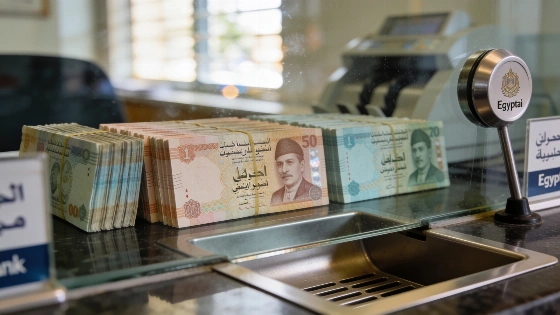
The UAE dirham opened Saturday with minimal movement against the Egyptian pound, as banks across Egypt posted nearly identical rates for both buying and selling the currency
Saturday morning brought no surprises for anyone watching the UAE dirham against the Egyptian pound. Egypt's banks opened with almost no difference in their posted rates. For travelers, businesses, and families sending money, this meant one thing. Predictable costs. No sudden jumps at the counter. The Central Bank of Egypt kept a close eye on the market, following standards set by the International Monetary Fund and the Bank for International Settlements.
Dirham rates barely budge
On 26 September 2026, Egypt's biggest banks all showed the same numbers. The National Bank of Egypt, Banque Misr, Commercial International Bank, Bank NBE Next, Al Baraka Bank, Egyptian Gulf Bank, and Housing and Development Bank listed the dirham at 14.07 EGP to buy and 14.11 EGP to sell. Market surveys backed this up. AED/EGP rates came in at 14.0704 for buying and 14.1126 for selling. The gap was tiny. These are the rates you get at the counter, not the ones used for big interbank deals. Businessmen EG confirmed the tight cluster.
Some banks posted slightly different numbers. Suez Canal Bank offered 14.06 EGP to buy and 14.11 EGP to sell. Alexandria Bank and First Abu Dhabi Bank both set buying at 14.05 EGP, with selling at 14.11 EGP and 14.10 EGP. The Industrial Development Bank and HSBC had the lowest buying rates at 14.03 EGP, with selling at 14.14 EGP and 14.06 EGP. Arab African International Bank posted 14.01 EGP to buy and 14.11 EGP to sell. This kind of uniformity stands out. The Egyptian pound has seen sharp swings in other currency pairs lately. The Federal Reserve and IMF both noted this in their regional reports.
Why the dirham-pound rate matters
Egyptians heading to the UAE, or families relying on remittances, feel every change in the dirham's rate. Businesses trading across borders do too. Even a small shift can add up fast on big deals. Right now, banks are moving in lockstep. That means low volatility. No real room for rate shopping. Earlier in the week, things were different. On 20 September 2026, the dirham hit 14.1439 EGP for buying and 14.1825 EGP for selling. SEE News tracked those numbers. The lesson is clear. Daily changes matter, especially for large transfers.
Banks update their rates often. Still, the opening numbers set the tone for the day. This Saturday's calm stands out. Sometimes, sharp moves or policy changes shake things up. That brings uncertainty and extra costs. Earlier reports showed global currency swings, but the AED/EGP pair stayed steady. The Central Bank of Egypt's approach matches the European Central Bank and Bank of England. They focus on clear rules and open communication.
Key figures and real impact
On 26 September 2026, most banks set the dirham at 14.07 EGP to buy and 14.11 EGP to sell. The spread was just 0.04 EGP. That's a slim margin for retail customers. Only a few banks strayed from this range. The lowest buying rate was 14.01 EGP. The highest selling rate was 14.14 EGP. For someone exchanging 1,000 dirhams, the difference between the best and worst rates was under 100 EGP. Not much room to hunt for a better deal. The National Bank of Egypt's rates on 22 September 2026 were 14.10 EGP to buy and 14.15 EGP to sell. The range has barely moved. NileFM reported the same trend.
How banks set exchange rates
Banks add a margin to the interbank or mid-market rate. That's how they cover costs and make a profit. The spread-usually 0.04 EGP here-is the bank's gross margin on cash or retail transfers. These margins are small compared to some other countries, but they still matter for big sums or frequent transfers. The Bank for International Settlements often points out the need for clear pricing and fair spreads in its global reviews.
Egypt's currency market moves fast. The central bank keeps a tight grip. This week's calm in the dirham is good news for customers. But rates can change quickly. Policy shifts, capital flows, or outside shocks can all move the market. Always check the latest numbers before making a big transfer. The pound's rate against the US dollar was still volatile this week. It improved by week's end. That matters for all currency pairs, including AED/EGP. Banks usually adjust their retail rates to match the pound's overall moves, as noted by Al Ahram English and the Federal Reserve's regional outlooks.
The AED/EGP rate depends on market demand, central bank policy, and how Egypt's banks operate. The Central Bank of Egypt doesn't set a fixed dirham rate. Still, banks keep their numbers close to avoid losing customers. For most people, the difference between banks is tiny-especially when the market is calm. For big corporate deals or international settlements, even a small change in the quoted rate can mean real money.