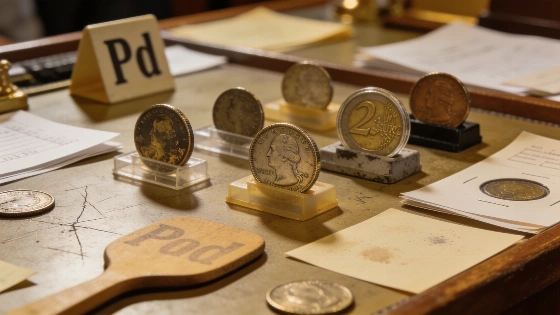
Collectors share their experiences selling coins at auction, from local club events to major online platforms, highlighting the practical challenges, costs, and evolving technology shaping the numismatic marketplace
For many coin collectors, selling coins at auction is both a practical necessity and a test of market knowledge. The process can range from informal local club events to highly structured sales at major auction houses or global online platforms. Each route offers distinct advantages and trade-offs, and the experience often depends on the value of the coins, the seller's goals, and the evolving landscape of numismatic commerce.
Choosing Where to Sell
Collectors often face a choice between local coin club auctions, established auction houses, and online marketplaces. Local clubs, such as the Buffalo Numismatic Association (BNA), provide a community-driven environment where members can auction coins without incurring seller fees. This makes them attractive for lower-value coins or modern mint products that may not justify the commissions charged by larger firms. However, higher-value coins may struggle to meet reserve prices in these settings, limiting their appeal for sellers seeking maximum returns.
Major auction houses-including Stacks, Bowers, Heritage, and Great Collections-offer access to a broader pool of buyers and professional marketing. These firms typically charge commissions, sometimes referred to as "the juice," which can significantly affect net proceeds. Sellers must weigh these costs against the potential for higher realized prices, especially for rare or high-demand items. The rise of online platforms such as eBay has further expanded options, allowing collectors to reach international audiences and benefit from competitive bidding, particularly for unusual or niche coins.
Online Auctions and Changing Technology
The internet has transformed the auction landscape, making it easier for collectors to buy and sell coins globally. Improved photography and digital catalogues have enhanced transparency and buyer confidence, reducing the need for in-person lot viewing and lengthy sale sessions. Sellers report that online auctions can generate strong results for certain items, especially when listings are well-presented and attract international interest. For example, a collector selling a rare New Zealand Health Issue first day cover (FDC) on eBay saw bidding escalate rapidly in the final hours, ultimately achieving a price five times the published book value-demonstrating the power of global reach and competitive dynamics.
However, not all experiences are positive. Some sellers find that timing and market conditions play a critical role in outcomes. Coins of average quality or limited collector interest may attract little attention, and sellers risk disappointment if they list items during periods of low demand. Fees, shipping costs, and the risk of non-payment or returns are additional considerations, particularly on peer-to-peer platforms.
Costs, Risks, and Practical Considerations
Understanding the fee structure is essential before consigning coins to auction. Major auction houses typically charge both seller and buyer commissions, which can total 15-25% or more of the final hammer price. Local club auctions may waive seller fees but offer lower visibility and liquidity. Online platforms like eBay charge listing and final value fees, and sellers must manage shipping, insurance, and potential disputes directly.
According to Numismatic News, the choice of auction venue should reflect the coin's value, the seller's willingness to accept risk, and the desired balance between convenience and potential return. Sellers with rare or high-value coins may benefit from the marketing power and authentication services of established auction houses, while those with lower-value or bulk items may find local clubs or online platforms more cost-effective. For those interested in the broader context of coin and bullion transactions, Michigan Coin & Bullion's approach to in-person evaluation and transparent pricing is explored in this detailed look at their operations in Bloomfield Hills.
Data from the Professional Numismatists Guild (PNG) indicates that in 2025, U.S. coin auction sales exceeded $600 million, with online platforms accounting for a growing share of transactions. The average seller commission at major U.S. auction houses ranged from 10% to 15%, while eBay's final value fee for coins and paper money was typically around 12.9% plus a fixed charge per transaction. These figures highlight the importance of understanding costs and market dynamics before selling.
Grading, Authentication, and Market Access
Before the widespread adoption of third-party grading and certification, successful auction participation required advanced grading skills and in-person lot viewing. Today, certification by recognized grading services has simplified the process, but sellers must still understand how grading affects value and buyer confidence. Accurate, high-quality images and detailed descriptions are essential for attracting competitive bids, especially in online settings where buyers cannot inspect coins directly.
Market access has expanded dramatically, but so has competition. Sellers must be realistic about the likely demand for their coins and the impact of timing, presentation, and venue selection. While some items may spark bidding wars, others may struggle to attract attention, particularly if similar coins are widely available or market sentiment is weak.
In the context of coin auctions, the distinction between face value, collector value, and market value is critical. Face value is the denomination assigned by the issuing authority, while collector value reflects rarity, demand, and condition. Market value is ultimately determined by what buyers are willing to pay at a given time and venue. Sellers should be aware that realized prices can fluctuate significantly based on these factors.