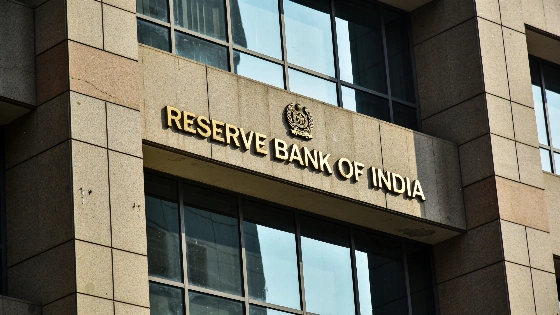
After two months of net foreign currency sales, the Reserve Bank of India shifted course in June, buying $561 million as the rupee stabilized and capital inflows surged following new policy measures
The Reserve Bank of India (RBI) shifted its approach in June 2026, moving from net foreign currency sales to net purchases as the Indian rupee stabilized against the United States dollar. According to data released by the RBI, the central bank bought a net $561 million in the foreign exchange market during June, reversing the pattern seen in April and May when it had sold $8.9 billion and $6 billion respectively. This change in direction reflects the RBI's ongoing efforts to manage currency volatility and respond to evolving capital flows.
In May, the rupee had weakened sharply, reaching a record low of 96.96 per US dollar. The decline was driven by higher oil prices linked to instability in the Middle East, which increased India's import costs and pressured the currency. However, the rupee's slide was halted in early June as the RBI introduced new policy measures designed to attract foreign capital and support the currency. These included a zero-cost hedging facility for banks' overseas foreign exchange deposits, which proved effective in drawing significant inflows.
Capital Inflows and Market Intervention
Between June 8 and August 21, the RBI reported nearly $73 billion in capital inflows, with the majority attributed to the new hedging facility. This surge in foreign currency deposits allowed the central bank to absorb excess dollars and reduce pressure on the rupee. The RBI's monthly bulletin showed that in June, it bought $30.89 billion and sold $30.33 billion in the spot market, resulting in the net purchase figure. The central bank's net outstanding forward dollar sales also declined, falling to $103.3 billion at the end of June from $106.7 billion a month earlier, indicating a gradual unwinding of previous interventions.
These developments follow a period of heightened volatility for the rupee, which had prompted the RBI to intervene more actively in the foreign exchange market. The central bank's actions are part of a broader toolkit used to manage liquidity, stabilize the currency, and maintain orderly market conditions. For context, the RBI's approach to managing large-scale inflows and its decision to close a discounted swap facility early after a surge in deposits was previously discussed in an analysis of India's currency management strategies, available here.
Facts and Figures
According to the RBI's June bulletin, the central bank's gold holdings remained unchanged at 880.52 metric tonnes since May 22. The net purchase of $561 million in June contrasts with net sales of $6 billion in May and $8.9 billion in April. The rupee's record low of 96.96 per US dollar in May marked a significant depreciation, but the currency has since stabilized as capital inflows increased and intervention measures took effect.
Understanding Central Bank Currency Management
Central banks like the Reserve Bank of India use a combination of direct market intervention, policy adjustments, and regulatory tools to influence currency stability. When a currency faces downward pressure, a central bank may sell foreign reserves to support its value or introduce incentives to attract foreign capital, as seen with the RBI's hedging facility. Conversely, when inflows are strong, the central bank may purchase foreign currency to prevent excessive appreciation and maintain export competitiveness. These actions are carefully calibrated to balance domestic economic objectives, external vulnerabilities, and the need for financial stability. The effectiveness of such interventions depends on market confidence, the scale of capital flows, and the broader global economic environment.