
A 1687 James II Five Guineas marked with an elephant and castle resurfaces at auction, exposing the coin's direct link to West African gold and the Royal African Company's role in Britain's monetary and colonial history
This September, a 41.94-gram gold coin from the reign of James II will appear at Sovereign Rarities Auction XXIII. The 1687 Five Guineas, stamped with an elephant-and-castle mark, is more than a rare piece of British currency. It's a direct artifact of the late seventeenth century, when monarchy, commerce, and the transatlantic slave trade were tightly linked. The Bank of England, now central to the UK's financial system, traces its beginnings to this era of expanding colonial wealth and new financial institutions.
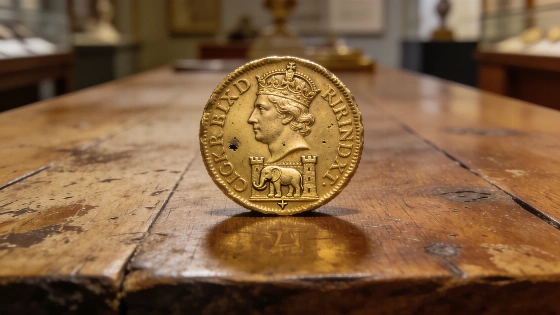
The coin's story is told in a small symbol beneath the king's portrait. The elephant and castle mark isn't decorative. It shows the gold came through the Royal African Company-a chartered business that traded in both precious metals and enslaved Africans. The Royal Mint Museum confirms this mark was used to identify the metal's source. The coin is tied to the economic and political systems that drove Britain's imperial ambitions and shaped its currency. The Royal African Company, founded in 1672 with James II as a leading figure, became the largest English participant in the transatlantic slave trade by the late 1600s (The Guardian).
Colonial gold and the elephant mark
The Royal Mint's choice to stamp some coins with the elephant-and-castle was a statement of origin. According to the Royal Mint Museum, this symbol identified gold supplied by the Royal African Company, which by the 1680s was shipping thousands of enslaved people each year along with bullion. James II had served as the company's governor before becoming king, leaving his mark on both the coinage and the company's operations. The Bank for International Settlements (BIS) notes that the global movement of bullion and the rise of standardized coinage were key to the development of modern foreign exchange markets.
In 1687, the Tower of London Mint produced Five Guineas, Guineas, and Half Guineas with the elephant-and-castle, but not the Two Guineas. Of the total British gold output of £401,301 that year, only a small portion carried the mark. A study published with the Samuel King Collection in 2005 found just 38 auction appearances of the 1687 Five Guineas with the mark between 1960 and 2005, compared to 127 for the standard issue. This rarity has led to high auction prices: Heritage sold an NGC MS60 example for $156,000 in 2020, and Spink sold an NGC AU55 coin for £50,000. The coin's standard weight is 41.94 grams of 22-carat gold (.917 fine), with a diameter of about 37 mm, matching Royal Mint specifications for high-value coins of the time.
Political upheaval and coinage reform
The coin was struck during a period of political and religious conflict. James II's reign, starting in 1685, saw growing tensions. His 1687 Declaration of Indulgence, which aimed to ease restrictions on Catholics and Protestant dissenters, alienated much of the political class. Within a year, William of Orange landed in England, James fled, and his rule ended. The Five Guineas was minted at the Tower of London during the last full year of his reign. This period also saw the early development of central banking in England, with the Bank of England founded in 1694, soon after these events (Bank of England history).
James II's reign was also the first in England to use only milled coinage, ending the centuries-old hammered process. Chief engraver John Roettier designed the king's laureate bust facing left, with the Latin inscription "IACOBVS II DEI GRATIA." The reverse shows four crowned cruciform shields and the legend "MAG. BR. FRA. ET. HIB REX." Raised edge lettering reads "DECVS ET TVTAMEN ANNO REGNI TERTIO," a phrase later used on the modern £1 coin.
Rarity and market evidence
The elephant-and-castle Five Guineas is recognized by collectors and historians as a rare coin. Its scarcity comes from both its age and its deliberate marking and limited production. The coin's specifications-41.94 grams of 22-carat gold, 37 mm diameter-are standard, but its provenance is not. Lot 170, the example offered by Sovereign Rarities, was last recorded as a private purchase from A. H. Baldwin in 2013. Bidding starts at £9,000, but recent sales suggest the final price could be much higher, especially for coins in better condition. The Bank of England's gold reserves and the pound sterling's historical gold standard connection highlight the importance of such coins in British monetary history.
Other lots in the auction show the evolution of Britain's largest gold coins, from Queen Victoria's 1887 Jubilee Five Pounds to the 2023 Charles III Coronation issue. But none have the same historical weight as the 1687 Five Guineas, whose metal and markings are inseparable from the economic and colonial realities of its time.
Historical consequences and perspective
The 1687 James II Five Guineas is more than a collector's item. It's a compact record of Britain's late seventeenth-century changes-political, technological, and moral. The elephant-and-castle mark is a direct link to the Royal African Company's role in the slave trade, a fact that cannot be separated from the coin's value. Auction houses and collectors may focus on rarity and condition, but the real significance of this coin is in what it reveals about the origins of British wealth and the systems behind it. As the numismatic market seeks ever-rarer pieces, the lesson of the 1687 Five Guineas is that the story behind the gold matters as much as the gold itself. The International Monetary Fund (IMF) has noted that the legacy of colonial-era capital flows still shapes modern currency systems and global financial stability.
For those interested in the intersection of coin collecting and historical accountability, coins like this are a reminder that the past is never fully gone. As reported earlier, the numismatic world is changing quickly, but the ethical questions raised by coins like the James II Five Guineas remain. How the market chooses to address these histories will shape the future of collecting as much as any new technology.
The elephant-and-castle mark on British gold coins is more than a mint symbol. It shows that the gold used in the coin came through the Royal African Company. This company, chartered in the seventeenth century, held a monopoly over English trade along the West African coast, including gold, ivory, and enslaved people. The mark provides a rare, tangible link to the global flows of wealth and exploitation that defined the era. For historians and collectors, understanding these marks is key to interpreting the broader economic and social context of Britain's coinage and its imperial expansion.