
Banks are shifting AI workloads from public to private cloud to cut costs and meet strict rules. New data shows a surge in sovereign cloud spending and a new approach to deploying large language models.
For global banks using artificial intelligence, the main challenge is no longer about finding the next big use case. The real test is whether their infrastructure can run AI securely, efficiently, and at scale. This is happening as central banks like the Federal Reserve and the European Central Bank (ECB) keep a close eye on inflation and financial stability. Digital change in banking is moving fast, and the pressure to control costs and follow the rules is growing.
Banks are moving from small AI pilots to full-scale rollouts. The old idea that public cloud is the best place for advanced models is now up for debate. In regulated markets, picking between public and private cloud is not just a technical choice. It is about compliance, cost, and control. The ECB has recently told banks to focus on data localization and operational resilience. Eurozone banks now face more questions about cross-border data flows and how they manage third-party risks.
Cost and compliance shape cloud choices
Running AI models, especially large language models (LLMs), costs a lot. Banks that already own big data centers are finding it can be much cheaper to run AI on their own hardware than to rent space from public cloud providers. Broadcom says 83% of enterprises are thinking about moving workloads back from public to private cloud, and more than half have already done it. Broadcom also says private cloud can cut total cost of ownership by three times compared to public cloud. This matters as banks try to make the most of their capital while interest rates and credit conditions keep changing, as seen in Federal Reserve monetary policy.
Rules add more complexity. Many countries have data sovereignty laws that say where sensitive data can be processed. Gartner predicts global spending on sovereign cloud infrastructure-usually built on private cloud-will hit $80.4 billion in 2026, up 35.6% from the year before. Banking is a big driver of this growth. China is expected to spend $47.4 billion on sovereign cloud IaaS in 2026, while North America will spend $16.4 billion and Europe $12.6 billion. These numbers show how rules and currency differences shape cloud spending in each region, according to the Gartner forecast breakdown.
Where data sits is not just about following the rules. In practice, banks usually run AI where their data already lives-often on private infrastructure. This avoids moving huge amounts of sensitive data and uses the security and risk controls banks already have. The Bank for International Settlements (BIS) has warned about the risks of moving data across borders, especially for operations and cybersecurity. This is pushing banks toward local, sovereign cloud setups.
Scaling AI while keeping control
Banks that work in many countries need to standardize their private cloud setups. This makes governance and audits simpler. Private cloud platforms often have independent certifications like SOC 2 Type 2, which banks can use everywhere. This cuts down on unique problems and helps banks scale up faster.
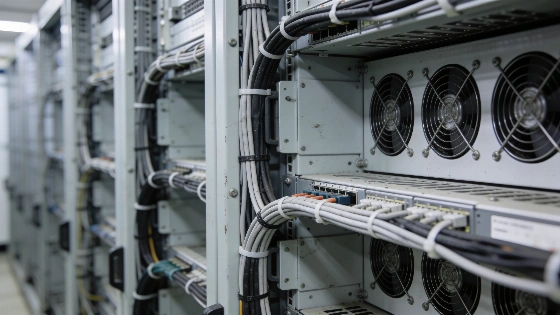
For banks, the basic building block is the server rack. They can roll out automated, hyperconverged hosting platforms from main data centers to smaller edge sites. This keeps every AI workload under the same security rules. Automation helps banks keep operations lean, even as they expand into new markets.
Instead of sending huge datasets to outside AI engines, banks are now bringing AI engines to where their data already is. This uses the security, risk management, and disaster recovery systems banks trust. It also lowers the risks that come with rolling out new AI projects step by step.
Tokenomics and the value of AI
The value of AI in banking is not just about how advanced the models are. It depends on the setup that lets banks use them. Banks learned from APIs that the speed and cost of the underlying systems decide which services work. Tokenomics-the cost of processing and delivering AI results-now shapes which AI projects make sense at scale.
Some banks are looking for "commodity AI": standard, affordable AI services they can use widely without breaking the bank. Lowering the cost per inference is what makes more projects possible, as long as the data and infrastructure are solid.
Key numbers
Gartner expects global spending on sovereign cloud infrastructure to reach $80.4 billion in 2026, up 35.6% from the year before, and to hit $110.6 billion by 2027. In 2026, China will lead with $47.4 billion in sovereign cloud IaaS spending, North America will spend $16.4 billion, and Europe $12.6 billion. Broadcom's 2026 survey shows 56% of enterprises are running or planning to run production AI inference on private clouds. The share using public clouds is set to drop from 56% in 2025 to 41% in 2026. These numbers show how fast regulated industries, especially banks, are moving in response to new rules from the Bank of England (BoE) and other financial authorities.
Preparing for the next wave of AI
Having enough compute power is not enough to make a bank ready for AI. The global data platforms, vector databases, and retrieval-augmented generation (RAG) frameworks built over the past year matter just as much as the hardware. AI-ready banking means being able to deliver standardized, scalable AI wherever the bank operates-not just in big data centers.
In the next few years, success will depend less on which AI models banks pick and more on whether they can deliver inference securely, reliably, and at a good price in every market. The aim is to build a setup where data, governance, security, and AI all work together, so intelligence can be brought straight to the workload.
For sensitive tasks, regulated data, and critical operations, private cloud is becoming the base for responsible, large-scale AI. The banks that can move fast and specialize will be the ones that have already modernized their infrastructure and how they work. This shift is similar to other big changes in banking tech, as reported earlier.
Private cloud is no longer just an IT choice. It is now a key tool for banks that want to control costs, meet tough rules, and deliver AI-powered services worldwide. The banks that invest early in strong, standardized infrastructure will be best placed to turn AI from a test project into a real driver of growth.
Private cloud in banking means dedicated, bank-controlled computing built to meet strict rules, security, and operational needs. Unlike public cloud, where resources are shared, private cloud gives banks direct control over where data sits, who can access it, and how compliance is managed. This matters most in places with data sovereignty laws that may ban some data from leaving the country or require special audit trails. By using private cloud, banks can set up the same governance everywhere, make regulatory reporting easier, and lower the risk of breaking the rules. But building and running private cloud takes big upfront spending and ongoing know-how. That is why it appeals most to large banks with complex rules to follow and big data center investments already in place.