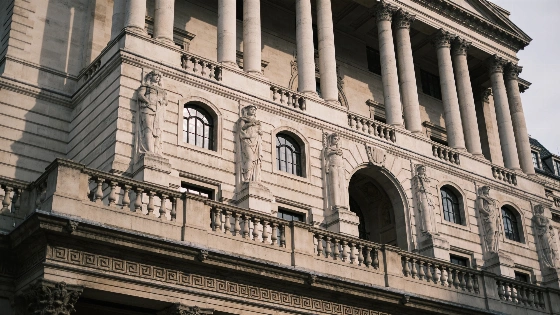
The Bank of England's decision to keep rates steady has left Pound Sterling exposed, with its previous interest rate advantage fading as other central banks consider further hikes
Pound Sterling has come under renewed pressure after the Bank of England opted to leave its policy rate unchanged, raising questions about the currency's ability to maintain its previous interest rate advantage. According to a report from HSBC, the Bank of England's decision to keep the Bank Rate at 3.75%-with a 6-3 split on the Monetary Policy Committee-signals a continued reluctance to join the global trend of further rate hikes. This stance has left the Pound vulnerable to underperformance, especially as other major central banks remain open to tightening policy in response to inflation risks.
HSBC notes that while the presence of a third dissenting vote in favor of a hike was a modest surprise, the broader market reaction has focused on the majority's cautious approach. The Bank's "wait and see" position comes at a time when energy prices remain volatile and inflation risks persist, but the UK's underlying economic growth remains fragile. As a result, the Pound has weakened against both the Euro and the US Dollar since the decision, with Sterling recording six consecutive daily losses against the Dollar at one point.
Interest Rate Advantage Erodes
The erosion of Sterling's interest rate premium is a central concern for currency markets. HSBC highlights that the market-implied probability of a Bank of England rate hike in September stands at just 40%, compared to 85% for the European Central Bank and 64% for the Federal Reserve. This shift has narrowed the gap between UK and German two-year government bond yields to their lowest level since 2026, while the UK-US yield spread has nearly disappeared. The Pound's earlier rally, which was driven by expectations that UK rates would rise faster due to high inflation, has now reversed as the Bank of England's patience contrasts with more hawkish signals from its peers.
Recent data supports the Bank's cautious approach. UK inflation has continued to surprise on the downside, with three consecutive months of lower-than-expected consumer price index (CPI) readings. Meanwhile, the UK labor market is showing signs of softening, particularly in the private sector, where employment has fallen by 121,000 since late 2024. These trends have given the Bank's dovish members cover to argue against immediate tightening, further weakening Sterling's policy support.
Growth Risks Outweigh Inflation Fears
The Bank of England's current stance reflects a clear prioritization of growth risks over inflation concerns. While a minority on the Monetary Policy Committee continues to warn about the potential for second-round inflation effects from energy shocks, the majority appears more concerned about the impact of higher rates on an already subdued economy. The recent volatility in energy prices-driven by shifting Middle East tensions and diplomatic developments-has only added to the uncertainty, making it harder for the Bank to justify a preemptive rate hike.
For Sterling, this means that its fate is increasingly tied to relative interest rate expectations and the broader outlook for UK growth. As HSBC points out, if the Bank of England remains on the sidelines while other central banks continue to tighten, the Pound is likely to remain exposed to further underperformance, particularly against currencies with stronger rate or growth support. This dynamic has been evident in recent weeks, as discussed in our coverage of how narrowing yield spreads have weighed on Sterling's performance against both the Euro and the Dollar (see our analysis of Sterling's recent losses as yield spreads narrow).
What Could Shift the Outlook
The vulnerability of Pound Sterling is not set in stone. HSBC suggests that clear evidence of persistent inflation pressures, a sustained rise in energy prices, or stabilization in the labor market could strengthen the case for a rate hike later in the year. Such developments would likely boost Sterling's appeal by restoring some of its lost policy support. However, until these conditions materialize, the currency remains at risk of further declines, especially if external shocks or domestic policy uncertainty persist.
Not all analysts share HSBC's cautious view. Lloyds Bank, for example, sees potential for the Pound to recover against the Euro over the medium term, arguing that relative yields will remain the dominant driver of currency moves. According to Lloyds, while political developments may cause short-term volatility, the underlying interest rate profile should provide some stability for Sterling if the Bank of England eventually signals a willingness to tighten policy.
As of early June 2026, the Pound Sterling has depreciated by approximately 2.5% against the US Dollar and 1.8% against the Euro since the start of the year, based on daily closing spot rates. The Bank of England's policy rate remains at 3.75%, while the European Central Bank and Federal Reserve are both seen as more likely to raise rates in the coming months, according to market-implied probabilities.
Central banks play a crucial role in shaping currency values through their policy decisions, but their actions are often constrained by competing economic risks. The Bank of England's current approach illustrates the trade-off between supporting growth and containing inflation. When a central bank signals caution in the face of uncertain data, it can erode a currency's interest rate advantage, making it more sensitive to external shocks and shifts in global sentiment. For international businesses, travelers, and anyone exposed to currency risk, understanding these dynamics is essential for navigating periods of heightened volatility.