The United States Mint will release enhanced uncirculated Morgan and Peace Silver Dollars on August 25, 2026, featuring a dual date and Liberty Bell privy mark to commemorate the 250th anniversary of American independence
Two of the most iconic American silver dollar designs are set to return in 2026, as the United States Mint prepares to launch special editions of the Morgan and Peace Dollars to mark the 250th anniversary of American independence. Scheduled for release at noon EDT on August 25, 2026, these enhanced uncirculated coins will feature a unique dual date "1776 ~ 2026" and a Liberty Bell privy mark with the number "250," distinguishing them from previous issues. Each coin will be priced at $169, with a maximum mintage and product limit of 250,000 per design.
Unlike standard annual releases, the 2026 Morgan and Peace Dollars are designed as one-year commemoratives, directly linking two historic coin types to the United States Semiquincentennial. The Mint will enforce a household order limit of 10 coins per design during the initial 26-hour sales window, ending at 2 p.m. EDT on August 26. After this period, the Mint may adjust or remove the limit depending on demand. Both coins will be struck at the West Point Mint, though neither will carry a "W" mintmark. Each contains 0.859 troy ounce of 99.9% fine silver, measures 38.10 mm in diameter, and features a reeded edge. Packaging includes an encapsulated coin, a presentation case, and a certificate of authenticity.
Morgan Dollar: A Western Legacy Reimagined
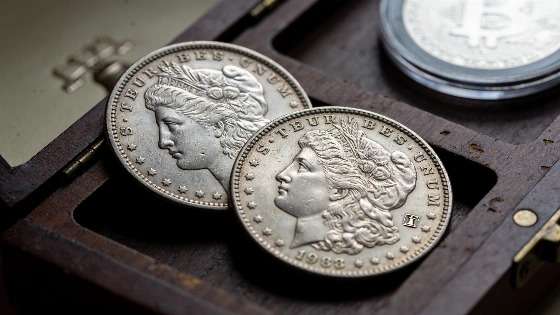
The Morgan Dollar, first issued from 1878 to 1904 and briefly in 1921, is closely associated with the era of westward expansion and industrial growth in the United States. Designed by George T. Morgan, its obverse features Liberty facing left, adorned with a cap, floral elements, and a crown inscribed with LIBERTY, surrounded by thirteen stars and E PLURIBUS UNUM. For 2026, the date is replaced by the dual "1776 ~ 2026," and the reverse retains the familiar eagle with outstretched wings, arrows, olive branch, and a surrounding wreath. The new Liberty Bell "250" privy mark visually connects the 19th-century design to the nation's 250th anniversary.
Collectors will note that the enhanced uncirculated finish and commemorative elements set these coins apart from both circulating and previous collector issues. The Morgan Dollar's enduring popularity is reflected in its continued presence in the numismatic market, with modern releases often selling out quickly. For context, rare U.S. silver coins such as the 1939 Proof Walking Liberty Half Dollar have recently set grading records at auction, highlighting the ongoing demand for top-tier American coinage. For example, a 1939 Proof Walking Liberty Half Dollar graded Proof-68+ will headline a major auction in 2026, underscoring the significance collectors place on both rarity and preservation.
Peace Dollar: Symbol of a New Era
The Peace Dollar, introduced in 1921 following World War I, was created by Anthony de Francisci to commemorate peace between the United States and Germany. Its obverse features Liberty with a radiant crown, the inscriptions LIBERTY, IN GOD WE TRVST (using the classical "V" for "U"), and the dual date "1776 ~ 2026." The reverse depicts a resting eagle holding an olive branch above the word PEACE, with UNITED STATES OF AMERICA, E PLURIBUS UNUM, and ONE DOLLAR inscribed. The Peace Dollar's design reflects both the optimism of the postwar period and America's growing international stature.
For 2026, the Peace Dollar's enhanced uncirculated finish and commemorative features offer collectors a version never before issued. The dual date and Liberty Bell privy mark are exclusive to this anniversary year, making these coins distinct from both original and recent reissues. The Mint's decision to limit production to 250,000 coins per design is intended to balance collector demand with long-term scarcity, a strategy that has shaped the market for modern commemorative coins.
Key Specifications and Collector Impact
Both the Morgan and Peace Dollars for 2026 share the following specifications: denomination of $1, 99.9% silver composition, 0.859 troy ounce silver weight, 38.10 mm diameter, reeded edge, enhanced uncirculated finish, West Point Mint production (no mintmark), Liberty Bell "250" privy mark, and a maximum mintage and product limit of 250,000 per design. The issue price is set at $169 per coin, with a household order limit of 10 coins per design during the initial 26-hour window. Customers can sign up for the Mint's "Remind Me" notifications ahead of the release.
The United States Mint, established in 1792 and part of the Department of the Treasury since 1873, funds its numismatic programs through product sales rather than taxpayer appropriations. In recent years, the Mint has revived classic coin designs for collectors, including the 2021 Morgan and Peace Dollars, which marked the centennial of the Morgan Dollar's final original-year production and the Peace Dollar's debut. The 2026 editions, however, introduce a new commemorative direction, combining historic artistry with a one-time anniversary theme.
For collectors, the 2026 Morgan and Peace Dollars represent a rare convergence of two classic designs, a major national milestone, and modern minting techniques. The combination of enhanced uncirculated finish, dual date, and Liberty Bell privy mark ensures these coins will stand apart from both their historical predecessors and recent commemorative issues.
Commemorative Coinage and the Role of Privy Marks
Commemorative coins serve as both historical artifacts and vehicles for marking significant national events. The use of privy marks-small symbols or motifs added to a coin's design-has become increasingly common in modern numismatics to denote special occasions, anniversaries, or limited editions. In the case of the 2026 Morgan and Peace Dollars, the Liberty Bell "250" privy mark not only signals the Semiquincentennial but also provides a visual link between the coins' original eras and the present. Privy marks can enhance a coin's appeal to collectors by signaling exclusivity and commemorative intent, but their long-term impact on value depends on factors such as mintage, demand, and the broader context of the coin's release.