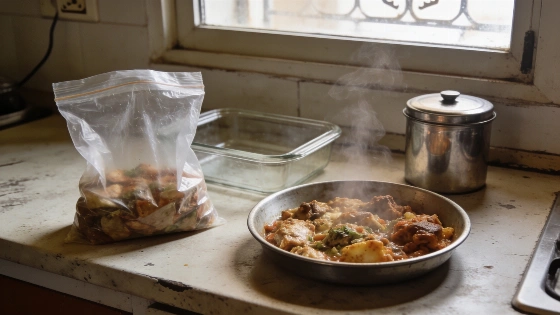
Reports in Egypt warn that long stretches standing in the kitchen can strain circulation and joints. They also flag possible chemical migration when hot food is stored in plastic bags, with glass or stainless steel suggested as alternatives.
Reports about everyday household habits began circulating across social media platforms and search engines in Egypt. They focus on the demands of meal preparation and how food is stored at home.
Many women spend extended periods standing in the kitchen while preparing food and drinks for their families. Doctors and experts cited in the reports warn that staying in one position for long stretches can strain the body. Medical guidance links static posture with muscle fatigue and discomfort. That discomfort can affect the feet. It can also reach the knees or lower back. Changing position helps vary the load. A brief walk can help, as can a change in stance. Short seated breaks are another option, as Acibadem International explains.
The strain of prolonged standing
Reported concerns include weaker circulation in the limbs and persistent pain in the joints or spine. Swelling in the feet is also mentioned. General muscle fatigue can affect a woman's energy and her ability to carry out daily activities, the reports say. These symptoms are associated with prolonged static loading. To ease the strain, a person can walk briefly or shift weight. Moving the hips and ankles may also help. Sitting for a short period offers another way to change the load.
There is no single established safe duration for standing while cooking that applies to everyone. The reports describe potential effects of extended standing, while the right amount of movement and rest can vary with the person and the task.
Hot food and plastic bags
The reports also caution against repeatedly storing food in plastic bags, particularly when the food is hot. One concern is migration, the transfer of molecules from packaging into food. The amount can depend on temperature and contact time. It can also depend on the area touching the food and the packaging's composition. Hot food and longer contact can increase migration. Fatty foods warrant particular care because some substances dissolve more readily in fat, as discussed in Maison & Travaux.
Food-contact packaging is regulated in the European Union under Regulation (EC) No 1935/2004. It requires materials to be made so they do not transfer constituents to food in quantities that could endanger health or unacceptably change the food. The details matter: plastic items do not all behave the same way. Suitability depends on the material and whether it is designed for the food and temperature involved. Packaging not intended for hot food should not be used for that purpose.
A 2021 experiment by Welle and Franz of Fraunhofer IVV, as reported by Tea Trade, measured caprolactam released from nylon-6 tea bags steeped at 100°C for five minutes. The amount was 0.8-2.3 mg per kilogram. Those figures apply to that specific nylon product under that test condition, not to plastic bags generally.
Glass containers and vessels made from stainless steel are presented as alternatives for storing food. For hot meals, using a container intended for food contact and for the relevant temperature is a practical precaution. Glass or stainless steel can also avoid uncertainty about whether a plastic item can handle the heat. The warning covers refrigeration in plastic bags as well as wrapping food while it is still hot.
Household spending is a separate consumer issue from food safety. An earlier report on Talabat card savings covered discount eligibility, not health risks.