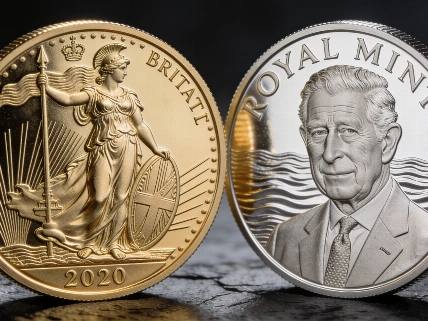
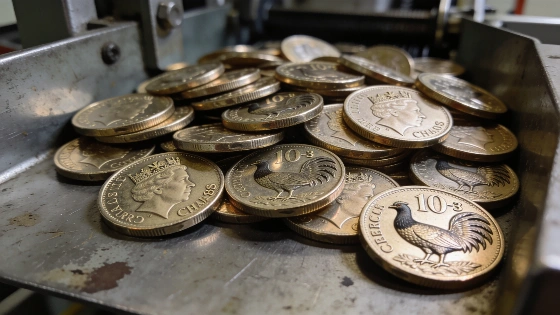
The United Kingdom has released its first circulating 10-pence coins featuring King Charles III, with millions entering daily use. The new design highlights a rare Scottish bird and offers collectors a fresh opportunity amid low overall demand.
The United Kingdom has begun circulating its first 10-pence coins bearing the portrait of King Charles III, marking a significant update to the nation's coinage. Although the new design was initially unveiled in October 2023, the denomination was not released at that time due to subdued demand for small change. Now, the Royal Mint has issued 600,000 coins dated 2023 and a further 6.5 million dated 2026, introducing the new effigy into everyday transactions for the first time.
Despite this release, coins featuring King Charles III still represent only about 1 percent of the 24.1 billion coins currently circulating in the UK. This limited presence means that the new 10-pence pieces may attract interest from collectors and those tracking the transition from Queen Elizabeth II's portrait to the new monarch. The obverse of the coin displays King Charles III, while the reverse features the capercaillie, a large woodland grouse native to Scotland and now listed as a threatened species on the UK conservation red list.
Design and Conservation Message
The choice of the capercaillie for the reverse design is intended to raise awareness about the bird's precarious status in the wild. The capercaillie is now found only in a small region of Scotland, with its population declining due to habitat loss and other pressures. The Royal Mint has stated that more of these coins will enter circulation than there are capercaillies remaining in the wild, using the coin as a platform to highlight the species' risk of extinction. By placing the bird's image into millions of pockets, the Mint hopes to spark broader public discussion about conservation challenges facing native wildlife.
Circulation Figures and Collecting Potential
According to official figures, the 10-pence coin is among the lower-demand denominations in the UK, with fewer new coins required each year compared to higher-value coins. The combined release of 7.1 million new 10-pence coins is modest relative to the total coin stock, but it represents a notable event for numismatists and those interested in the evolution of British currency. The rarity of coins dated 2023, in particular, may make them especially sought after by collectors. For context, the introduction of new coin designs often generates a wave of interest, as seen with high-profile numismatic events such as the gathering of rare 1933 Double Eagles at a major coin exhibition, detailed in this feature on historic coin displays.
Understanding Coin Circulation and Design Changes
In the UK, coin designs are periodically updated to reflect changes in the monarchy or to commemorate significant national themes. The transition from Queen Elizabeth II to King Charles III on circulating coins is a gradual process, with older coins remaining legal tender and circulating alongside new issues. The Royal Mint manages the introduction of new coins based on demand, wear, and the need to replace withdrawn or damaged currency. As a result, it can take years for new portraits to become commonplace in daily transactions, especially for denominations with low turnover.
The release of the King Charles III 10-pence coin illustrates how currency design can serve both practical and symbolic purposes. While the primary function is to facilitate everyday payments, the imagery chosen for coins can also reflect national identity, commemorate historical events, or draw attention to contemporary issues such as wildlife conservation. The inclusion of the capercaillie on the 10-pence coin is a recent example of this dual role, combining monetary utility with a message about environmental stewardship.
Coin circulation in the United Kingdom is managed by the Royal Mint, which assesses demand for each denomination and schedules new issues accordingly. Lower-denomination coins like the 10-pence often see less frequent replacement, as they tend to remain in use for many years. This means that design changes, such as the introduction of a new monarch's portrait, are phased in gradually and may take considerable time to become widely visible in everyday transactions. Collectors and currency watchers often monitor these transitions closely, as early issues and low-mintage dates can become valuable over time.