The Indonesian Rupiah is expected to weaken further against the US Dollar through mid-2027, as persistent trade deficits and rising oil import costs challenge Bank Indonesia's efforts to stabilise the currency
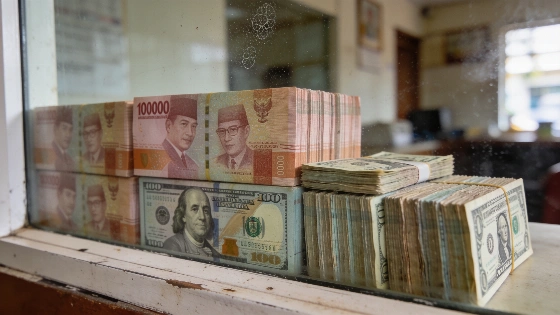
The Indonesian Rupiah has come under renewed pressure, with forecasts pointing to a continued weakening against the US Dollar over the next two years. According to a report from MUFG, the USD/IDR exchange rate is projected to reach 18,700 by the second quarter of 2027, driven by a combination of trade deficits and elevated oil import costs that are straining Indonesia's external balance.
Recent months have seen the Rupiah stabilise near 18,000 to the Dollar, as Bank Indonesia intensified its support through foreign exchange intervention and by offering higher yields on its Rupiah-denominated securities. The nomination of Destry Damayanti as central-bank governor has also helped reinforce confidence in policy continuity. However, these measures have not fully offset the impact of persistent trade shortfalls and strong demand for US Dollars within Indonesia.
Trade Deficits and Oil Imports Weigh on the Rupiah
Indonesia recorded two consecutive monthly trade deficits in May and June, with a $1.6 billion shortfall followed by a $0.5 billion deficit, according to MUFG. The oil and gas sector was the main contributor, posting a $3.5 billion deficit that outweighed surpluses in animal and vegetable oils and an improving base-metals balance. These trade gaps have increased the demand for US Dollars onshore, adding to liquidity pressures and making it more difficult for the Rupiah to recover.
Portfolio flows have offered little relief. In the week ending 14 August, foreign investors sold a net $23 million of Indonesian government bonds, following a $199 million inflow the previous week. Equity markets also saw a net outflow of $30 million after a modest inflow earlier. This lack of sustained foreign investment has limited the effectiveness of Bank Indonesia's interventions in supporting the currency.
Gradual Depreciation Path Projected
MUFG's forecast outlines a gradual weakening of the Rupiah, with the USD/IDR rate expected to move from 18,100 in the third quarter of 2026 to 18,350 in the fourth quarter, then 18,500 in the first quarter of 2027, before reaching 18,700 by the second quarter. This scenario assumes that Bank Indonesia's interventions will slow, but not fully halt, the Rupiah's depreciation as long as oil import costs remain high and trade deficits persist. The bank expects the central bank to keep its policy rate at 5.75% in the near term, relying on intervention rather than rate hikes to manage currency stability.
Oil prices remain a critical factor. Brent crude has been trading near $90 a barrel, and tanker flows through key shipping routes have declined, further complicating Indonesia's external position. While surpluses in other export sectors provide some cushion, they have not been sufficient to offset the impact of the oil bill. As a result, the Rupiah's outlook remains vulnerable to shifts in global energy markets and domestic demand for foreign currency.
Policy Response and Market Implications
Bank Indonesia's toolkit includes direct intervention in the foreign exchange market, adjustments to yields on its securities, and cheaper hedging swaps for domestic participants. These measures have helped stabilise the Rupiah in the short term, but the underlying pressures from trade and oil costs continue to dominate the medium-term outlook. According to MUFG, unless there is a significant improvement in Indonesia's trade balance or a sustained drop in oil prices, the Rupiah is likely to remain under pressure through at least mid-2027.
For context, other major currency pairs have also experienced volatility in response to shifting economic fundamentals and central-bank policy expectations. For example, the Pound Sterling's performance against the US Dollar has been influenced by UK jobs data and Bank of England rate expectations, as discussed in this recent analysis of GBP/USD dynamics.
As of August 2026, the USD/IDR exchange rate has hovered around 18,000, with Bank Indonesia maintaining its policy rate at 5.75%. Indonesia's trade deficit reached $0.5 billion in June, following a $1.6 billion deficit in May, while the oil and gas account posted a $3.5 billion shortfall. Foreign investors recorded a net outflow of $23 million from Indonesian bonds in the week ending 14 August, and equities saw a $30 million net outflow in the same period.
Indonesia's experience highlights the complex interplay between trade balances, commodity prices, and central-bank policy in shaping currency outcomes. While interventions and policy continuity can provide temporary support, sustained external deficits and high import costs often limit a central bank's ability to defend its currency over the long term. The Rupiah's path will remain sensitive to changes in global oil markets, domestic demand for US Dollars, and the effectiveness of Bank Indonesia's evolving policy toolkit.