

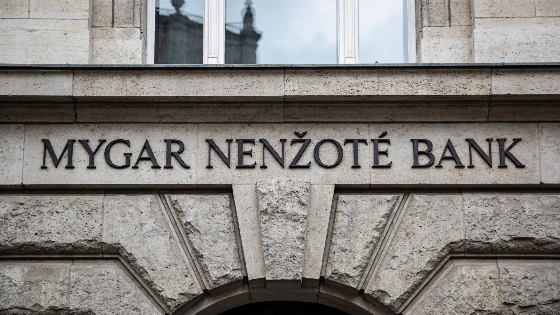
Hungary's central bank is expected to cut its inflation target to 2.5 percent this week. Goldman Sachs says this could help the forint, which has moved in step with energy prices lately.
Hungary's forint is at a crossroads. The country's central bank is about to announce a lower inflation target. Goldman Sachs says this could help steady the currency and shape its future. Right now, the official inflation target is 3.0%. That could change soon. Hungarian financial media and market analysts expect the Magyar Nemzeti Bank (MNB) to cut the target at its next policy meeting. The move would bring Hungary closer to euro area standards and what markets expect, according to Világgazdaság.
For months, the forint's value against the euro has moved almost lockstep with oil and natural gas prices. Goldman Sachs points out that the forint's gains since early July have matched their model, which tracks how energy costs affect the currency. This has made the forint one of the most energy-sensitive currencies in the region. Every shift in global energy markets shows up quickly in the EUR/HUF exchange rate. The gap between Hungarian and eurozone inflation has also pushed the currency pair, as recent market commentary and the European Central Bank (ECB) have noted.
Central bank signals and market moves
The Magyar Nemzeti Bank's statements have shaped what traders expect, not just energy prices. The next central bank meeting is set for September 22. Markets expect the bank to formally announce a lower inflation target. The consensus is a cut from 3.0% to possibly 2.0% over the next few years. The change would likely come in steps, with a tougher stance on inflation, according to ING Think. The MNB is expected to keep its base rate at 5.50%. The rate-cutting cycle is on hold for now, as the inflation gap with the euro area is still a big concern for both policymakers and investors.
The widening inflation gap has been a steady force behind the EUR/HUF spot rate and what traders see as its fair value. By lowering the inflation target, the central bank wants to close this gap. That could help the forint hold its value and bring Hungary closer to euro area norms. The Bank for International Settlements (BIS) has said that credible inflation targets matter for emerging market currencies facing outside shocks.
Energy prices and currency shifts
In recent months, the forint has tracked oil and gas prices closely. The currency has strengthened as energy costs have dropped. Goldman Sachs says this link is still strong. Central bank messaging can make these moves bigger or smaller, depending on what the bank signals to the market. Their economists say that a lower inflation target, along with a pause in rate cuts, could help anchor expectations and calm swings in the forint's exchange rate. The Federal Reserve's experience shows that clear communication can matter as much as the policy rate itself when it comes to currency moves.
The euro has also reacted to central bank decisions shaped by energy and inflation trends, as reported earlier. This shows how currency markets are linked and why clear policy signals matter for exchange rates.
Key numbers and policy backdrop
The Hungarian Central Statistical Office says annual inflation in August 2026 dropped to 1.3%. That's well below the current 3.0% target. The MNB's June forecast puts average inflation at about 1.8% for the year. GDP growth is expected to be around 2.0%. These numbers set the scene for the likely change in the inflation target. They also back up the central bank's move toward a more cautious policy. The goal is to close the inflation gap with the eurozone. That's key for EUR/HUF stability and forint credibility with the ECB and global investors.
The forint's future will still depend on global energy prices and what the central bank does at home. But by moving to lower its inflation target, the central bank is showing it wants price stability and closer ties to the euro area. This could help limit further drops in the currency and boost investor trust in Hungary's monetary policy. The Bank of England has also stressed that anchoring inflation expectations is key to keeping a currency steady.
Inflation targeting means the central bank sets a clear rate or range for yearly price increases. This guides its policy moves. By lowering its target, the Magyar Nemzeti Bank is showing a stronger push for price stability. That can help anchor inflation expectations and support the forint's value. But this only works if the central bank is seen as credible and can react to outside shocks, like swings in energy prices. For Hungary, the link between energy markets and monetary policy will keep shaping the forint's outlook.