The United States' experiment with a twenty-cent silver coin lasted just four years, leaving behind a denomination that confused the public and now fascinates collectors for its rarity and historical context
In the mid-1870s, the United States introduced a new silver coin: the twenty-cent piece. Intended to address regional coin shortages and support domestic silver interests, this denomination was minted for only four years before being quietly discontinued. Today, the twenty-cent coin stands as one of the shortest-lived and least understood issues in American currency history, valued more for its scarcity and story than for its original purpose in commerce.
Origins and Political Motives
The creation of the twenty-cent coin was shaped by a mix of political lobbying and post-Civil War monetary policy. Although proposals for a coin of this value dated back to the late 1700s, the idea gained momentum after the Coinage Act of 1873 ended the free coinage of silver, a move that angered western mining interests. Nevada Senator John Percival Jones championed the new denomination, arguing it would both absorb surplus silver and help US coins compete with European silver in international trade. Congress also saw the coin as a way to ease small-change shortages in western states, especially after the half dime was discontinued and most minor coins were struck only in Philadelphia.
Despite these intentions, the twenty-cent piece was never widely accepted. Its introduction coincided with a period of monetary uncertainty and shifting silver policy, and the coin's practical value was quickly questioned by both merchants and the public.
Design Flaws and Public Confusion
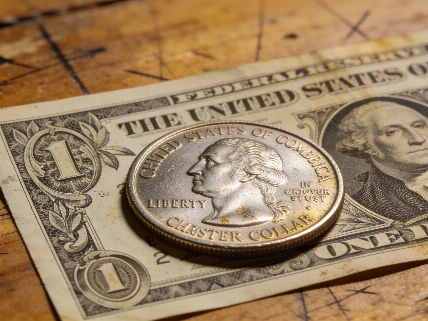
The twenty-cent coin's failure can be traced in part to its design. Chief Engraver William Barber adapted the familiar Liberty Seated motif, making the new coin look nearly identical to the quarter dollar. The only clear difference was a plain edge, as opposed to the quarter's reeded edge-a distinction that quickly disappeared as coins wore down in circulation. This similarity led to frequent confusion, with consumers and businesses often mistaking one coin for the other, sometimes resulting in financial loss.
Although the US Mint experimented with alternative designs, none were adopted that would have made the twenty-cent piece easily distinguishable from the quarter. Public confidence eroded, and the coin failed to gain traction in everyday transactions.
Production, Circulation, and Rarity
The twenty-cent piece was struck at three mints: Philadelphia, Carson City, and San Francisco. In 1875, the San Francisco Mint produced over 1.1 million coins, anticipating export demand, while Carson City and Philadelphia struck 133,290 and 38,500 coins, respectively. However, only the 1875-S issue remains relatively accessible to collectors today, as many examples survived in higher grades.
The following year, the Carson City Mint produced just 10,000 coins, nearly all of which were melted before release. Fewer than 20 examples of the 1876-CC twenty-cent piece are believed to exist, making it one of the rarest 19th-century US silver coins. By 1877, the denomination had been abandoned for circulation, and only proof coins were struck for collectors in 1877 and 1878, with mintages of 350 and 600, respectively. Many of these proofs have since been lost or damaged, and high-grade survivors are highly sought after at auction.
For context, the twenty-cent piece's total mintage across all years and mints was less than 1.4 million coins, a fraction of the output for other US denominations of the era. Its brief production run and low survival rates have made it a focus for numismatists and collectors interested in rare American coinage. The coin's story is often compared to other short-lived US issues, such as the 1939 Proof Walking Liberty Half Dollar, which also commands attention for its rarity and preservation, as discussed in this analysis of record-setting US proof coins.
Notable Examples and Collector Appeal
Among the most prized twenty-cent coins are the 1878 proof issues and the 1875-CC circulation strikes in high grades. The 1878 proof, with a mintage of just 600, is rare in any condition and especially so in cameo format, where mirrored fields and frosted devices create striking visual contrast. Some of these coins have appeared at auction with exceptional provenance, further increasing their appeal to collectors.
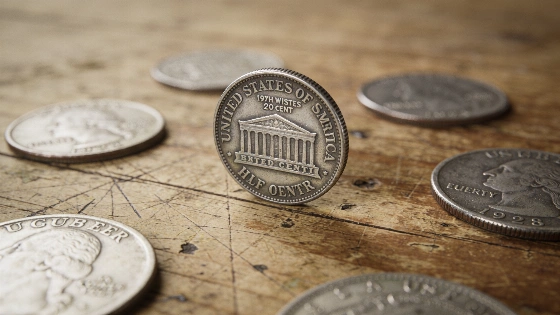
The 1875-CC twenty-cent piece, struck during the denomination's first year, is considered the cornerstone of the series for collectors. High-grade examples display strong luster and sharp detail, with subtle design differences-such as the plain edge and bold "20 CENTS" inscription-intended to distinguish the coin from the quarter. The reverse design, featuring an eagle with arrows and an olive branch, echoes earlier US coinage and reflects the era's symbolic priorities.
Legacy and Lessons
The twenty-cent coin's rapid demise highlights the risks of introducing new denominations without clear practical need or distinct design. While it was meant to solve multiple problems-supporting silver producers, easing coin shortages, and aiding foreign trade-it ultimately satisfied none. Its short lifespan, however, has ensured a lasting legacy among collectors, who value the coin for its rarity, historical context, and the cautionary tale it represents in US monetary history.
The story of the twenty-cent piece also illustrates how coin design, public acceptance, and monetary policy intersect. Even well-intentioned reforms can falter when execution fails to account for everyday use and clear differentiation from existing denominations. For those interested in the evolution of US coinage, the twenty-cent piece remains a compelling case study in both ambition and unintended consequence.
In the context of US coin history, the twenty-cent piece stands out not only for its rarity but also for the lessons it offers about the challenges of currency innovation. Its brief existence underscores the importance of practical design, public trust, and the complex interplay between politics and monetary policy in shaping the coins and notes that circulate-or fail to circulate-in everyday life.