
The 1986 centennial of the Statue of Liberty saw the US and France issue commemorative coins that remain highly sought after, reflecting both nations' shared history and the evolving market for precious metal collectibles
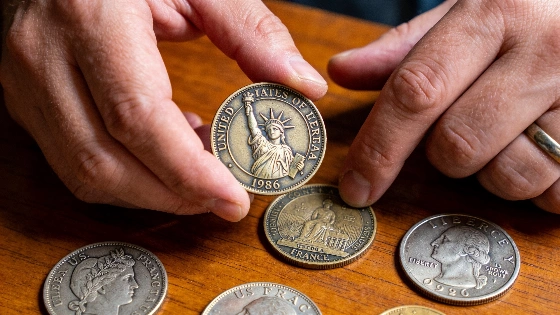
In 1986, the centenary of the Statue of Liberty prompted both the United States and France to launch major commemorative coin programs, each reflecting their own approach to marking the occasion. The United States Mint released three distinct coins: a copper-nickel half dollar, a .900 fine silver dollar, and a .900 fine gold five-dollar piece. Each was available in both uncirculated and proof versions, offering collectors six different options. These coins were not intended for general circulation but were produced as commemorative issues, with proceeds supporting the restoration of the Statue of Liberty and Ellis Island.
The US program stands out as one of the largest commemorative coin releases in American history. According to official mintage figures, the combined output of all three coins exceeded 12 million pieces-enough for every person who passed through Ellis Island during its years as an immigration gateway. The coins' designs highlighted the Statue's symbolism, with imagery referencing both the monument itself and the broader themes of liberty and immigration. Today, these coins are widely available on the secondary market, with prices influenced by both collector demand and the underlying value of their precious metal content.
France's commemorative effort was more restrained in terms of mintage but offered a unified design across five different versions. All French coins featured a shoulder-high portrait of the Statue of Liberty on the obverse, with the country's name in French and the dual dates 1886 and 1986. The reverse displayed the national motto-Liberté, Égalité, Fraternité-arranged to evoke the shape of the statue's torch, topped by the liberty cap. Each coin carried a face value of 100 francs and the year of issue. The main workhorse of the French series was the uncirculated .900 fine silver coin (catalogued as KM960), with a mintage of 4,427,000 pieces. This coin contains 0.434 troy ounces of silver and is typically traded at prices close to its metal value. A rarer proof version (KM960a), struck in .950 fine silver and containing 0.4832 troy ounces of silver, is also sought after by collectors.
In addition to silver, France issued three high-value coins in .920 fine gold, .999 fine platinum, and .900 fine (likely referring to another precious metal, though the source does not specify). These versions are considerably scarcer, and their market prices are determined by both rarity and the value of the underlying metal. Assembling a complete set of all five French coins is a challenge for collectors and serves as a tangible symbol of Franco-American cooperation during the Statue's centennial.
For collectors, the 1986 Statue of Liberty coins from both countries remain accessible entry points into the world of commemorative coinage. US issues are common enough to be found at modest premiums over their metal content, while the French silver coins are similarly available, though the gold and platinum pieces command higher prices. The coins' enduring appeal lies in their historical context, their role in funding restoration efforts, and their connection to one of the world's most recognizable monuments.
According to official data, the US Mint's 1986 Statue of Liberty commemorative program produced over 7 million half dollars, more than 6.8 million silver dollars, and nearly 1.8 million gold five-dollar coins across all versions. France's main silver coin saw a mintage of 4,427,000, while the proof and precious metal versions were issued in much smaller numbers. These figures make the US coins among the most widely distributed commemorative issues in American numismatic history.
The 1986 coin programs illustrate how commemorative currency can serve both as a fundraising tool and as a means of reinforcing shared historical narratives. While the coins themselves are not legal tender for everyday transactions, their designs and distribution reflect the values and priorities of the issuing countries at a particular moment in time. For many collectors, these coins offer a direct link to the centennial celebrations and the ongoing story of the Statue of Liberty as a symbol of migration, freedom, and international partnership.
Commemorative coins differ from circulating currency in several important ways. They are typically produced in limited quantities to mark specific events, anniversaries, or figures, and are often sold at a premium above face value. While some commemorative coins are legal tender, they are rarely intended for everyday use and may not be accepted by merchants. Their value to collectors depends on factors such as mintage, condition, metal content, and historical significance. In the case of the 1986 Statue of Liberty coins, their enduring popularity is tied not only to their precious metal content but also to their role in celebrating a landmark of global significance and the cooperation between two nations.