
Numismatic price appreciation is shaped by rare coin indices, price guides, and auction results, but no single source captures the full picture. Collectors and investors face challenges in interpreting these signals and understanding real value shifts
Tracking the appreciation of coins and currency-known as numismatics-has long been a challenge for collectors, investors, and researchers. Unlike stocks or bonds, where market indices and price feeds are widely available and standardized, the numismatic market is fragmented, with multiple sources offering sometimes conflicting signals about value changes. This complexity means that understanding how and why coin prices rise or fall requires careful attention to both the data and the context behind it.
Historically, attempts to create benchmarks for numismatic appreciation have reflected this complexity. In 1978, the investment bank Salomon Brothers launched its own Coin Index to compare the performance of rare coins against traditional financial assets like stocks and bonds. During the high-inflation years of the late 1970s and early 1980s, this index often showed rare coins outperforming other investments, fueling public interest in coins as an alternative asset. However, the index's methodology was kept secret to prevent market manipulation, and it was later revealed to include only twenty high-value rarities-coins that did not represent the broader market or the types of coins most commonly promoted to new investors.
Indices, Price Guides, and Auction Data
Following the Salomon Brothers Coin Index, other financial institutions such as Kidder Peabody and Merrill Lynch established rare coin investment funds in the late 1980s. These funds coincided with the rise of third-party grading services, notably the Professional Coin Grading Service (PCGS) in 1986 and the Numismatic Guaranty Corporation (NGC) in 1987. The influx of investor capital initially drove prices higher, but as new investment slowed by mid-1989, appreciation largely stalled. Regulatory scrutiny increased, with the U.S. Federal Trade Commission raising concerns about the use of indices to market common or overgraded coins. By around 1990, Salomon Brothers discontinued its index, and the era of coin investment funds faded.
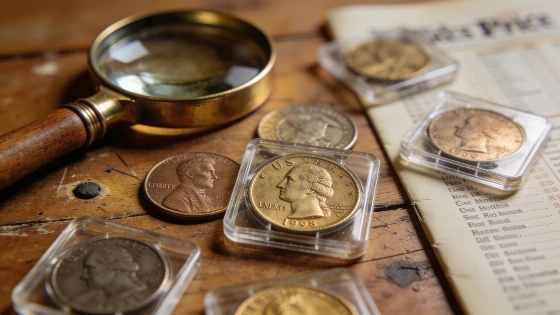
Before and after these developments, collectors relied on annual catalogs such as the Redbook (A Guidebook of United States Coins) and the Bluebook (A Handbook of United States Coins), which provided price estimates but were often outdated by the time of publication. Dealer-to-dealer pricing was tracked through newsletters like The Greysheet (Coin Dealer Newsletter) and The Bluesheet (Certified Coin Dealer Newsletter). The internet later enabled real-time trading networks and online price guides from PCGS, NGC, and The Greysheet's Collector's Price Guide (CPG). Auction houses also began publishing detailed records of past sales, offering another window into market trends.
Why No Single Source Tells the Whole Story
Despite these advances, no single index, price guide, or auction record can fully capture the dynamics of numismatic appreciation. Each source uses different methodologies, covers different segments of the market, and may be influenced by factors such as rarity, condition, and collector demand. Even coins with identical technical grades can trade at different prices due to subjective factors like eye appeal, which varies from one collector to another. As a result, experienced numismatists treat price guides as reference points rather than definitive valuations, and they weigh their own judgment, the availability of comparable pieces, and their financial circumstances when assessing value.
For example, in June 1989, the rare coin market saw a sharp slowdown in appreciation as investor inflows dried up. This shift was not immediately reflected in annual price guides, which lagged behind real-time market conditions. Meanwhile, auction results showed that coins of the same grade could fetch widely different prices depending on their appearance and provenance. These discrepancies highlight the importance of using multiple sources and understanding their limitations when evaluating numismatic appreciation.
Historical Shifts and Regulatory Responses
The history of U.S. commemorative coins also illustrates how market forces and regulatory intervention can reshape numismatic trends. In 1936, the U.S. Mint issued 34 different commemorative coin designs and mintmarks, many tied to local or regional events. This proliferation was partly driven by event promoters seeking to raise funds through coin sales. However, concerns about the proper role of the Mint and the risk of market saturation led President Franklin Roosevelt to intervene, and Public Law #278 in 1939 halted the issuance of new commemorative coins until after World War II. Such episodes show how policy decisions can abruptly change the landscape for collectors and investors.
According to data from the Professional Coin Grading Service (PCGS), the value of certain rare U.S. coins increased by over 200% between 1978 and 1989, outpacing the S&P 500 index during the same period. However, this growth was concentrated in a small subset of high-grade rarities, while prices for more common coins remained relatively stable or even declined after the investment boom ended. Auction records from major U.S. houses confirm that realized prices for coins of the same type and grade can vary by 10-30% depending on eye appeal and provenance, underscoring the market's subjectivity.
Understanding numismatic appreciation requires more than tracking published prices or indices. It involves recognizing the limitations of each data source, the influence of grading standards, and the impact of regulatory and market shifts. For collectors and investors, this means approaching price guides and indices as tools rather than guarantees, and remaining alert to the nuances that drive real-world value in the coin market.
One key distinction in numismatics is between face value, market value, and collector value. Face value is the denomination assigned by the issuing authority and is typically far below the market value for rare or collectible coins. Market value reflects what buyers are willing to pay at a given time, influenced by rarity, condition, and demand. Collector value is often shaped by subjective factors such as historical significance, eye appeal, and provenance. These layers of value mean that numismatic appreciation is rarely straightforward, and that careful research and judgment remain essential for anyone navigating this complex market.