
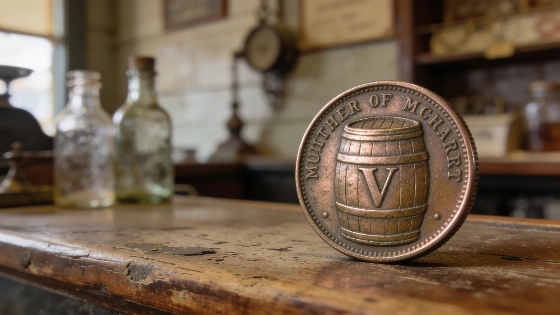
A rare 1891 advertising token from North Carolina exposes the overlooked currency and business history of Elwood G Newcomb, whose ventures spanned liquor, hospitality, and local law in the late 19th century
In 1891, a small copper-nickel token showed up in Greensboro, North Carolina. It read "IN NEWCOMB WE TRUST." That token did more than advertise a business. It cracked open a forgotten chapter of local money and trade. The man behind it, Elwood G Newcomb, ran his business during a time when small coins were hard to find. The Federal Reserve later confirmed that coin shortages were common in the late 1800s. Merchants had to get creative.
Newcomb's life doesn't appear in official histories. His story comes together from old ads, legal notices, and a few rare tokens. He sold liquor, ran hotels, and even tried his hand as a barber. Each move shows how business, law, and money kept shifting in the South after the Civil War. The U.S. dollar was backed by gold, but that didn't help when coins ran out. Merchants like Newcomb made their own tokens. The Bank for International Settlements has studied how these private tokens filled gaps in the money supply.
The token and its message
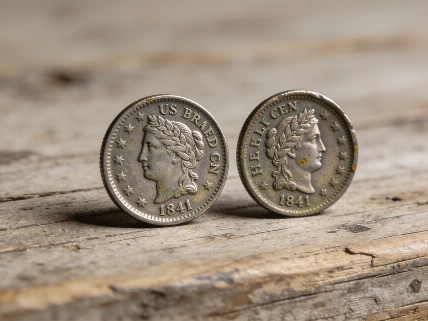
Newcomb's 1891 token was 21mm wide, made of copper-nickel. One side showed a big barrel and the words "WINES/LIQUORS." Around the edge: "GREENSBORO, N.C./1891." The other side had a large Roman "V" and the phrase "IN NEWCOMB WE TRUST/CENTS." That "V" matched the U.S. 5-cent coin of the time. The token was both an ad and a workaround for coin shortages. According to the Federal Reserve, private tokens like this popped up whenever coins were scarce.
This wasn't official money. It was a merchant's promise. Customers could trade it for goods at Newcomb's shop. Tokens like his were common in the late 1800s, especially where coins were rare or merchants wanted loyal customers. Today, collectors prize these tokens. They're business tools and pieces of history.
Business ventures and legal battles
Newcomb started out in Petersburg, Virginia. He and his brother ran Newcomb Brothers, selling liquor, tobacco, and cigars. The partnership didn't last. By 1872, Elwood's grocery business failed and was sold at auction. He didn't give up. He moved to North Carolina, managed dining rooms at the Central Hotel, and opened his own place in Court House Square. He served oysters and even set up a separate area for women. That was rare back then.
By 1883, he bought J.R. Moore's liquor business at the McAdoo House. He added wines, brandies, whiskies, and billiard tables. He kept the business going through the 1880s, advertising in local papers. In 1893, he started running big ads in Reidsville while still working in Greensboro. These moves happened as the U.S. Treasury and, later, the Federal Reserve tried to keep the dollar stable and make sure there was enough money for trade.
In 1899, Newcomb hit a wall. North Carolina banned liquor sales in Greensboro. He kept selling anyway. The court fined him $100 and gave him six months in jail. He fought back, appealed to the state Supreme Court, and got a pardon from the governor. While fighting the law, he opened a barber shop and bath on Elm Street. The liquor ban was later dropped. In 1901, Newcomb went back to selling liquor. These ups and downs show how changing laws shaped business and money, just as today's regulators like the Office of the Comptroller of the Currency and the Federal Reserve shape the rules for banks and currency.
Personal reputation and final years
People who knew Newcomb had strong opinions. The Reidsville Review in 1895 called him refined, public-spirited, and generous. He was known for being sober in his own habits, even though he sold liquor. His shop at 231 Elm Street got praise for comfort and careful service. He wanted to draw in all kinds of customers.
In 1905, Newcomb joined the board of the Greensboro Wood Fiber Plaster Company. Not long after, he closed his business and moved back to Petersburg. He opened another liquor store there. He died in 1915 at age 67 after a short illness. His story lives on in tokens, old ads, and scattered records. Official histories left him out. The tokens did not.
Facts and figures
The 1891 token was 21mm, copper-nickel, with a Roman "V" for 5 cents. In 1899, Newcomb was fined $100 and sentenced to six months in jail, but he was pardoned. He ran businesses in Petersburg, Greensboro, and Reidsville from the early 1870s to 1905. No one knows exactly how many tokens he made or how many were used. That's not unusual. The Bank for International Settlements notes that tracking private money like this is tough.
Merchant tokens and local currency
Merchant tokens like Newcomb's were practical. When coins ran short, local businesses made their own. These tokens worked only at the issuing shop. They weren't legal tender, but they kept trade moving and brought customers back. Today, collectors value them for what they show about how people handled money shortages and changing rules. Central banks, including the European Central Bank, now look at similar issues with digital currencies and new payment tools. The old tokens still matter. They tell the story of how people adapted. That story isn't finished.