
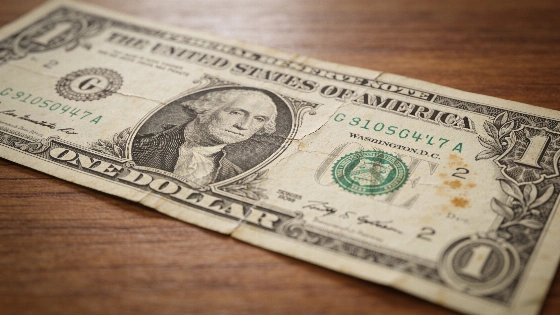
A rare $1 Hawaii overprint note, signed by the crews of the Enola Gay and Bockscar just after the atomic bombings of Japan, has fetched $37,551 at auction, highlighting the intersection of currency, history, and collector demand
A unique piece of currency history has changed hands at auction, as a $1 Hawaii overprint silver certificate signed by the crews of the Enola Gay and Bockscar sold for $37,551. The note, originally owned by Enola Gay tail gunner George R. "Bob" Caron, was signed in August 1945, just days after the atomic bombings of Hiroshima and Nagasaki. According to RR Auction, which handled the sale, the note is a 1935A series silver certificate bearing the Hawaii overprint, a wartime issue designed for use in the Pacific and easily demonetized if captured.
Signatures from Two Historic Missions
The face of the note is inscribed with "Aug. 6, 1945, Atomic Bomb $1 on Hiroshima, Japan" and features the signatures of all 12 Enola Gay crew members. On the reverse, the note reads "Atomic Bomb #2 on Nagasaki, Aug. 8, 1945," and includes signatures from 12 of the 13 Bockscar crew. The signatures were collected by Caron in the immediate aftermath of the missions, with some added later as surviving crew members were located. The note's condition is described as very good, showing wear and soiling consistent with its age and history.
Collector Value and Provenance
Accompanying the note is a copy of Caron's 1982 letter of provenance, which details the circumstances of the signatures and notes the rarity of certain crew autographs. Some signatures, such as that of Capt. William S. "Deak" Parsons, are particularly scarce due to the early deaths of the signers. The Hawaii overprint series itself holds a special place in U.S. currency history, as these notes were issued for use in Hawaii during World War II and could be declared worthless if the islands were occupied.
Historical Context and Auction Trends
The sale of this short snorter-a term for a banknote signed by fellow travelers or comrades, especially among military personnel-reflects ongoing interest in currency as a witness to major historical events. The $1 note's journey from a wartime artifact to a high-value collectible underscores how numismatic items can serve as tangible links to pivotal moments. According to RR Auction, demand for such historically significant notes remains strong, with collectors seeking both the story and the signatures attached to the currency.
For comparison, the 1967 Roosevelt dime, despite its record mintage, remains elusive in high grades due to changes in minting policy and collector behavior, as explored in this analysis of rare modern U.S. coins. Both cases illustrate how historical context and scarcity can drive collector interest far beyond face value.
Facts and Figures
The auctioned note is a 1935A $1 silver certificate with serial number P 35453390 C, issued with a Hawaii overprint. It was signed by 24 crew members from the Enola Gay and Bockscar missions in August 1945. The final sale price of $37,551 was achieved at RR Auction's Fine Autographs and Artifacts Featuring WWII event on June 10, 2026. Hawaii overprint notes were first issued in 1942 and remained in circulation until 1946, with demonetization provisions in place during the war.
Short snorters like this one highlight the intersection of currency, military history, and personal narrative. While most wartime notes were intended for practical use or emergency contingency, those bearing signatures from historic missions have become highly sought-after collectibles. The value of such items is shaped not only by rarity and condition but also by the documented provenance and the significance of the events they witnessed.