
A Wall Street executive's Half Dome Collection now leads three CAC Registry categories for early 20th-century US gold coins, including the record-setting $1.8 million 1911-D Indian Eagle, highlighting the challenge of assembling such rare sets
The Half Dome Collection, assembled by a Wall Street fund manager since 2012, has become one of the most significant private holdings of early 20th-century United States gold coins. According to Legend Numismatics, which has advised the collector for over a decade, the collection now dominates the CAC Registry in three major categories and includes several coins considered virtually unobtainable in comparable condition.
The collection's focus is on Indian Head Quarter Eagles, Half Eagles, and Eagles, as well as a comprehensive set of Saint-Gaudens Double Eagles. In total, the four main CAC Registry sets require 120 coins, each graded and approved to the highest standards. The collection also features a 1907 Ultra High Relief Saint-Gaudens Double Eagle, a coin renowned for its rarity and historical significance.
Record-Setting Acquisition
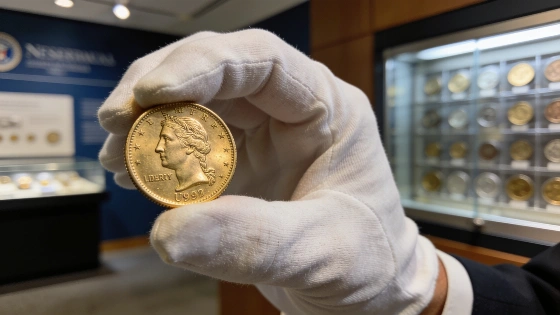
In February 2026, the collector acquired the finest-certified 1911-D Indian Head Eagle, graded MS66 by PCGS and approved by CAC. This coin, which had previously been part of the James A. Stack, Sr. Collection, was sold by Stack's Bowers Galleries for $1.8 million, setting a new auction record for any circulation-strike Indian Head $10 gold coin. The 1911-D issue, with an original mintage of just 30,100, is especially prized in high grades, and no other example has been certified above MS65 by PCGS or NGC.
The addition of this coin further strengthened the Indian Eagle set, which now leads the CAC Registry by a margin of more than seven points over the next closest competitor, the D.L. Hansen Collection. As of August 2026, all four Half Dome sets are listed as 100% complete in the CAC Registry, with the Indian Head Quarter Eagles, Half Eagles, and Eagles each ranked No. 1. The Saint-Gaudens Double Eagles set is currently ranked second, trailing the top set by only 0.31 points.
Defining Rarities
Several coins in the Half Dome Collection stand out for their exceptional rarity and preservation. Among them are a 1911-D Indian Quarter Eagle graded PCGS MS66+ CAC, the key date for the $2.50 series, and a 1909-O Indian Half Eagle graded PCGS MS65+ CAC, struck during the final year of coin production at the New Orleans Mint. The collection also includes a 1920-S Indian Eagle graded PCGS MS67+ CAC, a coin that survived the mass gold melts of the 1930s in extraordinary condition, and a 1927-D Saint-Gaudens Double Eagle graded PCGS MS66, one of the most elusive coins in the series. Every coin in the four main sets carries a CAC approval sticker, with the exception of the 1927-D Double Eagle.
Legend Numismatics reports that the Half Dome Indian Eagle set will be inducted into the PCGS Set Registry Hall of Fame during the 2026 awards cycle, further cementing its status among collectors and specialists.
From Childhood Hobby to Registry Leadership
The collector's interest in coins began in childhood, inspired by his father's own collecting pursuits. However, he did not enter the high-end numismatic market until 2012, when he began working exclusively with Legend Numismatics. Initially unfamiliar with the complexities of rare coin collecting, he was guided toward the Indian Head gold series, which the United States Mint produced from 1907 to 1933. Over time, his ambition grew from assembling a representative set to seeking the finest examples available, with a particular emphasis on CAC-approved coins as a mark of quality.
Despite the collection's current dominance, the owner, now in his early 50s, does not consider the project finished. He continues to pursue upgrades and additions, reflecting the ongoing challenge of finding coins that meet his standards.
Beyond Price: The Challenge of Rarity
Assembling a collection of this caliber involves more than financial resources. Many of the coins in the Half Dome Collection are unique at their grade level or may not appear on the market for decades. According to CAC founder John Albanese, even with unlimited funds, replicating the set would be less likely than summiting Mount Everest. The rarity and condition of these coins mean that opportunity and timing are as important as budget.
Laura Sperber, co-founder of Legend Numismatics, has spent decades building major collections for advanced clients and was recognized by PCGS and the American Numismatic Association for her contributions to the field in 2026. She notes that the thrill of assembling the Half Dome sets stands out even among her career achievements.
The Half Dome Name and Public Access
The collection is named after Half Dome, the iconic granite formation in Yosemite National Park, reflecting the patience, planning, and determination required to reach the summit-whether in hiking or in coin collecting. The owner's personal connection to the landmark made it a fitting symbol for his numismatic pursuit.
Plans are underway to display select coins from the Half Dome Collection at a future American Numismatic Association World's Fair of Money, offering collectors a rare chance to view pieces that are typically kept private. Legend Numismatics also intends to publish a coffee-table book featuring high-resolution images and historical context for the collection's highlights.
Facts and Figures
The 1911-D Indian Head Eagle, now the centerpiece of the Half Dome Collection, was sold for $1.8 million in February 2026, setting a record for any circulation-strike Indian Head $10 gold coin. The CAC Registry, as of August 3, 2026, lists the Half Dome Indian Head Eagles set with a score of 68.59, more than seven points ahead of the D.L. Hansen Collection. The Saint-Gaudens Double Eagles set, with a score of 67.41, is just 0.31 points behind the leading Elite Collection.
Understanding CAC approval is essential for collectors seeking top-tier coins. CAC, or Certified Acceptance Corporation, reviews coins already graded by PCGS or NGC and applies a sticker to those meeting its strict quality standards. Coins with CAC approval often command significant premiums in the market, especially when they represent condition rarities or are needed for registry sets. The CAC Registry allows collectors to compare sets based on both completeness and quality, driving competition for the finest examples.