
France's Monnaie de Paris is introducing new Marianne gold bullion coins in four sizes, aiming to attract domestic investors and compete with established international bullion coins while navigating EU tax rules and investor demand
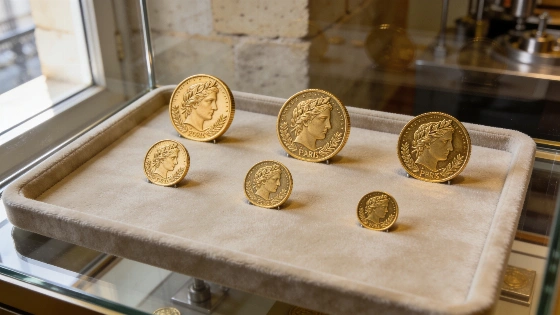
France is making a significant move into the modern gold bullion market with the introduction of its new Marianne gold coins, marking the country's first major entry into this sector. The Monnaie de Paris, France's official mint, will issue the coins in four denominations-1 ounce, 1/2 ounce, 1/10 ounce, and 1/25 ounce-targeting both French investors and international buyers. The launch comes after years of rising gold prices and increased domestic demand for investment-grade precious metals, with the mint positioning the Marianne series as a way to broaden access to gold ownership in France.
Unlike some earlier entrants to the bullion market, such as the United States with its Gold American Eagle coins in 1986, France's move arrives in mid-2026, following a period of price volatility in global gold markets. According to Monnaie de Paris, the new coins are intended to "democratize the gold market in France," making it easier for individuals to invest in physical gold that meets European Union standards for purity and legal tender status. The Marianne coins are struck in 0.999 fine gold, with the obverse featuring the iconic face of Marianne-a symbol of the French Republic-and the reverse displaying a map of France's territories.
Taxation and Market Access
French investors purchasing gold coins must navigate a complex tax environment. Investment-grade gold coins and ingots are exempt from Value Added Tax (VAT) in France if they meet EU purity requirements and are legal tender minted after 1800. However, sales of precious metal coins are subject to a precious metals tax, with investors able to choose between an 11.5% flat tax on the total sale amount or a standard capital gains tax that allows deductions based on the holding period. The closure of the organized Paris bullion exchange by Euronext has shifted most gold trading to over-the-counter markets, handled by specialized dealers and major European bullion platforms.
Monnaie de Paris has also introduced a digital e-Marianne coin, which allows buyers to hold their gold virtually at the mint until they decide to sell. This approach reflects a broader trend in the bullion market toward digital custody solutions, although the mint has not disclosed anticipated sales volumes for the new coins. In the previous year, Monnaie de Paris reported revenues of 197 million euros (approximately $230 million), a 1.7% increase, driven by its reputation for high-quality art medals, sculptures, and commemorative coinage.
Historical Context and International Competition
France's bullion coin launch builds on a long tradition of gold coinage. The country's historical gold coins include the 0.917 fine gold Louis d'or, first issued in 1640, and the 0.900 fine gold Napoleon 20-franc coins minted between 1803 and 1914. The latter, known for the "Rooster" design featuring Marianne and a rooster, remains a well-known collector's item. In recent decades, France has produced 0.920 fine gold commemorative coins and innovative tri-metal coins, such as the 1992 Mont St. Michel 20-franc piece.
The new Marianne bullion coins are designed to compete with established international products like the 0.999 fine Gold American Eagle, the 0.9999 fine Canadian Maple Leaf, and the 0.9167 fine South African Krugerrand. While the Marianne coins match or exceed the purity of some rivals, their success will depend on investor confidence, liquidity, and the ability to establish a secondary market. The Monnaie de Paris has not specified mintage limits or distribution plans, but the move signals France's intent to claim a share of the global bullion market, which has seen renewed interest as investors seek alternatives to traditional financial assets.
Facts and Figures
The Marianne bullion coins are minted in 0.999 fine gold and offered in four denominations: 1 ounce, 1/2 ounce, 1/10 ounce, and 1/25 ounce. French law allows investors to choose between an 11.5% flat tax on the sale of precious metals or a standard capital gains tax with deductions for holding periods. In 2025, Monnaie de Paris reported revenues of 197 million euros, up 1.7% from the previous year. The closure of the Paris bullion exchange has shifted most gold trading in France to over-the-counter platforms.
France's entry into the bullion coin market follows a broader European trend of expanding investment options for individuals. The Marianne coins' legal tender status and high gold purity are intended to meet both EU regulatory requirements and investor expectations. For collectors and investors interested in rare coins, the international market continues to offer unique opportunities, as seen at major events such as the gathering of 1933 Double Eagles at the World's Fair of Money in Pittsburgh, which brought together over $100 million in rare coins and currency (see coverage of the historic coin exhibition).
Understanding Bullion Coin Taxation in France
Taxation is a central consideration for anyone investing in gold coins in France. While EU rules exempt qualifying gold coins from VAT, French law imposes a choice between a flat-rate precious metals tax and a capital gains tax. The flat tax simplifies the process for those who do not wish to track purchase and sale prices, but may be less favorable for long-term holders who could benefit from capital gains deductions. The closure of the organized bullion exchange has made price discovery and liquidity more dependent on dealer networks and online platforms, increasing the importance of transparency and market access for investors. As France's bullion market evolves, regulatory clarity and investor education will remain key factors in the adoption of new products like the Marianne coins.