A metal detectorist has uncovered nearly 10 pounds of Viking Age silver coins and jewelry in Finland's biggest find of its kind. The hoard, found near Sysmä, includes coins from as far away as Germany and Great Britain.
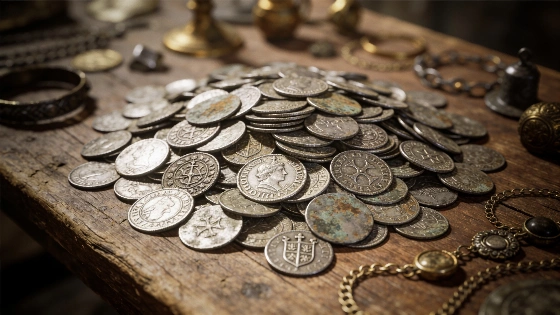
Thousands of medieval silver coins and pieces of jewelry have been found in what is now Finland's largest Viking Age hoard. The discovery was made by a metal detectorist near the town of Sysmä, about 95 miles north of Helsinki. Weighing nearly 4.5 kilograms (about 10 pounds), the hoard was unearthed on September 3, 2026, and is now recognized as the largest late Iron Age or Viking Age silver find in Finnish history (ABC News).
Scale and origins of the find
The hoard stands out for its size: museum staff estimate it contains thousands of coins, along with jewelry and other silver items such as a bracelet, a silver fragment, a clasp, and a bead. The coins come from a wide area, including regions that are now Germany, Great Britain, and Sweden. Archaeologists date the objects to between A.D. 1000 and 1050, placing them in the Viking Age, a time of active trade and movement across northern Europe. The silver was split between two birch bark containers, buried about 45 centimeters (18 inches) deep and roughly 12 meters (40 feet) apart, suggesting a careful effort to hide them.
Although the objects date to the Viking Age, archaeologist Esko Tikkala from the Lahti Historical Museum notes that this does not mean Vikings themselves buried the hoard. The museum's interpretation is based on archaeology, not assumptions about who owned the silver. The reasons for the burial and the exact timing are still unclear, and further work at the site is planned to learn more about why so much silver was hidden there.
Historical context and ongoing investigations
The Viking Age, which ran from the raid on Lindisfarne in A.D. 793 to the battle at Stamford Bridge in 1066, was marked by the movement of people, goods, and money across Europe. Hoards from this period have been found throughout the Nordic region, but finds of this scale are rare in Finland. The Sysmä hoard is notable not just for its weight-almost twice as heavy as the previous Finnish record from Nousiainen in 1895, which included about 1,700 coins and valuables-but also for the variety of its contents, showing how the Baltic region was connected to the rest of Europe (ECB statistics).
Archaeologists are continuing to investigate the site, looking for more artifacts and clues about why the silver was buried. The mix of coins from different regions suggests that the area was more involved in continental trade than previously thought. As reported earlier, studying old coins and hoards helps researchers understand how societies handled money long before the digital age. Today, the European Central Bank (ECB) tracks the movement and value of euro coins and notes, a sharp contrast to the unregulated and cross-border nature of medieval currency.
Numismatic significance and broader implications
For coin experts and historians, the Sysmä hoard is a rare chance to study how silver and coins moved in early medieval Finland. The range of coins-from several modern countries-shows how complex currency flows were during the Viking Age. The exact number of coins is still unknown, as cleaning and sorting continue, but the hoard's weight and mix make it the largest of its kind found in Finland. Today, the Bank of Finland manages a tightly regulated currency system within the eurozone, a far cry from the fragmented and informal money systems of a thousand years ago.
In recent years, more Viking Age hoards have been found across the Nordic countries, sparking both research and public interest. Each new discovery adds to what is known about trade, currency, and cultural contact in the region. The Sysmä find, in particular, challenges old ideas about Finland's place in these networks and shows how physical coins can serve as a record of history. Organizations like the International Monetary Fund (IMF) and the Bank for International Settlements (BIS) stress the value of understanding past monetary systems, especially as digital currencies and central bank digital currency (CBDC) projects become more common.
Silver coins in the Viking Age were more than just money-they could be stores of wealth, status symbols, or even ritual offerings. Burying such a large amount of silver may have been a response to insecurity, conflict, or a need to protect assets during uncertain times. Unlike modern currency, which is tracked and regulated by central banks, medieval coins often moved freely across borders. Finds like the Sysmä hoard are key to piecing together the economic history of the period.