A 1971-S Eisenhower Dollar prototype coin, one of only three known, is heading back to auction with a $264,000 estimate after its discovery in a tube of ordinary silver dollars revealed a unique chapter in US coin history
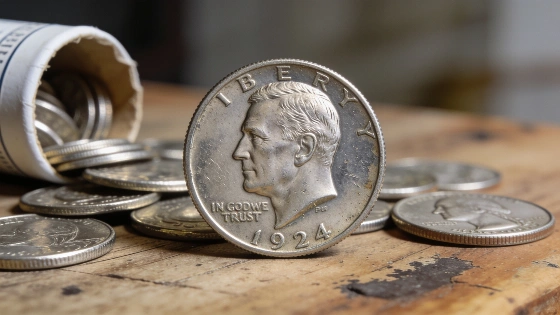
In 2008, collector Lee C. Lydston opened a tube of 40% silver Eisenhower Dollars at the Long Beach Coin Expo and found something unexpected: a 1971-S Eisenhower Dollar prototype, catalogued as Judd-2147. The coin's subtle design differences set it apart from regular issues and have made it one of the rarest modern US coins.
This same prototype is now returning to auction with an estimate of $264,000. Graded PCGS SP67 and carrying a CAC green sticker, it is the only J-2147 prototype to receive CAC approval. Bidding will close at GreatCollections on October 18, 2026.
Prototype origins and design details
The Eisenhower Dollar marked the US Mint's return to dollar coins after a 36-year break, honoring both President Dwight D. Eisenhower and the Apollo 11 moon landing. While most coins for circulation were copper-nickel, special collector versions-including this prototype-were struck in 40% silver. During development, the Mint produced a small number of prototypes to test the design and striking process. The Judd-2147 prototype preserves an earlier version of Frank Gasparro's artwork, especially in the way the Moon appears on the reverse. The reverse, showing an eagle landing on the Moon, was designed by Gasparro, who was Chief Engraver at the time.
Only three examples of this prototype are known, with two different die pairings among them. These coins are believed to have been struck at the San Francisco Mint during testing, not at the Philadelphia Mint's January 1971 trial. The rarity is heightened by the fact that this coin went unnoticed for decades, surviving in circulation until its discovery. The Federal Reserve's distribution of Eisenhower Dollars during this period also reflected changes in US monetary policy, as the country moved away from silver-backed currency toward fiat money-a shift that still shapes dollar liquidity and foreign exchange reserves.
Technical details and auction history
The prototype is made of 40% silver, weighs 24.59 grams, measures 38.50 mm across, and has a reeded edge. Both sides were designed by Frank Gasparro, with the reverse based on the Apollo 11 mission insignia. When last auctioned in January 2022, the coin sold for $264,000 at Heritage Auctions, setting a PCGS record for the J-2147 prototype.
The Eisenhower Dollar series has produced several notable rarities in recent years. For example, a unique 1976 No S silver proof dollar has approached the $1 million mark, showing the ongoing interest in design variants and minting errors from this era. The rare coin market's sensitivity to such prototypes is similar to the volatility seen in foreign exchange markets, where even small policy changes by the Federal Reserve or European Central Bank can move the US dollar index and related currency pairs.
Why this coin matters
The Judd-2147 prototype gives a direct look at the artistic and technical challenges the US Mint faced in the early 1970s. Its survival, after decades of being overlooked, preserves a piece of the design process and the evolution of a well-known American coin. For collectors, its rarity, historical context, and condition make it especially desirable.
With only three known and just one with CAC approval, the upcoming auction is expected to draw strong interest from advanced collectors and institutions. The $264,000 estimate reflects both its scarcity and its place in US monetary history. The Mint's experiments with silver content in the Eisenhower Dollar happened during a period of high inflation and changing interest rates, as tracked by the Federal Reserve and the Consumer Price Index. These economic factors affected both the value and collectibility of silver coins in the 1970s.
Prototype coins like the Judd-2147 are made during pre-production to test dies, adjust designs, and check striking quality before mass production. Most are destroyed or kept by the Mint, never meant for public release. When a prototype like the 1971-S Eisenhower Dollar surfaces, it gives researchers and collectors a rare glimpse into the Mint's decision-making and technical process. These coins connect the gap between concept and circulation, offering insights that regular issues cannot. Organizations like the International Monetary Fund and the Bank for International Settlements track how precious metal prices and collector demand affect global currency reserves, showing how numismatic history and international finance are linked.