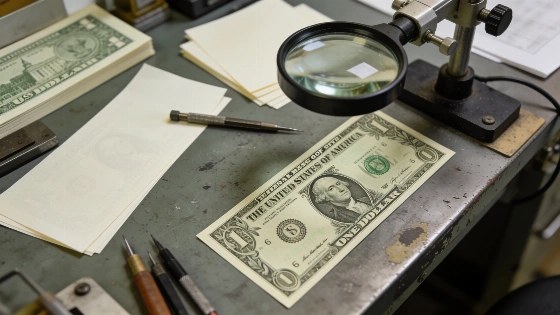
A proposed $250 commemorative note featuring a living US president has sparked debate over legal restrictions, political divides, and the creative use of souvenir cards to navigate longstanding currency rules
The possibility of a new $250 US banknote featuring a living president has reignited debate over the legal and political boundaries of American currency design. The idea, floated as part of the nation's upcoming 250th anniversary commemorations, centers on whether current law allows a living person-specifically, President Donald J. Trump-to appear on official US currency. While some supporters see the proposal as a fitting tribute, others argue it would break with a tradition rooted in law and history.
Under current US law, the Thayer Amendment of 1866 prohibits the depiction of any living person on federal banknotes, bonds, securities, or postal currency. This restriction was designed to prevent the use of currency for political promotion or personal glorification. Despite this, the Bureau of Engraving and Printing (BEP) has reportedly solicited artistic concepts for a $250 note, anticipating the possibility that Congress could create a legal exception for the Semiquincentennial celebration in 2026.
In March 2026, the US Treasury Secretary, Scott Bessent, confirmed that President Trump's signature would appear on future banknotes, a move that is permitted under existing rules. However, the inclusion of a living president's portrait remains legally blocked unless Congress acts. The relevant legislation, known as the Donald J. Trump $250 Bill Act (HR 1761), was introduced in early 2025 but has stalled in committee. The bill is structured to carve out a specific exception to the Thayer Amendment, rather than repealing it outright.
Political reactions to the proposal have been sharply divided. Republican lawmakers and supporters have championed the idea as a way to honor the current president's role in the nation's milestone anniversary. Democratic lawmakers, by contrast, have criticized the move as a politicization of the currency and a break with established norms. The debate has also drawn attention to the broader question of how commemorative currency is used to reflect national identity and political values.
While the $250 note remains hypothetical, non-governmental entities have already begun selling fantasy notes featuring President Trump's image. These items, marketed as collectibles, have no legal-tender status and cannot be used for payment. The BEP itself has a history of producing souvenir cards-colorful, non-negotiable prints that often feature historical or artistic designs. These cards are not considered financial instruments and are not subject to the Thayer Amendment's restrictions on living persons.
Some collectors and legal observers have suggested that a BEP-issued souvenir card could provide a workaround, allowing the depiction of a living president on a commemorative item without violating federal law. Since souvenir cards are not spendable currency, they fall outside the scope of the 1866 prohibition. The BEP has previously issued coin and currency sets that include facsimiles of historical notes, but these are clearly marked as non-circulating and cannot be separated for use as money.
According to the US Treasury, any move to issue a $250 commemorative note would require explicit legislative approval. The BEP has indicated it is prepared to act if Congress passes the necessary exception. Until then, the only official items likely to feature a living president's portrait are souvenir cards or other non-monetary collectibles.
For context, the United States has not introduced a new circulating banknote denomination since the $100 note was redesigned in 2013. The last new denomination added to US currency was the $100 bill in 1969, following the withdrawal of higher denominations. Commemorative coins are more common, but commemorative banknotes remain rare and are typically subject to strict legal and design standards.
The Thayer Amendment's enduring influence reflects a broader principle in US currency policy: the separation of political figures from the everyday instruments of commerce. While signatures of current officials appear on notes as a matter of record, portraits are reserved for historical figures whose legacies have been established over time. Any change to this practice would require not only legal reform but also a shift in public and political consensus.
The distinction between legal-tender currency and souvenir cards highlights the complexity of US banknote law. While the BEP can produce artistic items for collectors, only Congress can authorize changes to the rules governing official currency. As the nation approaches its 250th anniversary, the debate over who-and what-should appear on its money is likely to continue.
In the United States, the Thayer Amendment of 1866 remains a foundational law governing the design of federal currency. Its intent was to prevent the use of money for political self-promotion and to maintain the neutrality of the nation's financial instruments. The law's language is broad, covering not only banknotes but also bonds, securities, and postal currency. Over the years, this restriction has shaped the appearance of US money, ensuring that only deceased individuals are honored with portraits. The ongoing discussion about commemorative notes and souvenir cards illustrates how legal frameworks, political interests, and collector demand intersect in the world of currency design.