
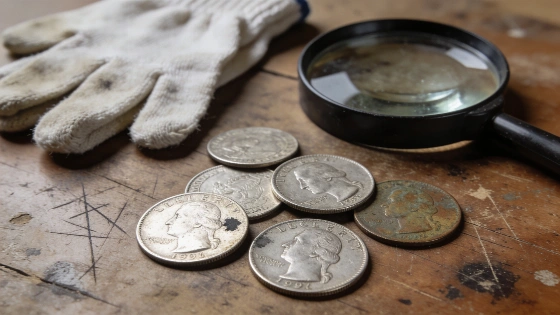
Cleaned coins divide collectors as resale value, authenticity, and historical context drive decisions. Certified coins offer some protection, but rare varieties and older issues still tempt buyers despite the risks.
For collectors, discovering that a coin has been cleaned can instantly drain its resale value. Many avoid cleaned coins entirely, knowing that once a coin loses its original surface, it also loses much of its appeal and market trust. This isn't just about aesthetics-future liquidity is at stake. The issue has become even more relevant as shifts in global monetary policy and inflation can push more buyers toward tangible assets like rare coins.
The reality, though, is rarely black and white. Some collectors refuse to buy cleaned coins under any circumstances. Others make exceptions, especially for rare varieties or coins from the earliest years of the U.S. Mint. The decision often comes down to whether a coin's rarity or historical importance outweighs the drawbacks. When currency markets are volatile, collectors may also weigh the metal value of a coin against its numismatic interest.
Certified coins and market risks
Certification is now the main defense against buying a cleaned coin by mistake. Collectors who stick to coins graded by reputable services expect that any cleaning or alteration will be flagged. This helps avoid surprises at resale, since cleaned coins almost always sell for less than untouched examples. Major grading companies like PCGS separate straight-graded coins from "details" or problem coins. A cleaned coin might still be slabbed, but it will carry a problem label instead of a regular mint-state grade-a standard practice across the industry grading concepts.
Still, certification isn't foolproof. Coins with "details" grades may have a cleaning history that's disclosed but not always obvious to less experienced buyers. The market's response is consistent: cleaned coins, even when certified, are harder to sell and often sit unsold or discounted. The price gap can be steep-a coin marked "Uncirculated Details-Cleaned" might sell for half the price of a similar undamaged coin, depending on the series and grade coin value and grading. Buyers are also encouraged to check certification numbers with the grading service's database to avoid counterfeit or mismatched slabs, as recommended by the GR Reserve guide.
Major online platforms have responded by expanding authentication services for collectible coins. eBay, for example, now offers an Authentication Guarantee for both U.S. and world graded coins, as well as U.S. raw coins over $500, with PCGS handling the checks. However, eBay's service stops at authentication and does not include grading or re-grading, reflecting the industry's focus on verifying authenticity rather than reassessing grade. This fits with broader trends in financial regulation, where transparency and consumer protection are priorities.
Exceptions and historical context
Despite the caution, many collectors recognize that almost every coin from before the modern era has probably been cleaned at some point. Cleaning was once routine, especially when the goal was to complete sets rather than preserve original surfaces. For coins from the 19th century or earlier, finding one that's never been cleaned is rare. This context matters, since the market often treats older coins differently, especially during times of economic uncertainty or when bond yields shift, as noted by the Federal Reserve.
In these cases, buying a cleaned coin becomes a question of balancing rarity, eye appeal, and personal goals. Some collectors will accept a coin with an old cleaning if it has re-toned nicely or fills a key spot in a collection that would otherwise be out of reach. Others only buy cleaned coins as bullion or "junk silver" for melt value, not as collectibles. The Bank of England has observed that demand for physical precious metals can rise during currency declines, which adds another layer to the decision for collectors weighing numismatic versus bullion value.
Data and market impact
Market data shows that cleaned coins usually sell for 20% to 50% less than similar uncleaned coins, depending on the series and grade. Certified coins labeled "cleaned" or "details" often remain unsold longer, reflecting buyer hesitation. This is especially true for U.S. coins minted before 1933, where original surfaces are highly valued and cleaning is seen as a major flaw. The pattern matches a basic financial principle: asset quality and transparency drive liquidity, a point often raised in IMF and ECB policy discussions.
Many collectors learn about the risks of cleaned coins the hard way. Early mistakes-buying altered or cleaned coins by accident-often lead to a more cautious approach over time. Just as central bank actions can quickly shift sentiment in currency markets, news about a coin's condition or history can move the numismatic market.
Editorial perspective
The debate over cleaned coins highlights a core tension in collecting: the pull between historical artifacts and the demand for originality and value. Certification and authentication have improved transparency, but they can't undo decades of past cleaning or the subjective judgments that still shape collector tastes. The market's stance is clear-original surfaces bring a premium, and cleaned coins are penalized. For those focused on liquidity and long-term value, certified, unaltered coins are the safest bet. Still, collectors drawn to history, rarity, or personal interest may make exceptions, as long as they understand the risks.
Cleaning in numismatics means removing dirt, toning, or surface contaminants, often with abrasive or chemical methods. Some professional conservation can help stabilize a coin, but most cleaning-especially when done poorly-removes original metal and changes the coin's look. This loss of originality is why the market discounts cleaned coins so sharply. Collectors should learn to spot signs of cleaning, like unnatural shine, fine scratches, or faded luster, and consult reputable grading services if unsure. The line between conservation and cleaning is still debated, but the preference for originality is unlikely to change.