Chrysler's Superfinish process promised engines with dramatically extended lifespans and set new standards for surface precision. This article examines how a technical breakthrough in the 1930s reshaped both automotive engineering and industrial marketing
When Chrysler began mailing out small steel discs to curious customers in the late 1930s, the company was not just promoting a new product-it was making a bold claim about the future of engine durability. The Superfinish process, developed in Chrysler's mechanical laboratories and licensed to the Foster Machine Company in Indiana, was marketed as a leap forward in surface finishing technology. The company's advertisements, which appeared in widely read magazines such as Popular Mechanics and Popular Science, suggested that engines treated with Superfinish could achieve a level of smoothness previously thought unattainable in mass production.
Chrysler's campaign was not subtle. Full-page ads depicted automobile engines under the provocative headline "What?...An engine that will never wear out." While the fine print admitted that perpetual motion was out of reach, the message was clear: Superfinish would deliver a "perfectly amazing increase in engine life." The company even invited readers to request a free illustrated book and a pocket-sized steel disc-one side ground by conventional methods, the other polished to a near-glass finish by Superfinish. Recipients were encouraged to test the difference with a fingernail, feeling for scratches as shallow as ten-millionths of an inch.
The Science Behind Superfinish
The technical achievement at the heart of Superfinish was its ability to reduce surface roughness to as little as one-millionth of an inch. According to a 1938 report in The Truth of Elkhart, Indiana, this level of precision meant that a human hair, if split into strands of one-millionth of an inch, would yield nine million filaments. The process was originally conceived in 1934 to address the problem of noisy wheel bearings, but its implications quickly extended to other engine components where friction and wear were critical concerns.
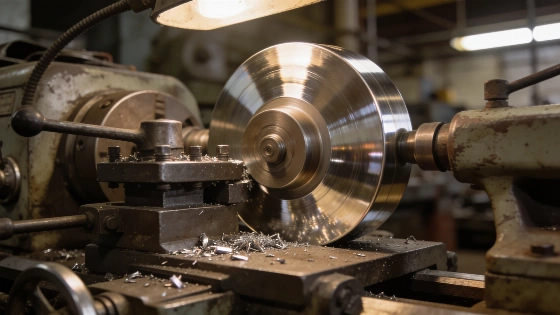
Chrysler's method involved a combination of fine grinding and a final polishing step that eliminated microscopic scratches and defects. The result was a surface so smooth that it could dramatically reduce friction, extend the lifespan of moving parts, and improve overall engine efficiency. The company's decision to license the process to Foster Machine Company allowed for broader industrial adoption, and by 1941, Superfinish was being used in aircraft engines for the U.S. government's defense program as well as in British military manufacturing.
Marketing Through Medals and Samples
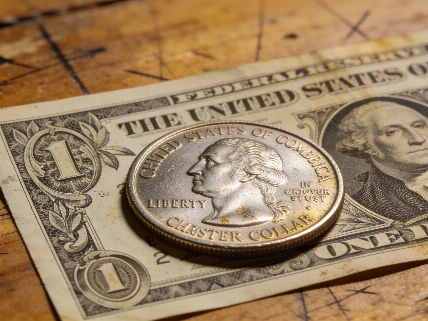
Chrysler's marketing strategy was as innovative as its engineering. The company produced thousands of "pocket pieces"-medals struck in bronze or nickel, each displaying a sample of both ordinary and Superfinished surfaces. One version, inscribed DESOTO SUPERFINISH/FOR LONG LIFE, was distributed to DeSoto salesmen across the United States in 1940. These medals were intended as tactile proof during sales presentations, reinforcing the claim that DeSoto engines incorporated Superfinish on thirteen key parts.
For the general public, Chrysler mailed out steel discs in specially printed envelopes. The instructions urged recipients to compare the two sides by touch, highlighting the almost imperceptible difference that Superfinish made. While the medals themselves are still relatively common among collectors, the original envelopes-often discarded-are now much scarcer. The company also offered a hardcover book, The Story of Superfinish by Arthur Swigert, to anyone who requested it, further cementing the process's reputation as a technical milestone.
Global Reach and Lasting Impact
Superfinish's influence quickly spread beyond the United States. By 1940, Australian car dealers were advertising Chrysler, DeSoto, Dodge, and Plymouth vehicles as benefiting from the process, claiming it could add 15,000 miles to an engine's life. The technology was also adopted in tank manufacturing and other defense applications, reflecting its perceived value in high-stakes environments where reliability was paramount.
While Chrysler's claims were ambitious, the company's approach to marketing and customer engagement was unusually direct for its era. By providing physical samples and inviting hands-on comparison, Chrysler made the abstract concept of surface precision tangible to both consumers and industry professionals. The Superfinish campaign stands as an early example of how technical innovation, when paired with effective communication, can reshape expectations across an entire sector.
In 1938, the automotive industry was still dominated by mechanical limitations and frequent maintenance. Chrysler's Superfinish process arrived at a time when even incremental improvements in engine longevity could translate into significant cost savings for consumers and manufacturers alike. The company's willingness to quantify its claims-down to the millionth of an inch-set a new standard for transparency in technical marketing. According to contemporary reports, the process was rapidly adopted in both civilian and military applications, with measurable reductions in wear and maintenance intervals reported by users.
Surface finishing remains a critical factor in modern manufacturing, affecting everything from fuel efficiency to component lifespan. The Superfinish process demonstrated that even small advances in precision engineering can have far-reaching consequences for reliability and performance. Today, the legacy of Chrysler's innovation is visible in the continued emphasis on surface quality in automotive and aerospace industries, where the difference between ordinary and exceptional often comes down to details measured in millionths of an inch.