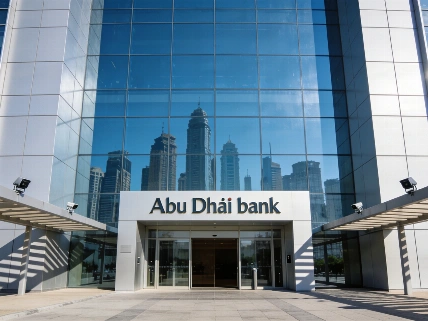
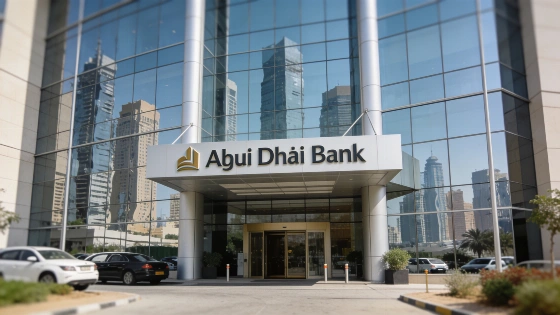
Abu Dhabi First Bank shares saw AED 41.6 million in direct trades after the bank posted just a 1% rise in half-year profits for 2026. The moves show how investor tactics are shifting in the UAE's banking sector.
Abu Dhabi First Bank (FAB) drew the spotlight in the UAE's financial markets after a wave of large direct share trades. In one day, AED 41.6 million worth of shares changed hands. These deals landed as the bank's profit growth stayed flat, showing how investor confidence and capital flows are shifting in the region's banking sector. By the end of the first half of 2026, FAB's total assets hit AED 1.41 trillion. The bank kept expanding across international markets and core business lines, but profit growth has leveled off, according to WAM / TIME Arabia Top Companies.
On Thursday, the Abu Dhabi Securities Exchange saw three big direct trades in FAB shares. A total of 2.07 million shares changed hands at AED 20.1 each. The trades added up to AED 41.6 million, or 0.02% of the bank's capital. The day before, there was an even bigger deal: 40 million shares, equal to 0.4% of the bank's capital, traded in a single direct deal worth AED 804 million, also at AED 20.1 per share. Regional regulators keep a close eye on these block trades. The UAE Central Bank requires full disclosure to keep the market transparent.
Profit margins and market sentiment
Even with these large trades, FAB's results for the first half of 2026 show only a slight profit increase. Net profits reached AED 10.73 billion, up just 1% from AED 10.63 billion in the first half of 2025. When you factor in currency shifts, the result is basically flat, matching the bank's own "strong first half" message, as reported by WAM / TIME Arabia Top Companies. Operating income did better, rising 7% to AED 19.5 billion from AED 18.3 billion a year earlier. This slow profit growth comes as central banks in the region, along with the Federal Reserve and European Central Bank, have kept a cautious line on interest rates. That has squeezed net interest margins for banks across the GCC.
The numbers show that FAB's core business is steady, but profit growth is slow. This may be shaping how and when big direct share deals happen, as institutional investors and major holders adjust their stakes in response to small earnings gains instead of big swings. The UAE dirham's peg to the US dollar has kept currency stable, which limits foreign exchange swings for FAB's global business. Recent IMF reports have pointed this out in their regional reviews.
Direct deals and strategic positioning
Direct deals are large trades worked out privately and done outside the open market. Big investors use them to shift their holdings without causing wild price swings. The latest moves in FAB shares point to a reset of strategic interests. This could show both faith in the bank's long-term stability and a practical response to its slow profit growth. On 21 September 2026, a FAB shareholder put up about USD 480 million in shares for a secondary sale, showing that big block trades kept coming after the Abu Dhabi direct deals, as reported by the Gulf Capital Market Association.
Similar big banking trades have shaped markets elsewhere, as seen in recent US banking sector consolidation. In the UAE, the size and pace of these direct deals show how important liquidity and institutional players are for keeping the market steady. The Central Bank of the UAE keeps a close watch on these trades, following global standards set by the Bank for International Settlements (BIS).
Key figures and market impact
Market data confirms the three direct deals on Thursday involved 2.07 million shares at AED 20.1 each, totaling AED 41.6 million and making up 0.02% of FAB's capital. The day before, a single direct deal moved 40 million shares for AED 804 million, or 0.4% of the bank's capital. These trades happened as net profits rose just 1% year-on-year and operating income climbed 7% in the first half of 2026. FAB was also named the top company in TIME's first Arabia's Top Companies 2026 list, published with Statista. This recognition comes even as profit growth slows.
The headline numbers don't show a big change in FAB's financial position. But the fact that major investors are making such large direct trades points to a careful view of risk and opportunity in the current market. The share price held steady at AED 20.1 on both days, showing a controlled approach to moving capital and avoiding big market swings. This matters as global sovereign bond yields have been volatile. The US 10-year Treasury yield has moved between 4.0 and 4.5% in recent months, shaping risk appetite in emerging markets.
How direct deals work in the UAE market
Direct deals on the Abu Dhabi Securities Exchange let big investors move large blocks of shares without exposing their trades to the full swings of the open market. This is key in markets where a few big players hold most of the liquidity, and where sudden large trades could otherwise shake up prices. For FAB, the recent run of direct deals shows both strong institutional involvement and careful management of market impact. The Central Bank of the UAE makes sure these trades are disclosed quickly and follow international rules, as set out in the central bank's monetary policy framework.
Direct deals are a common feature on several Middle Eastern exchanges. They offer a balance between transparency and flexibility for big stakeholders. These trades are usually disclosed right away so the market stays informed, but because they are negotiated, they can reflect strategies that don't always show up in regular trading. For FAB, the recent deals suggest that even with slow profit growth, the bank's shares still draw strong institutional interest. This pattern shows how direct deals help manage big capital flows in a market where stability and gradual change matter more than fast speculation.
Direct deals are different from regular trades. They are worked out privately between parties, often involving institutions or major shareholders. The exchange then reports and settles the trade at an agreed price, which might not match the current market rate. In the UAE, direct deals must meet strict disclosure rules to keep the market fair, but they let big investors adjust their positions without causing sharp price moves. This is especially important in markets with concentrated ownership or a small free float, where one big trade could have an outsized effect on price and liquidity. The Bank for International Settlements has noted that these mechanisms help keep markets orderly during times of high volatility.