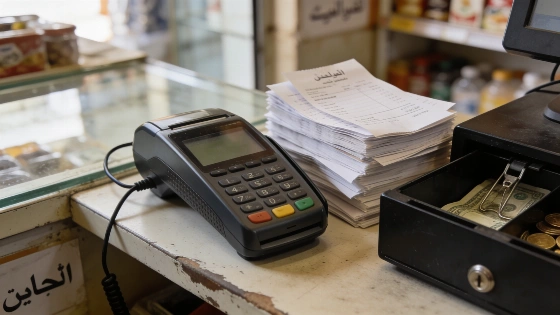
Paymob has raised $35 million in pre-Series C funding to speed up its digital payment rollout for businesses in Egypt, Saudi Arabia, the UAE, Oman, and Pakistan. The company wants to reach more merchants across the MENA region.
Paymob, a fintech company from Egypt, has secured $35 million in pre-Series C funding. This is a big move for the company as it tries to modernize how businesses in the Middle East and North Africa handle payments. Mubadala and the European Bank for Reconstruction and Development (EBRD) led the round. The goal is to help Paymob grow its reach and add new products in a region where cash is still king. This funding comes as central banks like the Central Bank of Egypt and the Saudi Central Bank push for more digital payments to boost financial inclusion and cut down on cash use.
Paymob started in 2015, founded by Islam Shawky, Alain El-Hajj, and Mostafa Menessy. The company built a platform that lets merchants take payments both online and in person. It also gives them tools to manage their finances. Paymob's list of investors keeps growing. British International Investment (BII), Global Ventures, and DPI Ventures joined this round. Earlier backers include PayPal Ventures, Kora Capital, Clay Point Capital, FMO, A15, and Helios Digital Ventures.
Regional expansion and merchant focus
Paymob holds regulatory licenses in Egypt, Saudi Arabia, the UAE, Oman, and Pakistan. The company says it now serves over 390,000 businesses. Since January of last year, more than 20,000 new clients have signed up. This shows that small and medium-sized businesses in the region want better ways to accept digital payments. The new funding will help Paymob grow its core payments business and launch new products for SME merchants and agent-based commerce. This fits with what's happening across the Gulf Cooperation Council (GCC), where central banks are making digital payments a priority. The International Monetary Fund (IMF) has reported a steady rise in electronic transactions across MENA economies.
Paymob's platform aims to close the gap between cash-based business and the need for digital payment tools. By offering both online and offline options, Paymob wants to make it easier for merchants to handle payments, track their money, and find new ways to earn. The shift to digital payments is also getting a push from regulators. The Central Bank of Egypt is working on interoperability, and the UAE Central Bank's National Payment Systems Strategy is focused on making retail payments safer and more efficient. More details on these rules are available on the UAE Central Bank consumer protection page.
Investor confidence and funding trajectory
This pre-Series C round is Paymob's first big fundraising since its $22 million Series B extension in September 2024. That brought total Series B funding to $72 million. Altogether, Paymob has now raised about $125 million, based on public filings and investor reports. Repeat investors like EBRD, BII, and Global Ventures joined again, along with Mubadala and DPI Ventures. Their continued support shows they believe in Paymob's business and its regional plans. CEO Islam Shawky has said that having sovereign wealth funds and development banks on board is helping to fill the growth capital gap in the region. The Bank for International Settlements (BIS) has also noted this trend in its recent look at fintech investment flows.
Paymob says the new money will help it expand further in MENA, focusing on digital payment acceptance and new products for SME clients. The company's ability to attract both regional and international investors points to the strong potential for digital payments in markets where cash is still common and electronic payments are just starting to take off. This is important as the Federal Reserve and the European Central Bank (ECB) keep an eye on global payment system changes and how they affect cross-border transactions.
Key figures and operational scale
After this funding round, Paymob holds licenses in five countries: Egypt, Saudi Arabia, the UAE, Oman, and Pakistan. It serves more than 390,000 businesses and has added over 20,000 new clients since January of last year. Investors now include Mubadala, EBRD, BII, Global Ventures, DPI Ventures, PayPal Ventures, Kora Capital, Clay Point Capital, FMO, A15, and Helios Digital Ventures. The pre-Series C round brought in $35 million, following the $22 million Series B extension in September 2024. Total Series B funding reached $72 million. In all, Paymob has raised about $125 million, making it one of the best-funded fintech companies in the region.
Digital payments and SME transformation
Paymob's growth shows how small and medium businesses in MENA are changing. For many, having digital payment options is now a must for reaching new customers and managing cash flow. Paymob is also focusing on agentic commerce, where merchants can act as payment agents for others. This points to new business models in the region's retail and service sectors. All this is happening while several MENA markets deal with currency swings. Central banks like the Central Bank of Egypt and the Saudi Central Bank are watching exchange rates and inflation closely. For the latest on monetary policy, see the Federal Reserve monetary policy page.
The digital payments market in MENA is still fragmented. But with this new funding, Paymob is in a stronger position to compete with both local and global players. Its ability to get regulatory licenses in different countries gives it an edge, letting it offer compliant solutions in many markets.
Cash is still widely used for daily transactions in MENA, so digital payment acceptance is still growing. But with well-funded platforms like Paymob entering the scene, the move to electronic payments is picking up speed, especially among SMEs that haven't had access to modern payment tools before. As more businesses go digital, the region's payment system should become more connected, efficient, and open to both merchants and customers.
For international payments, digital platforms like Paymob help cut friction, lower costs, and make cross-border transactions more transparent. By letting SMEs accept more types of payments, these platforms help businesses reach new markets and keep up with changing customer needs. The steady flow of investment into this sector shows that the shift in MENA payments is just getting started. The fight for merchant adoption is set to heat up even more.