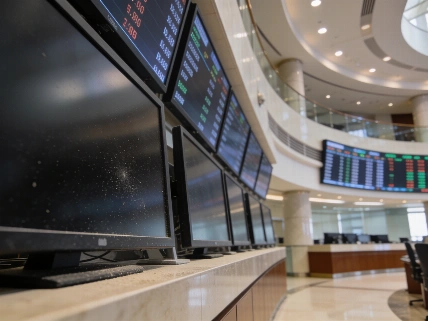

UAE stock markets wrapped up the week with main indexes barely budging. Banking and real estate shares kept things stable, while trading volumes in Abu Dhabi and Dubai showed investors are still in the game.
Trading floors in Abu Dhabi and Dubai stayed busy this week. Big banks and property firms kept the main indexes from slipping, even as global jitters and oil worries lingered. The Dubai Financial Market index broke above 6,000 points for the first time since early August. By Friday, it slipped just below that mark. Abu Dhabi's main index hovered near 10,200 points. Sector leaders refused to give up ground. Markets held steady, even as regional volatility made headlines. On 21 September, Abu Dhabi dropped 1.6% to 10,106 points. Dubai edged down 0.1% to 5,960. Reuters pointed to geopolitical tensions and oil supply fears as the main drag.
Numbers told the story. Abu Dhabi saw over 1.25 billion dirhams in turnover, spread across 22,852 trades and 389 million shares. Dubai clocked 583 million dirhams in turnover, with 14,183 deals and 254 million shares traded on 24 September. Al Etihad confirmed these figures. Appetite for blue-chip stocks stayed strong. Indexes barely moved, but the action in banking and real estate shares stood out. These sectors drove both sentiment and liquidity.
Sector leaders and index performance
Abu Dhabi's "ADNOC Gas" led by trading value. The stock rose 0.301% to 3.33 dirhams, with more than 149.2 million dirhams traded. "Aldar Properties" inched up 0.12% to 8.17 dirhams. "Borouge" gained 0.42% to 2.38 dirhams. "First Abu Dhabi Bank" moved up 0.6% to 19.98 dirhams. "ADNOC Drilling" added 0.35% to 5.74 dirhams. Not every stock climbed. "International Holding Company" slipped 0.51% to 370.1 dirhams. "Abu Dhabi Islamic Bank" fell 0.6% to 23.34 dirhams. The Abu Dhabi index closed at 10,205.96 points on 24 September, down 0.614% for the day. That erased the previous session's gains.
Dubai's market had its own standouts. "Emaar Properties" held steady at 11.68 dirhams and topped the trading value chart with over 177.4 million dirhams. "Aman" jumped 6.1% to 0.695 dirhams. "Emirates NBD" rose 0.65% to 30.9 dirhams. "Mashreq Bank" climbed 2.5% to 328 dirhams. Not all news was good. "Dubai Islamic Bank" dipped 0.13% to 7.29 dirhams. "Talabat" dropped 2.56% to 1.14 dirhams. The Dubai index slipped 0.416% to 5,983.05 points. Reuters noted that a 2.5% drop in Emirates NBD helped pull the index lower. Risk-off mood spread across the region. Investors noticed.
Technical signals and market sentiment
Traders watched technical levels all week. On 23 September, Dubai's index closed above 6,000 points. That was its highest finish since August 5. Momentum looked better. The index hovered near the lower edge of an upward channel set by September's highs and lows. Resistance sat at the 200-day simple moving average, around 5,994 points. Abu Dhabi's index stayed above key moving averages for 9, 21, 50, 100, and 200 days. Next targets: 10,600 and 10,800 points. On 23 September, ADX closed at 10,269.01. DFM finished at 6,008.03. ADX turnover hit Dh2.22 billion, boosted by a big Dh804 million trade in First Abu Dhabi Bank. Al Etihad tracked these moves.
Sectors moved at different speeds. In Abu Dhabi, basic materials and real estate outperformed. Consumer staples lagged. In Dubai, "Mashreq Bank" and "Emirates NBD" helped keep the index afloat. The close above 6,000 points in Dubai signaled a stronger market structure. But the pullback that followed showed investors are still cautious. Reuters linked the mixed Gulf performance to regional uncertainty and changing oil market expectations. These factors also shape foreign exchange rates and capital flows.
Trading volumes and market dynamics
Abu Dhabi's 24 September session saw 389 million shares traded in 22,852 deals. Dubai moved 254 million shares in 14,183 trades. Volumes stayed high. Investors kept chasing leading stocks. But the overall market direction stayed unclear. Focus on sector giants showed that big players want liquidity and safety. Global signals remain mixed. The Central Bank of the UAE keeps a close eye on liquidity and the dirham's peg to the US dollar. This peg helps steady investor nerves when global markets get rough. For official updates, see the Central Bank of the UAE.
International bond markets also played a role. US Treasury yields climbed. That shift affected risk appetite in the Gulf. Higher yields abroad can pull capital away from emerging markets. The US Federal Reserve's latest stance, detailed in the FOMC policy statement, pushed the US dollar higher and tightened global financial conditions. Regional central banks and investors are watching closely.
Key figures and market data
On 24 September, Abu Dhabi's index closed at 10,205.96 points, down 0.614% for the day. Dubai's index ended at 5,983.05 points, a drop of 0.416%. Abu Dhabi's trading value reached Dh1.25 billion, or about 340.3 million US dollars. 389 million shares changed hands. Dubai's trading value was Dh583 million, or roughly 158.7 million US dollars, with 254 million shares traded. On 23 September, Dubai's close above 6,000 points marked its highest since August 5. The index slipped back by week's end. Al Etihad provided these numbers.
Understanding index levels and sector influence
Stock indexes in Abu Dhabi and Dubai are weighted averages. They track the performance of selected listed companies. When big banks or property firms move, the whole index can shift, even if smaller stocks are more volatile. Traders and institutional investors watch technical levels like moving averages and round-number marks. These can trigger momentum shifts or automated trades. In the UAE, a handful of sector leaders set the tone. Their stability or swings often drive the broader market, especially when global signals are mixed. The International Monetary Fund and Bank for International Settlements both stress the need for strong financial oversight and stable exchange rates. These help keep market confidence up in emerging economies.