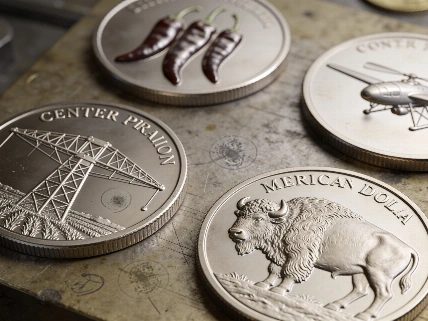
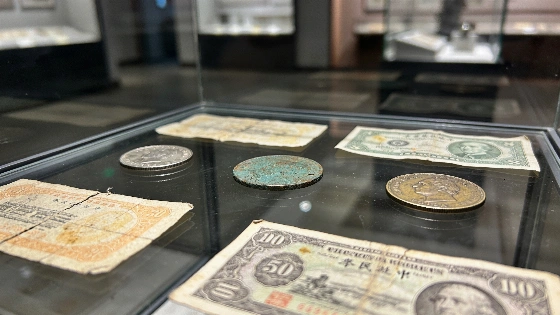
The American Numismatic Association's 2026 Literary Awards in Pittsburgh recognized groundbreaking research on coins, paper money, and monetary history-while also investing in the next generation of currency scholars
Numismatic research is not just about cataloguing coins-it's about rewriting the story of money itself. At the 2026 World's Fair of Money in Pittsburgh, the American Numismatic Association (ANA) made that clear by honoring a new wave of writers whose work is reshaping how collectors, historians, and even central banks understand the evolution of currency.
For the ANA, the stakes go beyond hobbyist prestige. Each award signals a shift in how monetary history is documented and interpreted, with topics ranging from the technical mysteries of Silver Center cents to the shadowy world of counterfeits and the overlooked narratives behind obsolete paper money. The 2026 awards cycle also marked a deliberate push to nurture young researchers, with substantial prizes and recognition for writers as young as eight.
Major Awards: From Silver Center Cents to Counterfeit Detection
The ANA's top literary honor, the Heath Literary Award, went to William Eckberg for his article "Pattern Enigma," published in The Numismatist's November 2025 issue. Eckberg's work, which earned him $250 and a custom medal, dissected the complexities behind rare U.S. coin patterns. Second place was awarded to Russ Bega for "Counterfeit, He Wrote," a detailed investigation into forged coins, while David Schenkman's "The Greenduck Story" secured third place for its exploration of a historic token manufacturer.
In the realm of U.S. numismatic research, the Wayte and Olga Raymond Memorial Literary Award recognized Eckberg again-this time for his deep dive into "Silver Center Cents." The article, published in January 2025, earned him $400 and further cemented his reputation for original research. Other Raymond Award recipients included Joel J. Orosz and Lance Humphries for correcting a longstanding misattribution, and Frank W. Garmon Jr. with Dylan Frederick for their analysis of Indian Head gold coin artistry.
Paper money studies were not left behind. The Catherine Sheehan Literary Award went to David D. Gladfelter for "Back Talk: Comments Found on the Flip Side of New Jersey Obsolete Notes," a piece that revealed how handwritten notes on old currency can unlock forgotten economic stories. Additional recognition went to Rick Melamed and Ray Williams for their work on fractional imitations and early American banknote figures.
Ancient, Medieval, and Modern: Expanding the Scope
The Prue and Arthur Fitts Literary Award for Ancient and Medieval Coinage Studies highlighted the field's growing diversity. Mark Fox's "For 'New' Ancient Mints" took first place, while Benjamin D.R. Hellings and Ken Bressett were recognized for their research on ancient recall practices and medieval tally stick money, respectively. Honorable mentions this year included Jeffrey A. Johnson's retrospective on the Redfield Hoard and Jonathan Marker's study of hobo nickels-a form of folk art that continues to evolve.
These awards are not just ceremonial. The ANA's process automatically considers every feature article in The Numismatist for the Heath Award, and evaluates qualifying research for the Raymond, Sheehan, and Fitts prizes. This system ensures that both established and emerging voices are measured by the same standards of originality and documentation.
Investing in Young Numismatists
Perhaps the most strategic move by the ANA in 2026 was its investment in young writers. The Young Numismatist Literary Awards, funded by Whitman Publishing, are divided into three age categories-each named after a prominent numismatic author. John Swindling, aged 8-12, won the Bill Fivaz Award for his account of the 1975-1976 American Freedom Train medals. In the 13-17 bracket, Miles Tichner's exposé on the Bank of Weston's frauds and fires took top honors, while the 18-22 group saw Nate Leonauskas recognized for his comparative study of the French Écu and the Morgan Dollar.
First-place winners in each youth category received $500 in cash and a $500 voucher for numismatic books, while second and third places earned book vouchers. These prizes are designed not just as rewards, but as tools-giving young researchers access to the references and resources needed to pursue original scholarship.
Numismatic Literature's Role in Currency Understanding
Behind the medals and certificates lies a broader reality: numismatic writing is a critical bridge between physical currency and the economic, political, and social forces that shape it. Research can overturn accepted attributions, expose counterfeits, and connect coins or notes to the historical events that produced them. The ANA's 2026 awards demonstrate that the field is no longer confined to catalogues and price guides-it now encompasses investigative work, art history, and even the sociology of collecting.
For context, the ANA's approach to commemorating monetary history is not unique. The United States Mint's recent reported earlier Freedom 250 Race Medal also illustrates how official institutions are using coins and medals to connect with wider audiences and document contemporary events.
According to ANA records, The Numismatist has published 139 annual volumes since its founding in 1888. The 2026 awards considered articles from the 2025 volume, with each category carrying specific monetary prizes: $250 for the Heath Award, $400 for the Raymond Award, $50 for the Sheehan Award, and $250 for the Fitts Award. Young Numismatist winners received up to $500 in cash and book vouchers, reinforcing the ANA's commitment to both research quality and educational access.
While rare coins and historic banknotes often make headlines for their auction prices, it is the underlying research that gives these objects meaning. The ANA's 2026 Literary Awards show that the future of numismatics depends not just on collecting, but on the ability to document, question, and reinterpret the story of money. By rewarding both established experts and young writers, the ANA is betting that the next generation will not simply inherit the field-they will redefine it.
Numismatic literature occupies a unique position in the study of currency. Unlike catalogues or price lists, scholarly articles and research pieces provide the context that transforms a coin or note from a collectible object into a historical document. This distinction is crucial: while a banknote's face value may expire, its story-when properly researched and recorded-can inform debates about monetary policy, economic crises, and even national identity. As more institutions and collectors recognize the value of rigorous numismatic writing, the field's influence on how we understand money's past and present will only grow.