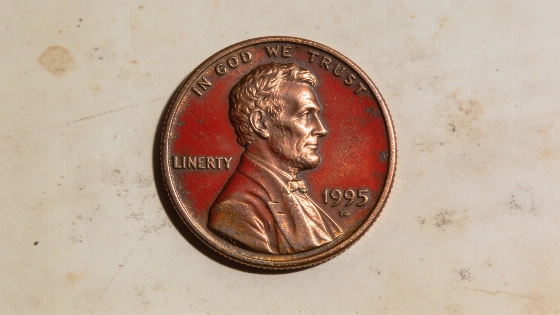
A 1919 Lincoln Wheat Cent graded PCGS MS-69 RD with CAC approval will be auctioned in August 2026, highlighting the extreme rarity of century-old U.S. coins in near-perfect condition and the evolving standards of coin certification
One of the most remarkable U.S. coins ever certified-a 1919 Lincoln Wheat Cent graded MS-69 Red by Professional Coin Grading Service (PCGS) and approved by Certified Acceptance Corporation (CAC)-is set to appear at auction through GreatCollections on August 30, 2026. This coin, preserved in virtually pristine condition for over a century, stands out not only for its technical grade but also for its provenance, having once belonged to the renowned Stewart Blay collection.
For collectors and researchers, the appearance of a business-strike Lincoln cent from 1919 in such exceptional state is almost unprecedented. Most surviving examples from this era show significant wear or color change due to copper's natural tendency to oxidize and darken over time. The MS-69 RD grade, just one point below the theoretical maximum on the 70-point Sheldon scale, signals a coin with full original mint red color and surfaces nearly untouched since striking.
What Makes This 1919 Cent Unique
Certification records underscore the coin's singular status. According to PCGS, this is the only pre-1934 Lincoln cent to achieve an MS-69 grade. CAC, which applies additional scrutiny to already-certified coins, has not approved any other U.S. cent-business strike or proof-at this level. The coin's full mint red color is especially rare for copper issues of this age, as most have mellowed to brown or red-brown over decades of storage and handling.
The 1919 cent's previous public sale in January 2023 drew widespread attention when it realized $412,500, setting a record for any classic U.S. small cent struck for circulation. For context, neither the Flying Eagle cents (1856-1858) nor the Indian Head cents (1859-1909) have approached this price at auction. Other high-profile Lincoln cents from the Stewart Blay collection, such as the 1909 VDB Proof-67+ RD (CAC) and the 1909-S VDB MS-67 RD (CAC), sold for $357,500 and $337,700 respectively, but both are considered key dates. The 1919 cent, by contrast, is from a year with a mintage exceeding 390 million pieces, making its survival in such condition all the more extraordinary.
Population Data and Collector Impact
Population reports from major grading services highlight the rarity of such elite survivors. PCGS lists 40 pre-1934 Lincoln cents at the MS-68 RD level across all dates, with nearly half-19 coins-coming from the 1919 issue. NGC, another leading grading service, has certified only two pre-1934 Lincoln cents as MS-68 RD, both 1909 VDB examples, and none at MS-69. This narrow margin between MS-68 and MS-69 underscores how few coins remain at the absolute top of the preservation scale, even among those considered gems.
The coin's provenance adds further significance. Stewart Blay, known for assembling one of the finest sets of Lincoln cents ever built, focused on acquiring the highest-graded examples available. Several coins from his collection have set modern auction benchmarks, and the 1919 MS-69 RD cent is widely regarded as a highlight of his efforts. The coin's upcoming appearance at GreatCollections is expected to draw international attention from collectors and institutions alike.
Historical Context and Market Comparisons
The Lincoln Wheat cent was introduced in 1909 to mark the centenary of Abraham Lincoln's birth. By 1919, the design was firmly established in American commerce, and the Philadelphia Mint produced more than 390 million cents that year-the highest mintage for the series until 1940. While circulated 1919 cents remain common and inexpensive, with typical Very Fine examples trading for about one U.S. dollar and heavily worn pieces for as little as twenty-five cents, coins at the MS-69 RD level are extreme outliers. Their survival demonstrates the impact of careful preservation and the evolving standards of coin certification.
For those interested in the broader context of U.S. coin grading and record-setting sales, the 1919 Lincoln cent's achievement can be compared to other notable coins, such as the 1939 Proof Walking Liberty Half Dollar, which set its own grading record and was featured in a recent editorial on rare U.S. coin preservation.
Understanding Coin Grading and Rarity
Professional coin grading services use a 70-point scale to assess the condition of coins, with MS (Mint State) grades reserved for uncirculated pieces. The difference between MS-68 and MS-69, while seemingly minor, represents a leap in rarity and market value. For copper coins, the "Red" (RD) designation indicates that the coin retains at least 95% of its original mint color, a feature that becomes increasingly scarce with age. The combination of technical grade, color, and third-party approval by organizations like CAC creates a hierarchy of desirability that drives auction results and collector demand.
Most 1919 Lincoln cents encountered today are found in circulated condition, often as part of inherited collections or in coin shop inventories. The MS-69 RD example stands as a testament to what is possible when a coin is preserved under ideal conditions for more than a century. Its upcoming auction will serve as a benchmark for both the Lincoln cent series and the wider field of U.S. numismatics.
Coin grading is a specialized process that attempts to standardize the assessment of a coin's physical state, color, and originality. While the Sheldon scale provides a numerical framework, the interpretation of grades can vary between services and over time as standards evolve. The addition of third-party verification, such as CAC approval, is intended to add another layer of confidence for buyers and sellers. However, even with these systems in place, the market for top-graded coins remains highly competitive, with small differences in grade or color designation leading to significant price disparities. For collectors, understanding these nuances is essential when evaluating rarity, value, and long-term significance.