A unique 1796 Draped Bust quarter, the only Mint State example with a gold CAC sticker, will be auctioned by Stack's Bowers Galleries. This coin's rarity, condition, and third-party approvals make it a landmark for collectors
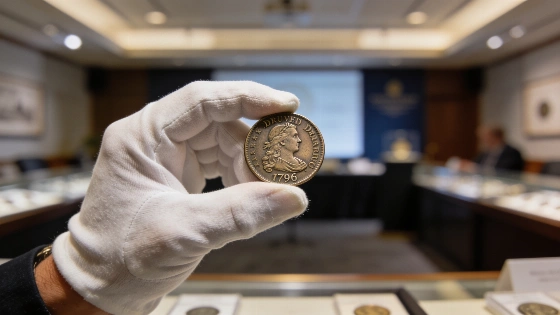
A rare 1796 Draped Bust quarter dollar, certified as Mint State (MS-62) by NGC and carrying a gold CAC sticker, is set to be auctioned by Stack's Bowers Galleries. This coin, from the Charles "Cheech" Litman Collection, is notable as the only known Mint State 1796 quarter to receive a gold CAC sticker, a distinction that signals exceptional quality even within its grade. The coin is also designated as Browning-2, High 6 variety, and holds a CMQ-X approval, further underlining its status among early American coins.
Origins of America's First Quarter Dollar
The United States Congress authorized the quarter dollar in 1792, but the Philadelphia Mint did not produce quarters for circulation until 1796. At the time, the Mint operated by refining bullion brought by private depositors, who could request specific denominations. Few depositors requested quarters, as Spanish colonial two-real coins-commonly called "two bits"-already circulated widely and matched the quarter's value. As a result, only 6,146 quarters dated 1796 were struck, delivered in four batches between April 1796 and February 1797. After this initial run, quarter production paused until 1804.
One-Year Design and Distinctive Features
The 1796 quarter is the only U.S. quarter to feature both the Draped Bust portrait of Liberty on the obverse and the Small Eagle on the reverse. The obverse displays fifteen stars, representing the states at the time, while the reverse shows a small eagle surrounded by laurel and palm branches. The coin does not display its denomination, requiring users to recognize it by size and design. When quarter production resumed in 1804, the reverse design changed to the larger Heraldic Eagle, making the 1796 issue unique in U.S. coinage history and the only quarter struck in the 18th century.
Browning-2 "High 6" Variety Explained
The Philadelphia Mint used two obverse dies and one reverse die for the 1796 quarters, resulting in two main varieties: Browning-1 ("Low 6") and Browning-2 ("High 6"). The auctioned coin is a Browning-2, identified by the final digit "6" in the date sitting high and close to Liberty's bust. Other markers include the position of the word LIBERTY and the alignment of Liberty's hair curls. Modern research suggests the B-2 variety was struck first, with the obverse die later replaced due to cracking. Both varieties are scarce, but B-2 is more frequently encountered among surviving examples.
Mint State Rarity and Third-Party Endorsements
Most 1796 quarters entered circulation and show significant wear or minting imperfections. Mint State survivors are extremely rare. According to PCGS estimates, only 50 to 60 Mint State examples exist, with many belonging to the B-2 variety. The Litman coin stands out for its original patina, strong strike, and smooth surfaces, with only minor softness on the eagle's head and breast-typical for the issue. The gold CAC sticker is especially significant: while a green CAC sticker indicates a coin is solid for its grade, a gold sticker means the coin exceeds its assigned grade and would likely qualify for a green sticker at the next higher grade. Only two 1796 quarters have received a gold CAC sticker in any grade, and this is the only Mint State example reported.
Key Data and Collector Impact
The 1796 Draped Bust quarter was struck in a total mintage of 6,146 coins at the Philadelphia Mint, with no mintmark. The NGC census lists five coins in MS-62 and 23 finer for both 1796 die marriages, with the highest graded at MS-66 Star. The coin's composition is 89.24% silver and 10.76% copper, weighing 6.74 grams and measuring 27.5 mm in diameter. Its rarity, historical significance, and unique third-party endorsements make it a centerpiece for advanced type set collectors. For most, acquiring any problem-free 1796 quarter is a major achievement, but a Mint State coin with a gold CAC sticker is a level few will encounter.
The 1796 quarter's combination of historical context, design, and rarity has driven collector demand for generations. Its status as the first U.S. quarter and the only one with the Draped Bust and Small Eagle pairing ensures its place in American numismatic history. The upcoming auction of the Litman specimen is expected to draw significant attention from collectors and institutions alike.
Third-party grading and endorsement services such as NGC and CAC play a crucial role in the rare coin market. NGC assigns numeric grades based on a coin's condition, while CAC applies green or gold stickers to coins that meet or exceed standards for their grade. The gold CAC sticker, in particular, is reserved for coins that are exceptional for their assigned grade and would likely be graded higher. These endorsements can significantly influence a coin's desirability and market value, especially for historic rarities like the 1796 Draped Bust quarter.