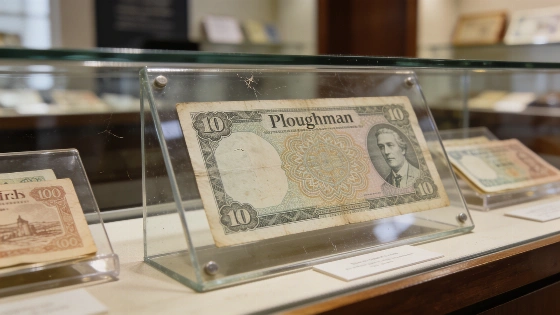
A trio of exceptionally rare Irish 'Ploughman' banknotes, each with the 000001 serial number, sold for nearly double their combined estimate at recent auctions, highlighting the strong demand for unique historical currency among collectors
Three Irish banknotes from the historic 'Ploughman' series, each bearing the highly sought-after 000001 serial number, have captured the attention of collectors and exceeded expectations at a series of recent auctions. The notes-a £10, £5, and £1 set issued by the Royal Bank of Ireland-were the centerpiece of Noonans' British and Irish Banknotes sale on July 8. Together, they achieved a total sale price of £34,500, far surpassing the combined pre-auction estimate of £20,000. All three notes were acquired by a single buyer, ensuring the set remains intact, a detail welcomed by auction specialists who cited the combination of rarity, pristine condition, and unique serial numbers as key factors driving the result.
Strong Demand for Irish Notes
The momentum for Irish banknotes continued at Spink's World Banknote e-Auction on July 9, where 13 lots featuring notes from the twentieth century to the modern era attracted competitive bidding. Notable sales included a 1996 Central Bank of Ireland replacement £100 note (PMI LTN92R, Pick 79*) with serial number KKK 000908, which fetched £1,000, and a 1959 Central Bank of Ireland £100 note (PMI LTN46, Pick 62c) that sold for £550. These results reflect a broader trend of collector interest in Irish currency, particularly for notes with unusual serial numbers or replacement status, which are often produced in smaller quantities and can command a premium.
Further evidence of this demand appeared at Stack's Bowers Mid-Year 2026 World Paper Money event on July 26. Among the highlights was a 1968 specimen £100 Central Bank of Ireland note, graded PMG Superb Gem Uncirculated 67 EPQ, which realized $1,708. Another specimen from the 1996 'C' series, graded PMG Gem Uncirculated 66 EPQ, sold for $1,020. Auction catalogues noted that such specimen notes, especially in high grades, are scarcer than their issued counterparts but can sometimes be acquired for less, depending on collector preferences and market conditions.
Facts and Figures: Auction Results
Across the three auctions, the standout 'Ploughman' set achieved £34,500 against a £20,000 estimate, while individual high-grade and replacement notes ranged from £550 to $1,708. The sales spanned a variety of denominations and issue dates, with the most competitive bidding focused on notes from the mid-twentieth century onward. The presence of unique serial numbers, specimen status, and exceptional grading consistently influenced final prices. For context, similar trends have been observed in other rare currency auctions, such as those featuring historic Latin American and Spanish coins, as discussed in a recent analysis of collector demand for rare coins.
Understanding the 'Ploughman' Series
The 'Ploughman' banknotes were introduced in Ireland in 1929 as part of a series issued by several commercial banks under the Currency Commission. Named for the image of a farmer ploughing a field, these notes were intended to standardize currency during a period of transition following Irish independence. The series was gradually withdrawn from circulation after the introduction of Central Bank of Ireland notes in the 1940s, but surviving examples-especially those with low or unique serial numbers-remain highly prized by collectors. The rarity of a 000001 serial number, combined with original condition and complete sets, makes such notes among the most desirable in Irish numismatics.
Serial numbers play a significant role in the value of collectible banknotes. The first note in a series, marked by the 000001 serial, is often reserved for presentation or archival purposes and rarely enters the market. When such notes do appear, they can command substantial premiums over otherwise identical examples. Collectors also seek replacement notes, which are issued to substitute for damaged or misprinted notes and are typically produced in smaller quantities. The intersection of rarity, historical context, and condition continues to shape the evolving market for Irish and other world banknotes.