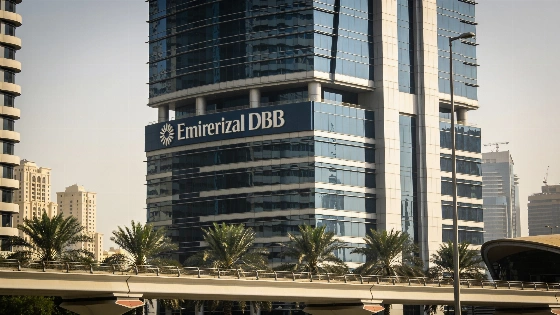
Emirates NBD is joining forces with Dubai Future District Fund to accelerate the adoption of fintech and AI solutions, aiming to streamline banking operations and improve digital services for customers and businesses in the UAE.
Emirates NBD, one of the largest banks in the United Arab Emirates, has entered a strategic partnership with Dubai Future District Fund (DFDF) to accelerate the rollout of fintech and artificial intelligence solutions across its banking operations. The collaboration is designed to give Emirates NBD direct access to DFDF's portfolio of technology start-ups, enabling the bank to pilot and potentially commercialize new digital tools that align with its business priorities.
DFDF was established in 2020 following a commitment of AED 1 billion by Sheikh Mohammed bin Rashid Al Maktoum to support the growth of local start-ups. The fund is now jointly backed by Dubai International Financial Centre (DIFC) and the Dubai Future Foundation, positioning it as a key player in the region's innovation ecosystem. Through this partnership, Emirates NBD aims to strengthen its capabilities in embedded finance, digital assets, SME banking, wealth technology, and compliance, with a particular focus on leveraging AI to enhance both infrastructure and customer experience.
Accelerating Digital Banking and Security
According to Emirates NBD, the partnership will allow the bank to work closely with emerging technology firms to streamline customer onboarding, deliver more personalized banking services, and deploy digital banking features more rapidly. The bank also expects to improve fraud detection and financial security, as well as expand its offerings for small and medium-sized enterprises (SMEs) and business clients. These efforts are part of a broader strategy to remain competitive in a rapidly evolving financial landscape, where digital transformation and regulatory compliance are increasingly critical.
In recent months, Emirates NBD has taken additional steps to modernize its payment infrastructure. Less than a month before the DFDF partnership, the bank joined the Partoir blockchain network to facilitate faster and more secure cross-border transactions. This move reflects a wider trend among regional banks to adopt blockchain and AI-driven solutions to reduce costs, improve transparency, and enhance customer trust.
Regional Context and Measurable Impact
As of 2024, the United Arab Emirates dirham (AED) remains pegged to the United States dollar (USD) at a fixed rate of 3.6725 AED per USD, providing stability for international transactions and cross-border business. The UAE's banking sector has seen a marked increase in digital adoption, with Emirates NBD reporting a double-digit percentage growth in digital transactions year-on-year. The bank's focus on AI and fintech is expected to further accelerate this trend, particularly as competition intensifies among regional and international banks operating in the Gulf.
Emirates NBD's approach mirrors developments in other markets, where financial institutions are partnering with technology providers to address operational risks and improve credit access. For example, India's Small Industries Development Bank recently expanded its invoice validation system to reduce fraud and support small businesses, as detailed in a recent report on digital financing initiatives.
Understanding Embedded Finance and AI in Banking
Embedded finance refers to the integration of financial services-such as payments, lending, or insurance-directly into non-financial platforms or business processes. For banks like Emirates NBD, this means offering seamless digital experiences that allow customers to access financial products within everyday apps or business workflows. Artificial intelligence, meanwhile, is increasingly used to automate decision-making, personalize services, and detect fraudulent activity in real time. As regulatory expectations rise and customer preferences shift toward digital-first solutions, banks must balance innovation with robust compliance and security frameworks. The partnership between Emirates NBD and DFDF highlights how financial institutions are leveraging local innovation ecosystems to stay ahead in a competitive and regulated environment.