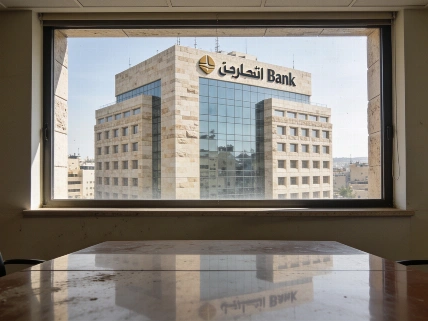

Emirates NBD and Commercial Bank of Dubai must pay over AED 4 million to Al Tijaria Real Estate after a cyber fraud case. The ruling exposes persistent gaps in digital payment security and cross-border banking oversight.
Emirates NBD and Commercial Bank of Dubai now face a court order to pay Al Tijaria Real Estate Company a combined AED 4.05 million. The Dubai appeals court handed down the decision after a lengthy legal fight sparked by a cyber fraud attack that slipped through the cracks of cross-border banking controls. The case unfolded against the backdrop of the UAE dirham's peg to the US dollar, a policy managed by the Central Bank of the UAE to keep monetary conditions steady in the region.
Case number 593 of 2024 spells out the financial hit: Emirates NBD owes nearly AED 4 million, while Commercial Bank of Dubai must pay AED 56,300. The court tossed out other claims and made each bank shoulder its own appeal costs. Legal fees were set off, and the security deposit paid to the court was forfeited. No official word has come from the banks or regulators on the final breakdown of liability or the exact sums, and public records offer no confirmation of any further appeals (Law360).
The trouble started in 2021 when Al Tijaria Real Estate's email system was breached. Attackers forged documents and emails, triggering fraudulent transfers. The company filed complaints in both the UAE and Kuwait. By June 2024, Al Tijaria took the fight to court, naming Emirates NBD, Commercial Bank of Dubai, Abu Dhabi Islamic Bank, and Dubai Islamic Bank as defendants. The claim: AED 54 million plus 5% legal interest from the date of filing until payment.
The court's award fell far short of that demand. The drawn-out litigation, capped by a judgment on September 29, 2026, followed an earlier appellate decision from April 2026. Assigning blame in cross-border cyber fraud cases rarely comes easy. The Central Bank of the UAE, echoing the Bank for International Settlements (BIS), has called for tighter cybersecurity and real-time payment monitoring to keep these threats in check.
Al Tijaria Real Estate told the Kuwait Stock Exchange that the Dubai ruling does not affect its financial position. The company's latest numbers show quarterly revenue at 12.334 million Kuwaiti dinars (KWD) and net profit at 5.291 million KWD, both up from the previous period. These figures, though, have no direct link to the Dubai court's decision and do not reflect any immediate impact from the judgment (Investing.com).
The original claim aimed for AED 54 million, but the court's AED 4.05 million award lands at less than 8% of that figure. The 5% legal interest, if applied, would start from the lawsuit's filing date, but the court did not grant the full scope of Al Tijaria's requests. The UAE's fixed exchange rate regime has kept currency swings in check for cross-border settlements, yet operational risks like cyber fraud remain. The Federal Reserve's rate moves, which shape the AED through the currency peg, have helped keep international business payments stable.
Cyber fraud keeps banks and corporate clients on edge across the Gulf. Financial institutions have been forced to rethink digital security protocols. Emirates NBD's expansion in Egypt shows the group's regional ambitions, but digital risk still shadows its operations. The European Central Bank (ECB) and other regulators have pressed for tighter standards in payment authentication and fraud prevention as cross-border transactions grow more complex.
Legal fights over cyber fraud often turn on who shoulders the blame: banks or clients. Here, the Dubai court put direct financial liability on the banks, even as most of Al Tijaria's claims were denied. The ruling signals that UAE courts will hold banks to account for payment security lapses, but will dig into the evidence and scale of losses before awarding damages.
For Gulf businesses, the case drives home the need for strong internal controls and clear lines with banking partners. Recovering losses from cyber fraud is never guaranteed. Outcomes depend on the facts, the evidence, and the court's appetite for assigning liability.
Cyber fraud in cross-border payments usually exploits weak spots in authentication or document checks. UAE banks must use multi-layered security, but the system is only as strong as its weakest link. When a breach hits, legal responsibility can be split or hotly contested, and clawing back funds is often slow and uncertain. Businesses need to keep a close eye on payment instructions and update security protocols, making sure everyone in the payment chain knows their risks and duties.