
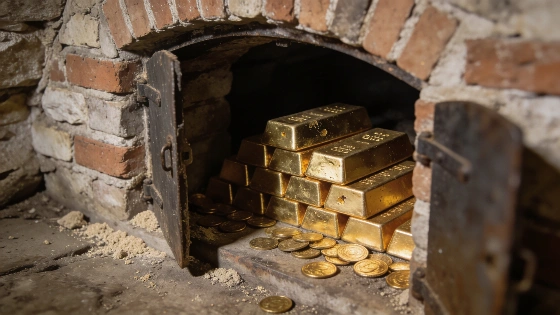
A routine construction project in Belgium has led to the discovery of thousands of gold coins and bars worth over $10 million, raising questions about the hoard's origins, legal ownership, and its place in European monetary history
In August 2026, a team of construction workers in Sint-Gillis-Dendermonde, Belgium, made an extraordinary find while renovating the cellar of a historic property. What began as a standard sewer installation quickly turned into a major numismatic event when workers uncovered thousands of gold coins and dozens of gold bars hidden within a cellar wall. Belgian police immediately secured the site and transferred the cache, estimated at around €9 million (over $10 million), to a high-security government facility.
The discovery has sparked intense interest among collectors, historians, and legal experts, not only for its sheer value but also for the questions it raises about the origins and ownership of the hoard. The property, now used by a social welfare organization, was originally built as a brewer's residence in the early 20th century. While some speculate that the gold may have belonged to the Van Assche brewing family, authorities have yet to establish any direct connection or rule out the possibility of criminal activity such as theft or money laundering.
Gold Sovereigns and Bullion Bars: A Closer Look
Photographs released by Dendermonde police reveal a diverse collection of gold items, including at least 4,000 British Gold Sovereigns and 49 kilogram-sized bullion bars. The Sovereign, a 22-karat gold coin first issued in 1817, became a standard in international trade and is recognized for its classic design featuring St. George and the Dragon. Each coin contains approximately 7.32 grams of fine gold, meaning the coins alone represent over 29 kilograms of pure gold.
The bullion bars, identified by specialists as products of renowned refiners such as N M Rothschild & Sons' Royal Mint Refinery and Johnson Matthey, provide further clues. Some bars are marked with dates from the late 1950s and 1960, indicating that the hoard could not have been concealed before that period. This evidence suggests the gold was hidden during the postwar decades, possibly overlapping with the brewery's final years of operation, which ended in 1970.
According to reports, the total weight of the hoard exceeds 78 kilograms (about 173 pounds) of fine gold, before accounting for any additional coins or items. The combination of highly liquid bullion bars and internationally recognized coins points to a deliberate strategy for storing and potentially moving wealth outside the banking system.
Legal and Historical Questions Remain
Under Belgian property law, anyone who finds valuable property must report it and make a genuine effort to locate the rightful owner. The law allows the original owner to reclaim the property within five years, but the final outcome depends on how courts classify the find and what investigators uncover about its history. The construction workers who discovered the gold have expressed hope for a finder's reward, but prosecutors must first determine whether the hoard has a criminal origin or if a legitimate owner can be identified.
The current property owner, CAW Oost-Vlaanderen, has stated that if it is awarded the gold, the proceeds would be used to expand services for vulnerable populations in East Flanders. Meanwhile, the discovery has attracted would-be treasure hunters to the site, prompting police to warn that the area is now fully secured and that further searching is both dangerous and futile.
For numismatists and historians, the most intriguing aspect may be the detailed cataloging of the coins and bars. Dates, mintmarks, and refinery marks could reveal not only when and where the hoard was assembled, but also provide insight into patterns of private gold accumulation and movement in postwar Europe. This echoes broader trends in the numismatic market, where the provenance and composition of large finds can reshape collector interest, as seen in the evolving online coin trade discussed in this analysis of digital numismatic platforms.
Facts and Figures: The Scale of the Find
The hoard consists of at least 4,000 British Gold Sovereigns and 49 gold bars, with a combined fine gold content exceeding 78 kilograms. At current market rates in August 2026, this amount of gold is valued at over €9 million (more than $10 million). The earliest confirmed date on the bullion bars is 1957, with some marked 1960, providing a minimum threshold for when the hoard could have been hidden. The property itself was constructed around 1900, and the brewery operated until 1970, narrowing the possible window for concealment.
Understanding Private Gold Hoards
Private gold hoards like the one found in Belgium are rare but not unprecedented in European history. Such caches often reflect periods of economic uncertainty, war, or regulatory change, when individuals sought to safeguard wealth outside formal banking channels. The combination of coins and bars in this case suggests a strategy designed for both liquidity and portability, allowing the owner to divide, transport, or sell the gold as needed. The legal treatment of such finds varies by jurisdiction, with outcomes depending on factors such as the circumstances of discovery, the ability to trace ownership, and the presence of any criminal elements. As investigators continue to analyze the Belgian hoard, the case highlights the complex intersection of monetary history, property law, and the enduring appeal of physical gold as a store of value.