Two World Economic Forum reports put AI's potential economic and sustainability value across the Middle East and North Africa at more than $1 trillion by 2030, if infrastructure and governance keep pace.
Published on 14 October 2026, a World Economic Forum estimate puts a figure on the region's AI opportunity. Two reports say AI could generate more than $1 trillion in economic and sustainability value across the Middle East and North Africa by 2030. Reaching that potential will take investment in power and water systems. Digital infrastructure will need to expand, too, alongside stronger regulation and governance.
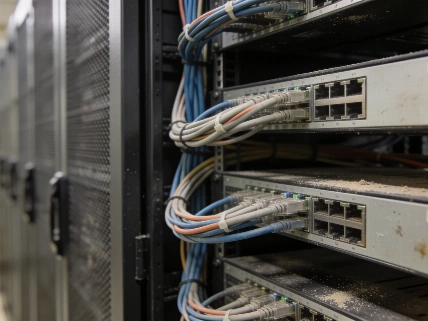
For data-centre developers, one possible advantage is speed. New facilities in the region could connect to electricity grids in two to five years, compared with more than 10 years in some mature markets, according to the WEF infrastructure report. That shorter wait could make the region more attractive for computing capacity. But AI infrastructure also puts pressure on energy and water systems.
The estimate comes from Unlocking Value: AI for Resilient Growth in MENA, prepared by the WEF with Bain & Company. The report assigns $200 billion to sustainable finance in the financial sector. It estimates $370 billion in sustainable investment flows enabled by the public sector, plus $250 billion in long-term asset losses avoided.
Another $90 billion could come from higher valuations in the energy sector. The report puts a further $100 billion in sustainable projects through cross-sector partnerships.
Together, the components total $1.01 trillion. That is potential value by 2030, not a tally of benefits already realised or guaranteed investment and public spending.
Adoption still trails the stated potential. The WEF and Bain report says 89% of surveyed chief sustainability officers see AI as having high or very high potential to support sustainability goals. Meanwhile, 40% to 55% describe the application of relevant solutions as experimental or scaled.
Maroun Kairouz, managing director of the World Economic Forum, said the region has the investment capacity and ambition to become a global centre for AI-driven growth, provided data-centre infrastructure expands alongside power and water systems. The demands are already clear: AI applications increase electricity use, while high temperatures add to cooling needs. The WEF infrastructure report also flags rising electricity demand and extreme heat. Limited water resources add pressure, including the energy required for desalination.
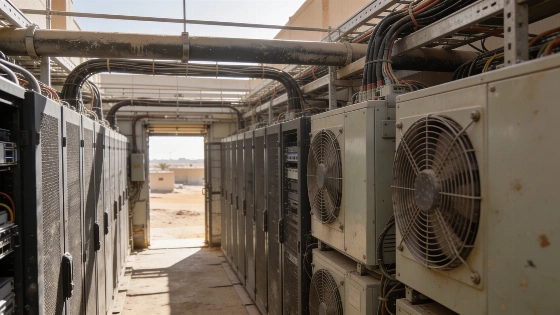
The second report, Powering AI at Scale: Optimizing Hyperscale Data Centre Infrastructure in MENA, identifies a potential speed advantage in connecting new data centres to electricity networks. That faster connection window does not make the resource demands disappear. High-density AI computing can concentrate power demand; heat raises cooling requirements, and water scarcity makes efficient cooling a priority. Globally, cooling can account for more than 40% of data-centre electricity consumption.
The WEF recommends more efficient facility design and AI-enabled operations. It also points to advanced cooling technologies, alongside updated regulatory frameworks. These are recommendations to support growth, not a new law or mandatory regional standard. Large data-centre loads can vary, so operators will need to coordinate with electricity networks and water systems.
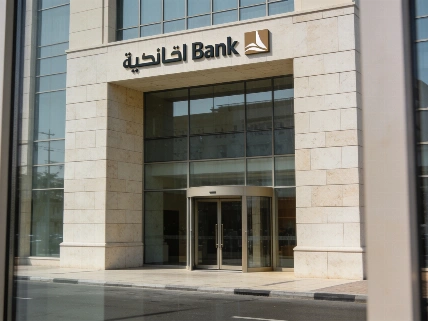
Christoph De Vosser, global managing partner at Bain & Company, described an opportunity that combines growth and innovation with energy costs and risk management. He pointed to the region's energy resources and its position linking global markets. The reports cite work at First Abu Dhabi Bank and ADNOC. They also cite Bahrain's Ministry of Sustainable Development and Saudi Arabia's Ministry of Economy and Planning.
AI is also reaching consumer financial services. Emirates NBD's UAE travel assistant is one customer-facing digital tool. The WEF reports, by contrast, examine how AI could support sustainability across sectors.
Nidaa Al Mubarak, managing director of SRMG Think, said the region could lead the next generation of digital infrastructure by linking smart infrastructure with more efficient resource use. The report calls for more efficient design standards and innovative cooling technologies. It also names AI-enabled operations and updated regulatory frameworks as priorities.
The WEF report puts the region's data-centre grid connection window at two to five years, compared with more than 10 years in some mature markets.