
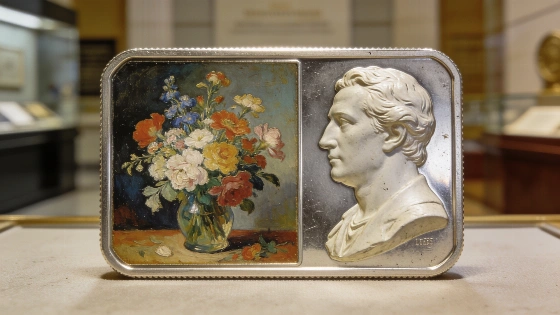
Romania's central bank has launched a limited-edition silver coin featuring Nicolae Tonitza's painting Flori galbene, marking the start of a new series dedicated to national painters. Only 500 coins are available, each priced at 1,150 lei
Collectors in Romania are facing a race for one of just 500 new silver coins, as the National Bank of Romania launches its first commemorative issue dedicated to the country's celebrated painters. The inaugural release puts Nicolae Tonitza, a leading figure in Romanian art, at the center of a high-stakes scramble for a piece of cultural and monetary history.
Demand is already outpacing supply, with the coin's mintage capped at 500 units. Each coin is priced at 1,150 lei (approximately US$254), a figure that positions it firmly in the premium collector segment. The coin is distributed exclusively through the National Bank's regional branches in Bucharest, Cluj-Napoca, Constanta, Craiova, Iasi, and Timisoara, making access a logistical challenge for buyers outside these cities.
Art Meets Currency
The coin's obverse is a bold departure from traditional numismatic design, featuring a full-color reproduction of Tonitza's Flori galbene ("yellow flowers"), a painting currently housed in the National History Museum of Romania. The denomination-10 lei-appears above the artwork, while the word ROMANIA is integrated into the frame, reinforcing the national identity of the issue. On the reverse, Tonitza's portrait is accompanied by his name and life dates (1886-1940), cementing the coin's commemorative intent.
Each coin is accompanied by an informational booklet and a certificate of authenticity, underscoring its status as both a collector's item and a piece of cultural documentation. The National Bank of Romania's decision to launch a painter-focused series signals a shift toward coins that serve as both legal tender and vehicles for national storytelling.
Limited Supply, High Stakes
With only 500 coins minted, scarcity is not just a marketing angle-it is a defining feature. The price point and limited distribution echo strategies seen in other countries' commemorative coin launches, such as the US Mint's reported earlier Freedom 250 Race Medal, where exclusivity and cultural resonance drive demand among collectors and investors alike.
According to the National Bank of Romania, the coins are available for purchase at designated branches, with no indication of a wider retail rollout or online sales. This approach effectively restricts access to those able to visit in person, a move that may frustrate international buyers or those outside major Romanian cities.
Facts and Figures
The coin's face value is 10 lei, but its sale price is set at 1,150 lei-over 100 times its nominal value. The mintage is strictly limited to 500 pieces. The launch date was August 24, and the coin is available only through six regional branches. The painting Flori galbene, featured on the coin, is part of the National History Museum of Romania's collection.
Commemorative Coins as Cultural Policy
Romania's move to spotlight national artists through currency is part of a broader trend among central banks to use commemorative coins as tools of cultural diplomacy and heritage preservation. By embedding iconic artworks into legal tender, issuing authorities can reach audiences beyond traditional museum-goers, while also generating revenue from collectors willing to pay a premium for exclusivity and authenticity.
Commemorative coins differ from circulating currency in both purpose and value. While they carry a legal face value, their true worth is determined by factors such as mintage, design, subject matter, and collector demand. Central banks often use these issues to mark anniversaries, honor historical figures, or highlight national achievements, with the added benefit of raising funds for cultural or institutional initiatives.